
University of Cambridge Initiates Review Following Death of Professor Jason Arday Amid Controversy
Here's what it means for you.
The scrutiny of academic institutions' decision-making processes could reshape hiring practices and support systems in universities worldwide.
Why it matters
This incident highlights critical gaps in institutional support and decision-making that can affect academic careers and mental health.
What happened (in 30 seconds)
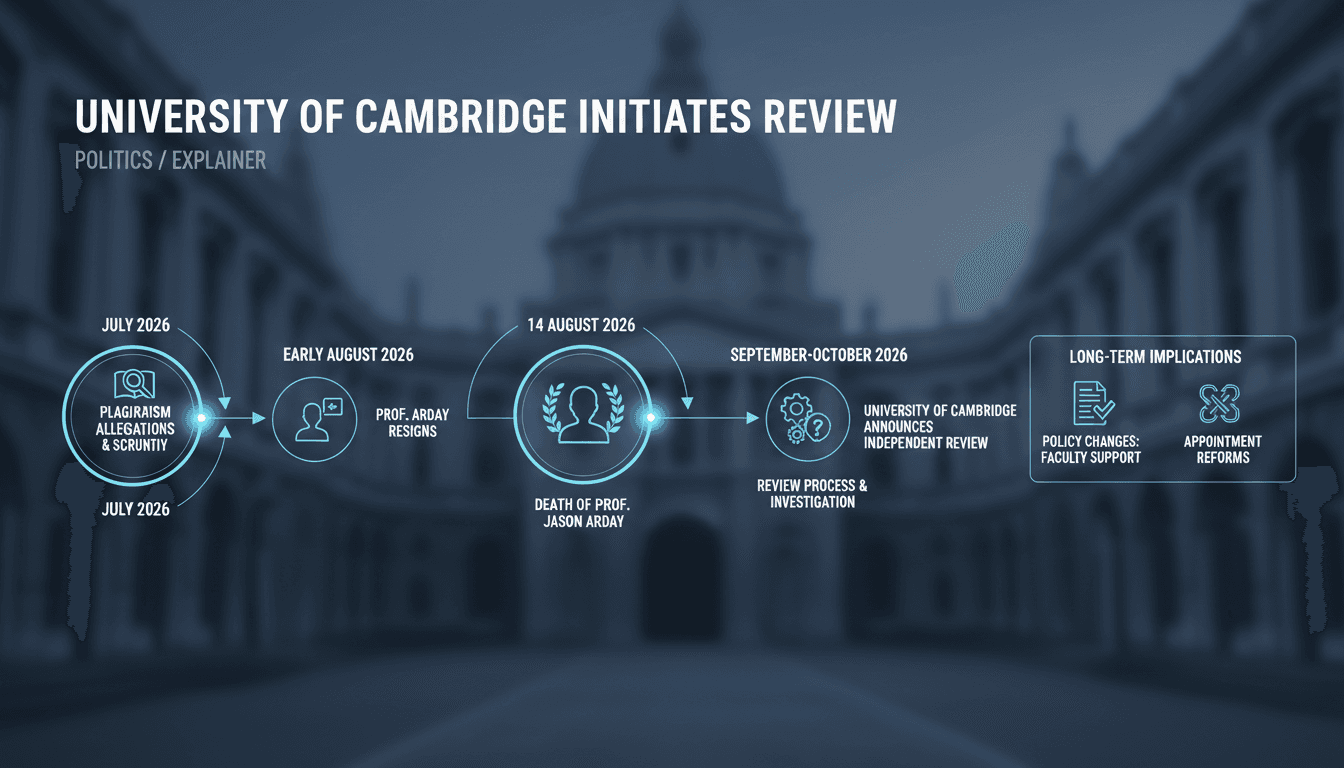
- The University of Cambridge announced an independent review on 4 September 2026, following the death of Professor Jason Arday.
- Arday, who was the youngest Black professor at Cambridge, died on 14 August 2026, shortly after resigning amid plagiarism allegations.
- The review will assess the university's support mechanisms and decision-making processes during the controversies surrounding Arday.
The context you actually need
- Arday's appointment in 2023 was a significant milestone for diversity at Cambridge, making his subsequent resignation and death particularly impactful.
- Plagiarism allegations surfaced in July 2026, leading to intense scrutiny of Arday's achievements and ultimately his resignation.
- The inquest into Arday's death classified it as unexpected but not suspicious, prompting further investigation into the circumstances surrounding it.
What's really happening
The University of Cambridge's decision to launch an independent review following Professor Jason Arday's death is a response to a complex interplay of institutional pressures, public scrutiny, and the need for accountability. Arday's tragic passing has raised significant questions about how universities handle allegations against faculty members, particularly those related to diversity and inclusion.
The review, led by Nazir Afzal OBE, will consist of two parts: an expedited examination of the support provided to Arday during the scrutiny he faced, and a broader review of the university's appointment and tenure practices. This dual approach reflects a growing recognition that academic institutions must not only attract diverse talent but also provide robust support systems to protect them from external pressures.
The allegations against Arday, which included claims of plagiarism and inconsistencies in his personal achievements, emerged in a climate where academic integrity is under increasing scrutiny. The university's initial response to these allegations, which included an internal investigation, has been criticized for potentially lacking the necessary support for Arday during a tumultuous period. This situation underscores the need for universities to establish clear protocols for handling allegations, ensuring that faculty members receive adequate support while maintaining institutional integrity.
The broader implications of this review extend beyond Cambridge. As universities worldwide grapple with issues of diversity, equity, and inclusion, the findings from this review could influence hiring practices and support systems across the academic landscape. Institutions may be compelled to reassess their approaches to faculty support, particularly for those from underrepresented backgrounds who may face unique challenges in navigating academic scrutiny.
Moreover, the public response to Arday's death has highlighted the importance of mental health support within academic institutions. As the review progresses, it will be crucial to monitor how the university addresses these systemic issues and whether it leads to meaningful changes in policy and practice.
Who feels it first (and how)
- Academics: Faculty members may face increased scrutiny and pressure, particularly those from diverse backgrounds.
- University administrators: Decision-makers will need to adapt policies and support systems in response to the review's findings.
- Students: Current and prospective students may benefit from improved support structures and a more inclusive academic environment.
What to watch next
- Review findings: The expedited report is expected within three months, which could lead to immediate changes in university policies.
- Public response: How the academic community and the public react to the review's outcomes will shape future discussions on diversity and support in academia.
- Policy changes: Look for potential shifts in hiring practices and support systems across universities as they respond to the findings of this review.
An independent review has been launched to investigate the circumstances surrounding Arday's death and the university's decision-making processes.
The review will lead to changes in how universities handle allegations against faculty and support their mental health.
The long-term impact of this review on academic hiring practices and institutional support systems remains to be seen.
Frequently Asked Questions
- Why it matters?
- This incident highlights critical gaps in institutional support and decision-making that can affect academic careers and mental health.
- What happened (in 30 seconds)?
- The University of Cambridge announced an independent review on 4 September 2026, following the death of Professor Jason Arday. Arday, who was the youngest Black professor at Cambridge, died on 14 August 2026, shortly after resigning amid plagiarism allegations. The review will assess the university's support mechanisms and decision-making processes during the controversies surrounding Arday.
- What's really happening?
- The University of Cambridge's decision to launch an independent review following Professor Jason Arday's death is a response to a complex interplay of institutional pressures, public scrutiny, and the need for accountability. Arday's tragic passing has raised significant questions about how universities handle allegations against faculty members, particularly those related to diversity and inclusion. The review, led by Nazir Afzal OBE, will consist of two parts: an expedited examination of the
- Who feels it first (and how)?
- Academics: Faculty members may face increased scrutiny and pressure, particularly those from diverse backgrounds. University administrators: Decision-makers will need to adapt policies and support systems in response to the review's findings. Students: Current and prospective students may benefit from improved support structures and a more inclusive academic environment.
- What to watch next?
- Review findings: The expedited report is expected within three months, which could lead to immediate changes in university policies. Public response: How the academic community and the public react to the review's outcomes will shape future discussions on diversity and support in academia. Policy changes: Look for potential shifts in hiring practices and support systems across universities as they respond to the findings of this review.
UK politics, business, and social stories.
"Sky News is a UK-based 24-hour channel known for fast-breaking news and political coverage."
— A47 Editor
University of Cambridge will review 'decision-making and actions' after death of Jason Arday
The University of Cambridge has announced an independent review to assess its decision-making and actions following the death of Professor Jason Arday, who was found dead at his home in London at the age of 37. His passing occurred just one week afte...
United Kingdom-focused news including local politics, business, and social issues.
"BBC News is widely regarded as a reputable international news organization, known for its impartial tone and public service mandate."
— A47 Editor
Cambridge launches review into support for Jason Arday before death
The University of Cambridge has initiated a review into its decision-making and actions prior to the death of Jason Arday, a former sociology professor who was found dead at his home in London at the age of 37. His death occurred just a week after he...
International coverage from The Guardian's global desks.
"The Guardian is known for its progressive editorial stance and in-depth analysis."
— A47 Editor
Cambridge University asks former chief crown prosecutor to open Arday review
The University of Cambridge has appointed Nazir Afzal, a former chief crown prosecutor, to lead the initial review into the circumstances surrounding the death of Jason Arday, a former sociology professor who passed away on August 14, 2026, shortly a...