
AfD Achieves Historic Electoral Success in Saxony-Anhalt
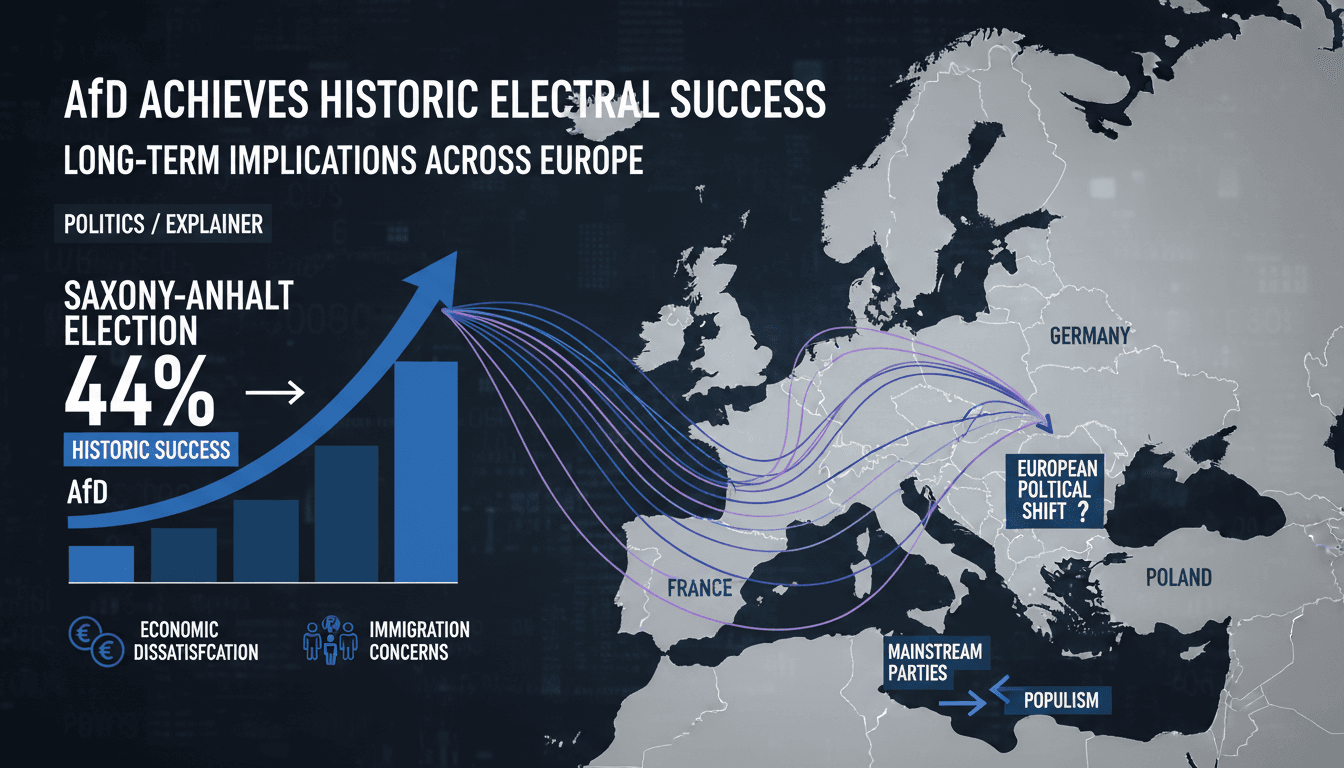
Here's what it means for you.
The rise of the AfD in Germany could reshape European policies that impact trade and migration, affecting global markets.
Why it matters
The AfD's strong performance signals a potential shift in European political dynamics, challenging the stability of mainstream parties.
What happened (in 30 seconds)
- AfD secured approximately 44% of the vote in the Saxony-Anhalt state election on September 6, 2026, marking a historic high for far-right parties in Germany.
- Chancellor Friedrich Merz and mainstream parties maintain a coalition firewall against the AfD, despite rising national support for the party.
- Upcoming elections in Berlin and Mecklenburg-Western Pomerania could further influence the political landscape in Germany and beyond.
The context you actually need
- Voter dissatisfaction in eastern Germany has fueled the AfD's rise, driven by economic stagnation and high immigration levels.
- The AfD is classified as a right-wing extremist party by German intelligence, complicating its acceptance in mainstream politics.
- European populist movements are gaining traction, with the AfD's success potentially inspiring similar parties across the continent.
What's really happening
The Alternative for Germany (AfD) has emerged as a significant force in German politics, particularly in the eastern state of Saxony-Anhalt, where it garnered approximately 44% of the vote in the recent state election. This result is not merely a reflection of the party's appeal but also a symptom of deeper societal frustrations. Voter discontent has been brewing for years, primarily due to economic stagnation and high immigration levels, which many perceive as failures of the centrist coalition led by Chancellor Friedrich Merz.
The AfD's rise is indicative of a broader trend across Europe, where populist and far-right parties are gaining ground amid dissatisfaction with traditional political structures. The party's strong performance in Saxony-Anhalt is the best showing for a far-right group in a German regional election since World War II, highlighting a significant shift in voter sentiment. The AfD has effectively capitalized on anti-immigration sentiment and economic grievances, positioning itself as a voice for those who feel left behind by the current political establishment.
Chancellor Merz has publicly reaffirmed his commitment to maintaining a coalition firewall against the AfD, emphasizing that mainstream parties will not cooperate with the far-right. However, this stance is increasingly challenged by internal pressures and the growing popularity of the AfD. The party's leaders are signaling ambitions for national influence, which could further destabilize the political landscape in Germany.
As the AfD continues to lead in national polls, the implications extend beyond Germany. European observers are concerned about the potential for contagion, where the AfD's success could inspire similar movements in other EU nations. The upcoming state elections in Berlin and Mecklenburg-Western Pomerania on September 20, 2026, will be critical in assessing the AfD's trajectory and its impact on the broader European political climate.
The reaction from mainstream parties has been to uphold the firewall against any coalition with the AfD, but this strategy may become increasingly difficult to maintain as the party's support grows. European leaders have expressed alarm at the AfD's electoral success, describing it as a grave moment for democracy in Germany and the EU. Meanwhile, nationalist parties in other countries, such as Spain, have welcomed the result, viewing it as validation of their own agendas.
In the financial markets, the immediate reaction has been limited, but analysts anticipate increased volatility in political risk assessments for Germany and the EU as a whole. The AfD's rise could lead to significant shifts in policies related to migration and trade, which may have far-reaching consequences for global markets.
Who feels it first (and how)
- Voters in eastern Germany: Directly impacted by economic policies and immigration issues.
- Mainstream political parties: Facing pressure to adapt or respond to the AfD's growing influence.
- European Union policymakers: Must navigate the implications of rising populism on EU cohesion and policy-making.
What to watch next
- Upcoming state elections: The results in Berlin and Mecklenburg-Western Pomerania will indicate whether the AfD's momentum continues.
- Poll trends: Monitoring national polling data for the AfD will reveal shifts in voter sentiment and potential impacts on mainstream parties.
- European political responses: Watch for how EU leaders address the rise of populism and its implications for migration and trade policies.
The AfD has secured approximately 44% of the vote in Saxony-Anhalt.
The AfD will continue to gain traction in upcoming elections, influencing national and EU politics.
The long-term sustainability of the mainstream parties' firewall against the AfD and its implications for governance.
Frequently Asked Questions
- Why it matters?
- The AfD's strong performance signals a potential shift in European political dynamics, challenging the stability of mainstream parties.
- What happened (in 30 seconds)?
- AfD secured approximately 44% of the vote in the Saxony-Anhalt state election on September 6, 2026, marking a historic high for far-right parties in Germany. Chancellor Friedrich Merz and mainstream parties maintain a coalition firewall against the AfD, despite rising national support for the party. Upcoming elections in Berlin and Mecklenburg-Western Pomerania could further influence the political landscape in Germany and beyond.
- What's really happening?
- The Alternative for Germany (AfD) has emerged as a significant force in German politics, particularly in the eastern state of Saxony-Anhalt, where it garnered approximately 44% of the vote in the recent state election. This result is not merely a reflection of the party's appeal but also a symptom of deeper societal frustrations. Voter discontent has been brewing for years, primarily due to economic stagnation and high immigration levels, which many perceive as failures of the centrist coalition
- Who feels it first (and how)?
- Voters in eastern Germany: Directly impacted by economic policies and immigration issues. Mainstream political parties: Facing pressure to adapt or respond to the AfD's growing influence. European Union policymakers: Must navigate the implications of rising populism on EU cohesion and policy-making.
- What to watch next?
- Upcoming state elections: The results in Berlin and Mecklenburg-Western Pomerania will indicate whether the AfD's momentum continues. Poll trends: Monitoring national polling data for the AfD will reveal shifts in voter sentiment and potential impacts on mainstream parties. European political responses: Watch for how EU leaders address the rise of populism and its implications for migration and trade policies.
Global news coverage with extensive reporting on Middle Eastern conflicts and geopolitics.
"Al Jazeera is a Qatar-based broadcaster known for wide regional coverage and alternative perspectives."
— A47 Editor
What are the implications of AfD’s electoral rise for Germany and Europe?
The far-right Alternative for Germany (AfD) party has made significant electoral gains in the Saxony-Anhalt regional elections, securing approximately 44.4% of the vote, just short of a majority. This marks a historic moment as it is the first time s...
Comprehensive coverage of Middle Eastern and global issues.
"Al Jazeera is a prominent voice from the Global South, especially the Middle East, with an emphasis on underreported stories."
— A47 Editor
What are the implications of AfD’s electoral rise for Germany and Europe?
The far-right Alternative for Germany (AfD) party has made significant electoral gains in the Saxony-Anhalt regional elections, securing approximately 44.4% of the vote, just short of a majority. This marks a historic moment as it is the first time s...
International news, politics, and culture.
"Sky News is a UK-based 24-hour channel known for fast-breaking news and political coverage."
— A47 Editor
Who are the far-right AfD party - and what are their policies?
The far-right Alternative for Germany (AfD) party has achieved a significant electoral victory in the Saxony-Anhalt state elections, securing approximately 44.4% of the vote, marking a historic breakthrough for a far-right party in Germany since Worl...
International coverage of politics, culture, and current affairs.
"BBC News is widely regarded as a reputable international news organization, known for its impartial tone and public service mandate."
— A47 Editor
How significant are AfD's historic gains for Germany and the rest of Europe?
The far-right Alternative for Germany (AfD) party has achieved a historic victory in the Saxony-Anhalt state election, securing approximately 44.4% of the vote, which positions it to potentially lead the state government for the first time since Worl...
International coverage of politics, culture, and current affairs.
"BBC News is widely regarded as a reputable international news organization, known for its impartial tone and public service mandate."
— A47 Editor
Germany's far-right AfD set for big win in eastern state, just short of majority
Germany's far-right Alternative for Germany (AfD) party is projected to achieve a historic electoral victory in an eastern state, securing approximately 44% of the vote, significantly ahead of the conservative party, which is at 17%. This marks a piv...