
AfD Achieves Historic 43.8% Vote Share in Saxony-Anhalt State Election
Here's what it means for you.
The rise of the AfD in Germany could reshape European political landscapes, impacting international business and migration policies.
Why it matters
The AfD's strong performance signals a potential shift in coalition dynamics that could influence economic and immigration policies across Europe.
What happened (in 30 seconds)
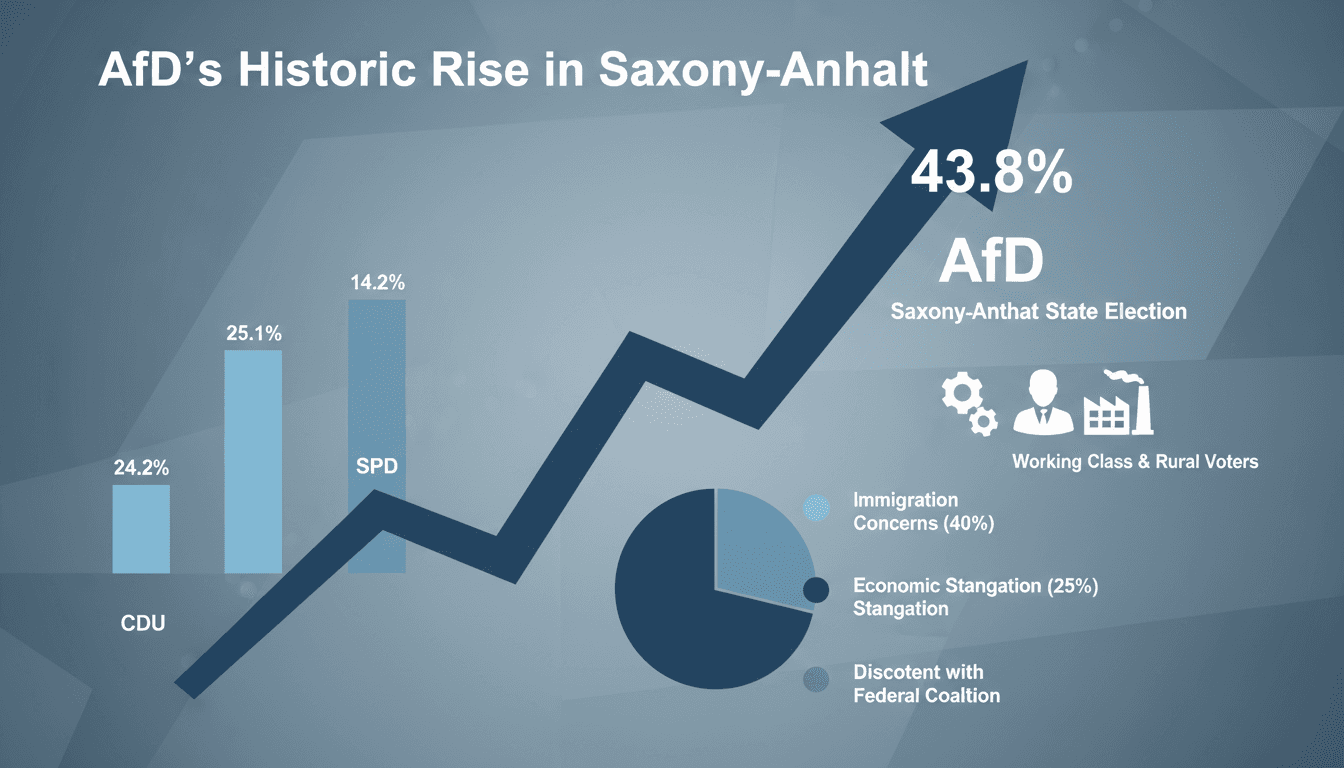
- The AfD secured 43.8% of the vote in the Saxony-Anhalt state election, marking a historic high for a far-right party in postwar Germany.
- The CDU, led by Chancellor Friedrich Merz, suffered significant losses, receiving only 17.2% of the vote and losing ground in a state with a history of economic challenges.
- Coalition negotiations are underway, with the AfD holding 39 of 83 seats but lacking an outright majority, raising questions about future governance.
The context you actually need
- The AfD's rise is rooted in economic discontent, particularly in eastern Germany, where residents feel left behind by federal policies.
- The party's platform includes strict immigration controls and pro-Russia sentiments, appealing to voters frustrated with mainstream parties.
- Previous elections showed a doubling of AfD support, driven by high abstention rates and a backlash against the federal coalition's handling of key issues.
What's really happening
The Alternative for Deutschland (AfD) has emerged as a significant political force in Germany, particularly in the eastern state of Saxony-Anhalt, where it achieved a historic 43.8% vote share in the recent state election. This result is more than double its performance in the 2021 elections, reflecting a growing discontent among voters with the current federal coalition led by Chancellor Friedrich Merz's Christian Democratic Union (CDU). The CDU's share of the vote plummeted to 17.2%, a stark indicator of the shifting political landscape.
The AfD's campaign focused on several key issues that resonate deeply with the electorate. These include strict immigration controls, calls for the deportation of irregular migrants, and a push for warmer ties with Russia. The party's messaging has found fertile ground in a region still grappling with the economic fallout from the reunification of Germany and the lingering effects of the 2015 migrant crisis. The economic stagnation under the Merz coalition has further fueled voter frustration, leading many to seek alternatives to the mainstream parties.
In the aftermath of the election, the AfD celebrated what they termed a "historic" mandate, while also courting support from individual CDU lawmakers to breach the so-called "firewall" that mainstream parties have erected against collaboration with the far-right. This has raised alarms among political observers, both domestically and internationally, about the potential normalization of far-right politics in Germany.
Chancellor Merz has vowed to maintain the firewall against the AfD, describing the election results as shaking his party "to its foundations." However, the CDU's heavy losses may force it to reconsider its strategies in the face of a resurgent AfD. The implications of this election extend beyond Saxony-Anhalt, as national polls indicate that the AfD is leading federally at 28%, suggesting that the party's influence could grow in upcoming elections across Germany.
As coalition negotiations begin, the political landscape remains fluid, with the potential for significant shifts in governance and policy direction. The AfD's rise could lead to changes in immigration policy, economic strategies, and Germany's foreign relations, particularly with Russia. This evolving situation will be closely monitored by both national and international stakeholders, as the outcomes could have far-reaching consequences.
Who feels it first (and how)
- Voters in Saxony-Anhalt: Residents are divided, with some expressing hope for change while others fear potential deportations and cultural shifts.
- Mainstream political parties: The CDU and other parties may need to adjust their platforms to regain lost support.
- International observers and businesses: Companies and governments in Europe will watch for shifts in policy that could affect trade and immigration.
What to watch next
- Coalition negotiations: The outcome will determine the immediate political landscape in Saxony-Anhalt and potentially influence national politics.
- Upcoming state elections: Results in other states could either bolster the AfD's momentum or signal a backlash against far-right politics.
- Public sentiment: Ongoing protests and national polling will reveal how the electorate responds to the AfD's rise and the CDU's strategies.
The AfD secured 43.8% of the vote in Saxony-Anhalt, marking a historic high for a far-right party.
Coalition negotiations will be contentious, with potential shifts in policy direction depending on the outcome.
The long-term impact of the AfD's rise on German and European politics remains to be seen.
Frequently Asked Questions
- Why it matters?
- The AfD's strong performance signals a potential shift in coalition dynamics that could influence economic and immigration policies across Europe.
- What happened (in 30 seconds)?
- The AfD secured 43.8% of the vote in the Saxony-Anhalt state election, marking a historic high for a far-right party in postwar Germany. The CDU, led by Chancellor Friedrich Merz, suffered significant losses, receiving only 17.2% of the vote and losing ground in a state with a history of economic challenges. Coalition negotiations are underway, with the AfD holding 39 of 83 seats but lacking an outright majority, raising questions about future governance.
- What's really happening?
- The Alternative for Deutschland (AfD) has emerged as a significant political force in Germany, particularly in the eastern state of Saxony-Anhalt, where it achieved a historic 43.8% vote share in the recent state election. This result is more than double its performance in the 2021 elections, reflecting a growing discontent among voters with the current federal coalition led by Chancellor Friedrich Merz's Christian Democratic Union (CDU). The CDU's share of the vote plummeted to 17.2%, a stark i
- Who feels it first (and how)?
- Voters in Saxony-Anhalt: Residents are divided, with some expressing hope for change while others fear potential deportations and cultural shifts. Mainstream political parties: The CDU and other parties may need to adjust their platforms to regain lost support. International observers and businesses: Companies and governments in Europe will watch for shifts in policy that could affect trade and immigration.
- What to watch next?
- Coalition negotiations: The outcome will determine the immediate political landscape in Saxony-Anhalt and potentially influence national politics. Upcoming state elections: Results in other states could either bolster the AfD's momentum or signal a backlash against far-right politics. Public sentiment: Ongoing protests and national polling will reveal how the electorate responds to the AfD's rise and the CDU's strategies.
International coverage from The Guardian's global desks.
"The Guardian is known for its progressive editorial stance and in-depth analysis."
— A47 Editor
‘I fear the price could be high’: Inside the German state where the far-right surged
The far-right party Alternative für Deutschland (AfD) achieved a historic victory in the Saxony-Anhalt state elections, securing approximately 44% of the vote, a significant milestone marking the party's potential first governorship since World War I...
European current affairs, EU politics, and regional developments.
"France 24 is viewed as a globally focused outlet with balanced coverage and a European perspective."
— A47 Editor
Only the beginning? German far right's breakthrough shakes Europe to its core
The far-right Alternative für Deutschland (AfD) party achieved a historic victory in the Saxony-Anhalt state election, securing approximately 44.4% of the vote, marking a significant breakthrough for the party since World War II. This result, while n...
RT is a Russian state-funded network covering global events from a Russian perspective.
"RT is widely criticized for promoting pro-Kremlin narratives and is considered by many to be a state propaganda outlet."
— A47 Editor
Berlin built a wall around the AfD. Voters just smashed it
The far-right Alternative für Deutschland (AfD) party has achieved a significant victory in the Saxony-Anhalt state election, securing approximately 44.4% of the vote, which marks a historic moment for the party as it seeks its first governorship sin...
24/7 international news from a French perspective in multiple languages.
"France 24 is viewed as a globally focused outlet with balanced coverage and a European perspective."
— A47 Editor
How far-right AfD breakthrough may ‘cause absolute chaos’ in Germany
In a historic breakthrough, Germany's far-right Alternative for Germany (AfD) party has emerged as a significant force in the Saxony-Anhalt regional elections, securing approximately 44.4% of the vote. This marks the first time since World War II tha...
24/7 international news from a French perspective in multiple languages.
"France 24 is viewed as a globally focused outlet with balanced coverage and a European perspective."
— A47 Editor
‘Idiots and traitors’: World reacts to AfD’s election victory
The Alternative for Germany (AfD) party has achieved a historic victory in the Saxony-Anhalt state elections, securing approximately 44.4% of the vote, marking the first time a far-right party has reached this level of success in Germany since World ...
International coverage of politics, culture, and current affairs.
"BBC News is widely regarded as a reputable international news organization, known for its impartial tone and public service mandate."
— A47 Editor
How significant are AfD's historic gains for Germany and the rest of Europe?
The far-right Alternative for Germany (AfD) party has achieved a historic victory in the Saxony-Anhalt state election, securing approximately 44.4% of the vote, which positions it to potentially lead the state government for the first time since Worl...