
UN Warns Israeli Rubble Clearance in Gaza May Erase Evidence of Atrocity Crimes
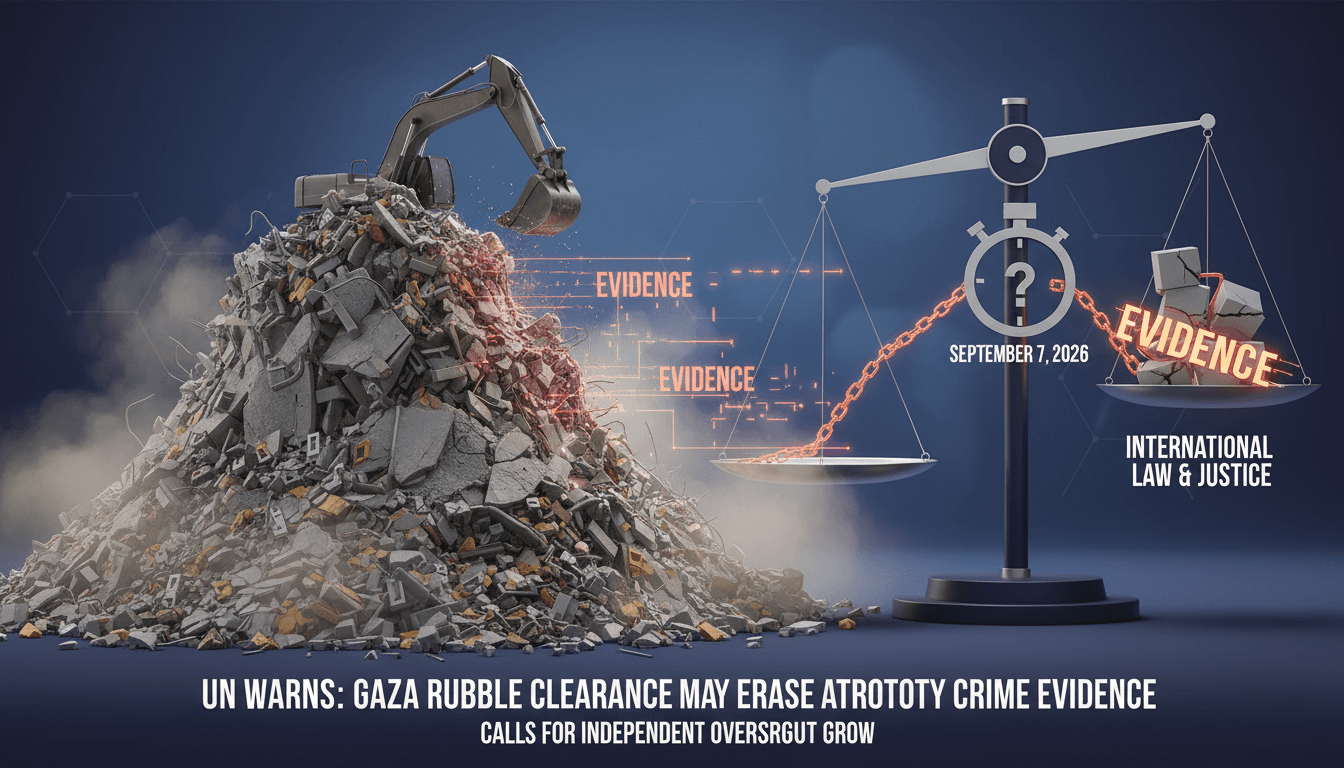
Here's what it means for you.
The ongoing operations in Gaza could have far-reaching implications for international law and human rights accountability.
Why it matters
The destruction of evidence in conflict zones can hinder justice for victims and affect global perceptions of accountability.
What happened (in 30 seconds)
- On September 7, 2026, UN Special Rapporteur Francesca Albanese warned that rubble removal in Gaza risks erasing evidence of international crimes.
- Approximately 68 million tons of rubble, containing human remains and forensic materials, are currently being cleared by Israeli military and contractors.
- Albanese called for Palestinian-led recovery efforts to ensure dignified treatment of remains and independent documentation of evidence.
The context you actually need
- The Israel-Hamas conflict escalated significantly after October 7, 2023, leading to widespread destruction in Gaza.
- The International Court of Justice issued orders in January 2024 to preserve evidence related to allegations of genocide, which are now at risk.
- Palestinian authorities estimate that over 10,000 individuals remain unrecovered under the debris, complicating recovery efforts.
What's really happening
The rubble removal operations in Gaza are not merely a logistical challenge; they represent a complex interplay of legal, ethical, and humanitarian issues. Francesca Albanese's warning highlights the potential for these operations to erase crucial evidence of atrocities committed during the conflict. The UN expert characterized the rubble as a "crime scene, a graveyard, and the material record" of a two-year bombing campaign, emphasizing the need for accountability.
The ongoing clearance activities, which involve the removal, crushing, and relocation of debris, are being conducted under Israeli military oversight. This raises significant concerns about the preservation of evidence, as the International Court of Justice had previously mandated that such evidence must be protected. The involvement of Israeli companies in these operations further complicates the situation, as it raises questions about potential criminal liability for those participating in the destruction of evidence.
The Palestinian authorities have expressed alarm over the situation, estimating that a substantial number of individuals remain unrecovered beneath the rubble. The lack of independent oversight in the clearance operations means that the systematic recovery of remains and documentation of evidence is at risk. Albanese's call for Palestinian-led planning underscores the need for a dignified approach to recovery, which is currently absent from the ongoing operations.
The implications of these actions extend beyond Gaza. They could set a precedent for how evidence is treated in conflict zones globally, affecting future accountability for war crimes and human rights violations. The absence of a formal international response to these warnings raises questions about the global community's commitment to upholding international law and protecting human rights.
Who feels it first (and how)
- Human rights organizations: Increased pressure to document and advocate for accountability in conflict zones.
- Palestinian families: Directly affected by the loss of loved ones and the inability to recover remains.
- International legal bodies: Potential challenges in prosecuting war crimes due to the loss of evidence.
What to watch next
- International responses: Monitor for any formal reactions from global human rights organizations or governments regarding the rubble removal operations.
- Evidence recovery efforts: Watch for developments in Palestinian-led initiatives aimed at documenting evidence and recovering remains.
- Legal ramifications: Keep an eye on potential legal actions against companies or states involved in the rubble removal that may face scrutiny under international law.
The rubble removal operations are ongoing, with no reported halt or formal international response.
Increased advocacy from human rights organizations and potential legal challenges regarding evidence preservation.
The long-term impact on international accountability for war crimes and how this situation may influence future conflicts.
Frequently Asked Questions
- Why it matters?
- The destruction of evidence in conflict zones can hinder justice for victims and affect global perceptions of accountability.
- What happened (in 30 seconds)?
- On September 7, 2026, UN Special Rapporteur Francesca Albanese warned that rubble removal in Gaza risks erasing evidence of international crimes. Approximately 68 million tons of rubble, containing human remains and forensic materials, are currently being cleared by Israeli military and contractors. Albanese called for Palestinian-led recovery efforts to ensure dignified treatment of remains and independent documentation of evidence.
- What's really happening?
- The rubble removal operations in Gaza are not merely a logistical challenge; they represent a complex interplay of legal, ethical, and humanitarian issues. Francesca Albanese's warning highlights the potential for these operations to erase crucial evidence of atrocities committed during the conflict. The UN expert characterized the rubble as a "crime scene, a graveyard, and the material record" of a two-year bombing campaign, emphasizing the need for accountability. The ongoing clearance activi
- Who feels it first (and how)?
- Human rights organizations: Increased pressure to document and advocate for accountability in conflict zones. Palestinian families: Directly affected by the loss of loved ones and the inability to recover remains. International legal bodies: Potential challenges in prosecuting war crimes due to the loss of evidence.
- What to watch next?
- International responses: Monitor for any formal reactions from global human rights organizations or governments regarding the rubble removal operations. Evidence recovery efforts: Watch for developments in Palestinian-led initiatives aimed at documenting evidence and recovering remains. Legal ramifications: Keep an eye on potential legal actions against companies or states involved in the rubble removal that may face scrutiny under international law.
Arabic-language coverage of international news and geopolitics.
"RT Arabic is a Russian state-funded outlet often criticized for promoting Kremlin-aligned narratives."
— A47 Editor
مقررة أممية تحذر: إزالة أنقاض غزة قد تطمس أدلة "جرائم وحشية" وتمحو آثار الإبادة
Francesca Albanese, the UN Special Rapporteur on the situation of human rights in the Palestinian territories, has warned that debris removal in Gaza could erase evidence of 'atrocious crimes' and potentially obscure traces of genocide. This statemen...
Regional coverage and analysis focused on politics, diplomacy, and business across the Middle East.
"Al-Monitor is known for analytical reporting on Middle East politics and policy developments."
— A47 Editor
Israeli clearance of Gaza rubble could destroy 'evidence', says UN expert
A U.N. expert has warned that Israel's ongoing clearance of rubble in Gaza could destroy crucial evidence of alleged atrocity crimes and hinder the recovery of human remains. This operation follows Israel's military actions in Gaza, which have result...
Regional coverage and analysis focused on politics, diplomacy, and business across the Middle East.
"Al-Monitor is known for analytical reporting on Middle East politics and policy developments."
— A47 Editor
Israeli rubble-clearing in Gaza could erase 'atrocity crimes' evidence: UN expert
A UN expert has raised alarms regarding Israel's extensive rubble-clearing operations in Gaza, warning that such actions could erase crucial evidence of alleged atrocity crimes and hinder the recovery of human remains. Francesca Albanese, the UN spec...
European coverage of Middle East politics and security issues.
"France 24 offers international reporting with a European editorial perspective."
— A47 Editor
UN rapporteur says Israeli rubble-clearing in Gaza could erase 'atrocity crimes' evidence
UN Special Rapporteur Francesca Albanese has raised concerns regarding the extensive rubble-clearing operations in Gaza, stating that such actions could potentially erase crucial evidence related to alleged international crimes. This warning comes am...
24/7 international news from a French perspective in multiple languages.
"France 24 is viewed as a globally focused outlet with balanced coverage and a European perspective."
— A47 Editor
UN rapporteur says Israeli rubble-clearing in Gaza could erase 'atrocity crimes' evidence
UN Special Rapporteur Francesca Albanese has raised concerns regarding the extensive rubble-clearing operations in Gaza, stating that such actions could potentially erase crucial evidence related to alleged international crimes. This warning comes am...