
Australia Proposes Digital Duty of Care Legislation for Social Media Algorithm Opt-Out
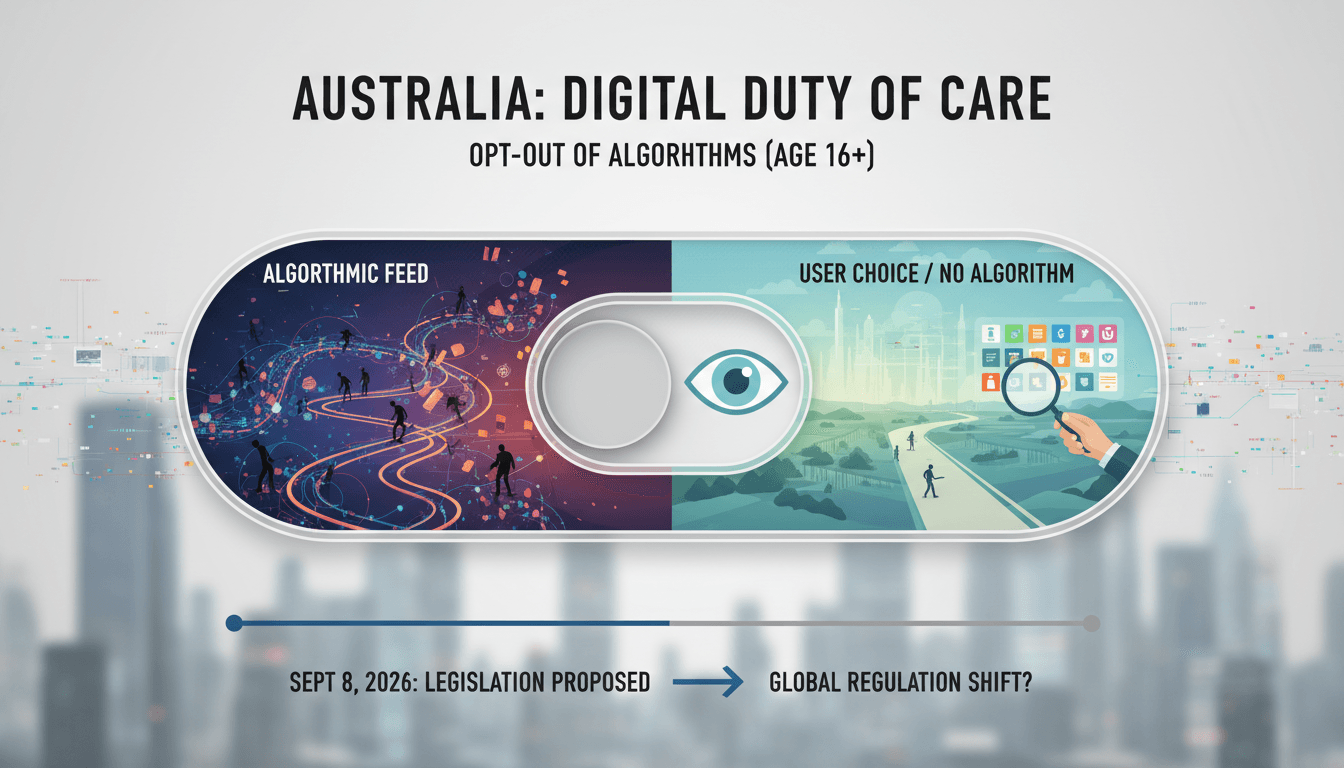
Here's what it means for you.
You may soon have the power to choose how social media platforms curate your content.
Why it matters
This legislation could reshape user engagement and accountability in the digital landscape.
What happened (in 30 seconds)
- On September 8, 2026, Australia proposed the Digital Duty of Care legislation mandating social media platforms to offer users over age 16 the option to opt out of algorithmic feeds.
- Prime Minister Anthony Albanese announced the bill in Canberra, aiming to empower users and protect children from harmful content.
- Non-compliance could result in fines up to A$109.2 million, holding platforms accountable for their content curation practices.
The context you actually need
- Australia is leading the way with this legislation, following its December 2025 ban on social media accounts for users under 16.
- Concerns about algorithmic amplification of harmful content have prompted global discussions on digital safety and platform accountability.
- The proposed legislation aligns with regulatory trends in the European Union, indicating a potential shift in global digital governance.
What's really happening
The Australian government's proposed Digital Duty of Care legislation is a significant step towards enhancing user autonomy in the digital space. By mandating that social media platforms provide users over the age of 16 with the option to opt out of algorithmically curated feeds, the legislation aims to address growing concerns about the negative impacts of algorithmic amplification. This includes the promotion of harmful content such as eating disorders, misogyny, and other distressing material that can adversely affect mental health.
The legislation builds on previous measures, notably the world-first ban on social media accounts for children under 16, which was implemented in December 2025. This earlier initiative highlighted the government's commitment to protecting younger users from the dangers of unregulated online content. The Digital Duty of Care bill extends these protections to all users, emphasizing the need for platforms to take responsibility for the content they promote.
Under the proposed legislation, social media companies will be required to notify both new and existing users about their options regarding algorithmic feeds. Users will have a genuine choice between personalized content and a chronological feed of accounts they follow. This shift is designed to empower users, allowing them to take control of their online experiences and mitigate the risks associated with algorithm-driven content.
However, the legislation is not without its critics. Some opposition figures have raised concerns about potential censorship and the implications of restricting user choice. Advocacy groups have welcomed the move but have called for stronger opt-in defaults and better content moderation practices. Industry voices have also pointed out the challenges of implementing such changes, warning that platforms may find ways to frustrate user choices or complicate the opt-out process.
The proposed penalties for non-compliance are substantial, with fines reaching up to A$109.2 million. This financial incentive aims to ensure that platforms prioritize user safety and adhere to the new regulations. The Australian government's approach reflects a broader trend towards increased accountability for tech companies, particularly in light of ongoing global discussions about digital safety and user rights.
As the legislation moves forward, it is expected to influence platform regulation not only in Australia but also globally, as other countries may look to adopt similar measures to enhance user protection and accountability in the digital space.
Who feels it first (and how)
- Social Media Users: Individuals over 16 will have more control over their content feeds.
- Parents and Guardians: Increased protections for children under 16 may ease concerns about online safety.
- Tech Companies: Social media platforms will face new compliance requirements and potential penalties.
What to watch next
- Legislative Progress: Monitor the advancement of the Digital Duty of Care bill in the Australian Parliament, as its passage could set a precedent for other nations.
- Industry Reactions: Watch how social media companies adapt their algorithms and user interfaces in response to the new regulations.
- Global Regulatory Trends: Keep an eye on similar legislative efforts in other countries, particularly in the EU and North America, as they may follow Australia's lead.
The proposed legislation mandates opt-out choices for algorithmic feeds for users over 16.
The legislation will advance in October 2026 and could influence global digital governance.
The specific implementation challenges and user experiences with the opt-out process remain to be seen.
Frequently Asked Questions
- Why it matters?
- This legislation could reshape user engagement and accountability in the digital landscape.
- What happened (in 30 seconds)?
- On September 8, 2026, Australia proposed the Digital Duty of Care legislation mandating social media platforms to offer users over age 16 the option to opt out of algorithmic feeds. Prime Minister Anthony Albanese announced the bill in Canberra, aiming to empower users and protect children from harmful content. Non-compliance could result in fines up to A$109.2 million, holding platforms accountable for their content curation practices.
- What's really happening?
- The Australian government's proposed Digital Duty of Care legislation is a significant step towards enhancing user autonomy in the digital space. By mandating that social media platforms provide users over the age of 16 with the option to opt out of algorithmically curated feeds, the legislation aims to address growing concerns about the negative impacts of algorithmic amplification. This includes the promotion of harmful content such as eating disorders, misogyny, and other distressing material
- Who feels it first (and how)?
- Social Media Users: Individuals over 16 will have more control over their content feeds. Parents and Guardians: Increased protections for children under 16 may ease concerns about online safety. Tech Companies: Social media platforms will face new compliance requirements and potential penalties.
- What to watch next?
- Legislative Progress: Monitor the advancement of the Digital Duty of Care bill in the Australian Parliament, as its passage could set a precedent for other nations. Industry Reactions: Watch how social media companies adapt their algorithms and user interfaces in response to the new regulations. Global Regulatory Trends: Keep an eye on similar legislative efforts in other countries, particularly in the EU and North America, as they may follow Australia's lead.
Science discoveries, research, and analysis.
"NPR is a nonprofit media organization offering thoughtful, in-depth journalism and storytelling, often with a liberal or progressive slant."
— A47 Editor
Australian social media users to be offered choice to opt out of algorithms
The Australian government announced that social media platforms will be required to notify both new and existing users about their option to opt out of algorithm-driven feeds. This initiative aims to give users more control over the content they see ...
International stories from NPR’s global desk.
"NPR is an American public media organization known for thoughtful reporting and a slightly left-leaning editorial tone."
— A47 Editor
Australian social media users to be offered choice to opt out of algorithms
The Australian government announced that social media platforms will be required to notify both new and existing users about their option to opt out of algorithm-driven feeds. This initiative aims to give users more control over the content they see ...
Global coverage of politics, crises, and international affairs.
"HuffPost provides progressive-oriented reporting on international developments, often focusing on humanitarian and social justice issues."
— A47 Editor
1 Country Just Proposed A Gigantic Change To How Social Media Feeds Work
Australia has proposed new legislation that would allow social media users to opt out of algorithm-driven feeds, marking a significant shift in how content is curated on these platforms. This move aims to enhance user control and address growing conc...
International coverage from The Guardian's global desks.
"The Guardian is known for its progressive editorial stance and in-depth analysis."
— A47 Editor
Australia to force social media platforms to allow users to opt out of algorithms
Australia has introduced draft legislation that allows social media users to opt out of algorithm-driven content, aiming to enhance online safety and reduce exposure to harmful material, particularly for children. Users aged 16 and older will have th...
Social/economic commentary and analysis relevant to business and markets.
"WSJ blends data-driven economic insight with commentary on policy and society."
— A47 Editor
Australian Government to Allow Users to Opt out of Social Media Algorithms
The Australian government is advancing towards implementing stricter regulations for technology giants by proposing new requirements that would enable social media users to opt out of algorithms that influence their social media feeds. This initiativ...
International coverage of politics, culture, and current affairs.
"BBC News is widely regarded as a reputable international news organization, known for its impartial tone and public service mandate."
— A47 Editor
'Good to have choice': Australians on opting out of social media algorithms
Australians in Sydney have expressed their views on the government's initiative to mandate social media companies to provide users with the option to easily opt in or out of personalized algorithms. This move aims to enhance user control over their o...
International news coverage curated for readers in the UAE and Gulf region.
"Emirates 24|7 world coverage presents global developments through a UAE-facing and Gulf-relevant editorial lens."
— A47 Editor
My feed, My way: Australia targets social media algorithms with new user-choice rules
Australia has proposed new regulations that allow social media users to choose the content they see on their feeds, marking a significant step in the government's efforts to enhance online safety, particularly following its pioneering ban on social m...
Corporate news, economic trends, and markets with UK and global scope.
"BBC News is widely regarded as reputable and impartial, with a public service mandate."
— A47 Editor
Australians will be able to switch off social media algorithms under planned legislation
The Australian government is planning legislation that will allow users to disable social media algorithms on platforms like Meta, Google, and TikTok, with substantial penalties for non-compliance. This move aims to enhance user control over their on...