
New York City Releases 170,000 Pages of Air Quality Documents Post-9/11
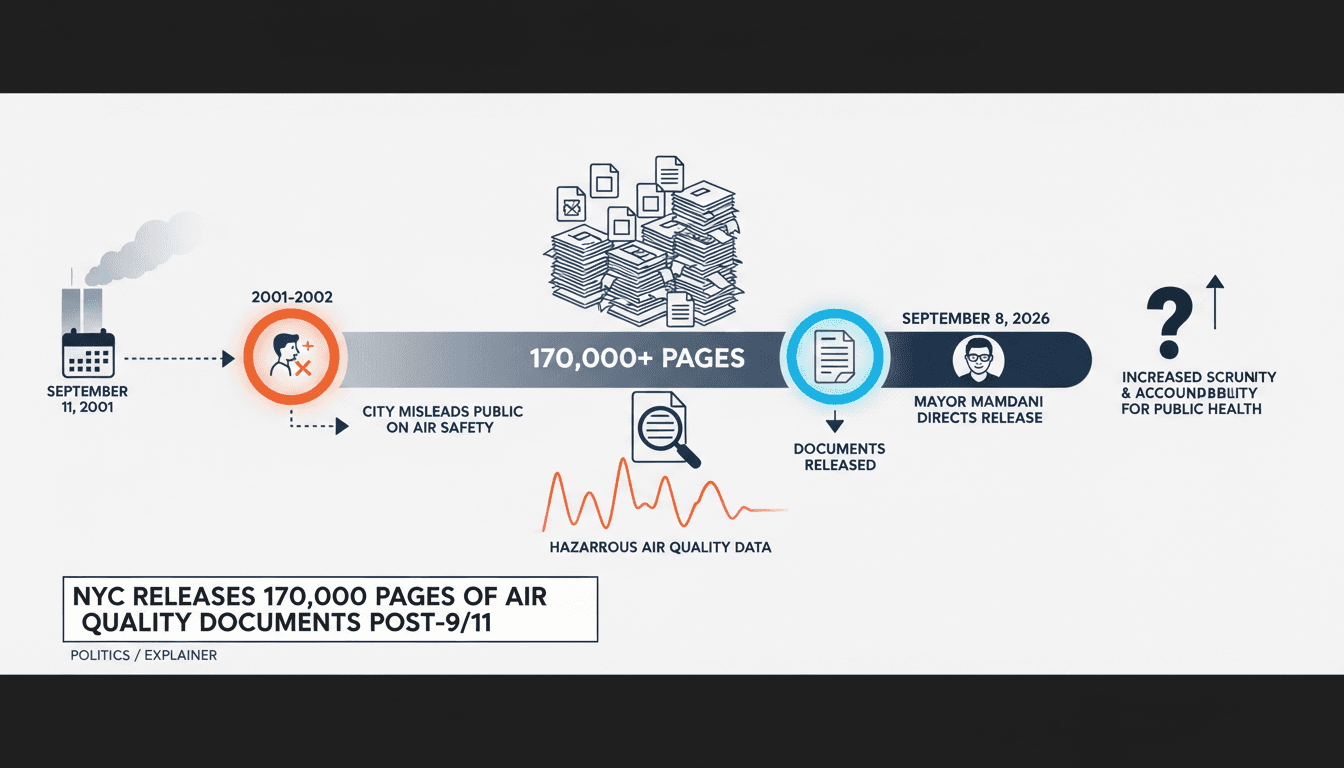
Here's what it means for you.
If you live or work in urban areas, this release could reshape how air quality is monitored and communicated in your city.
Why it matters
This disclosure raises critical questions about public health transparency and accountability in urban environments.
What happened (in 30 seconds)
- On September 8, 2026, NYC Mayor Zohran Mamdani released over 170,000 pages of documents detailing air quality monitoring post-9/11.
- The documents reveal that city officials knew about elevated carcinogen levels but misled the public about air safety.
- This release follows a settlement with advocacy group 9/11 Health Watch, highlighting long-standing concerns over health risks in Lower Manhattan.
The context you actually need
- Post-9/11 assurances from officials, including EPA Administrator Christine Todd Whitman, claimed air quality was safe, facilitating a quick return to the area.
- Internal documents show that city officials had evidence of hazardous air quality shortly after the attacks but chose to withhold this information.
- More than 9,400 individuals have died from illnesses linked to exposure to the World Trade Center site, according to federal monitoring programs.
What's really happening
The release of these documents marks a significant shift in how public health information is managed and communicated by city officials. For years, the narrative surrounding the air quality in Lower Manhattan post-9/11 was dominated by assurances of safety, despite internal knowledge of the dangers posed by toxic dust and debris. The documents reveal that city officials, under previous administrations, were aware of elevated levels of carcinogens such as asbestos and benzene but chose to prioritize economic recovery over public health transparency.
This decision-making process reflects a broader systemic issue where economic incentives often overshadow health considerations. The pressure to restore normalcy in the wake of a national tragedy led to a culture of misinformation, where the urgency to reopen businesses and attract residents took precedence over the well-being of individuals exposed to hazardous conditions. The release of these documents is not just a historical reckoning; it serves as a wake-up call for current and future administrations about the importance of transparency in public health matters.
The implications of this disclosure extend beyond New York City. It raises critical questions about how air quality is monitored and reported in urban areas worldwide. As cities grapple with environmental challenges, the need for accurate and timely information becomes paramount. This incident may prompt other cities to reevaluate their air quality monitoring practices and the transparency of their findings, especially in the wake of disasters or significant environmental changes.
Moreover, advocacy groups are likely to leverage this information to push for stronger regulations and oversight regarding air quality and public health disclosures. The long-term health effects of exposure to toxic substances are well-documented, and this release could catalyze a broader movement for accountability and reform in how cities handle environmental health risks.
Who feels it first (and how)
- Residents of Lower Manhattan: Directly affected by the toxic air quality and potential health risks.
- First responders and recovery workers: Exposed to hazardous conditions during cleanup efforts.
- Public health advocates: Engaged in pushing for transparency and accountability in health disclosures.
- Urban planners and policymakers: Need to reassess air quality regulations and public health strategies.
What to watch next
- Increased advocacy efforts: Expect advocacy groups to push for stronger regulations and oversight in air quality monitoring.
- Public health policy changes: Watch for potential reforms in how cities communicate air quality data to residents.
- Litigation trends: Monitor any legal actions taken by affected individuals or groups against city officials for withholding information.
The release of documents has confirmed that city officials were aware of hazardous air quality levels post-9/11.
There will be increased scrutiny of air quality monitoring practices in urban areas across the U.S.
The long-term impact on public health policy and urban planning remains to be seen.
Frequently Asked Questions
- Why it matters?
- This disclosure raises critical questions about public health transparency and accountability in urban environments.
- What happened (in 30 seconds)?
- On September 8, 2026, NYC Mayor Zohran Mamdani released over 170,000 pages of documents detailing air quality monitoring post-9/11. The documents reveal that city officials knew about elevated carcinogen levels but misled the public about air safety. This release follows a settlement with advocacy group 9/11 Health Watch, highlighting long-standing concerns over health risks in Lower Manhattan.
- What's really happening?
- The release of these documents marks a significant shift in how public health information is managed and communicated by city officials. For years, the narrative surrounding the air quality in Lower Manhattan post-9/11 was dominated by assurances of safety, despite internal knowledge of the dangers posed by toxic dust and debris. The documents reveal that city officials, under previous administrations, were aware of elevated levels of carcinogens such as asbestos and benzene but chose to priorit
- Who feels it first (and how)?
- Residents of Lower Manhattan: Directly affected by the toxic air quality and potential health risks. First responders and recovery workers: Exposed to hazardous conditions during cleanup efforts. Public health advocates: Engaged in pushing for transparency and accountability in health disclosures. Urban planners and policymakers: Need to reassess air quality regulations and public health strategies.
- What to watch next?
- Increased advocacy efforts: Expect advocacy groups to push for stronger regulations and oversight in air quality monitoring. Public health policy changes: Watch for potential reforms in how cities communicate air quality data to residents. Litigation trends: Monitor any legal actions taken by affected individuals or groups against city officials for withholding information.
24/7 international news from a French perspective in multiple languages.
"France 24 is viewed as a globally focused outlet with balanced coverage and a European perspective."
— A47 Editor
NY failed to disclose what it knew on 'toxic air' after 9/11
New York Mayor Zohran Mamdani announced the release of tens of thousands of documents revealing that the city did not fully disclose its knowledge about air toxicity following the September 11 attacks. This disclosure comes as the nation prepares to ...
Global news coverage with extensive reporting on Middle Eastern conflicts and geopolitics.
"Al Jazeera is a Qatar-based broadcaster known for wide regional coverage and alternative perspectives."
— A47 Editor
Mamdani releases records on toxic air in New York after 9/11 attacks
New York City Mayor Zohran Mamdani has released documents revealing that residents were misled about the air quality following the 9/11 attacks, with toxic substances lingering for months despite official assurances of safety. This disclosure has rai...
Comprehensive coverage of Middle Eastern and global issues.
"Al Jazeera is a prominent voice from the Global South, especially the Middle East, with an emphasis on underreported stories."
— A47 Editor
Mamdani releases records on toxic air in New York after 9/11 attacks
New York City Mayor Zohran Mamdani has released documents revealing that residents were misled about the air quality following the 9/11 attacks, with toxic substances lingering for months despite official assurances of safety. This disclosure has rai...
International coverage of politics, culture, and current affairs.
"BBC News is widely regarded as a reputable international news organization, known for its impartial tone and public service mandate."
— A47 Editor
New Yorkers were 'lied' to about toxic air after 9/11 attacks, says Mamdani
Newly released documents reveal that New Yorkers were misled about the safety of the air quality following the 9/11 attacks, with toxins persisting for months despite official assurances. Mamdani, a key figure in this revelation, emphasizes the long-...