
Singapore announces significant ministerial salary increases effective October 2026
Here's what it means for you.
If you’re a professional in Singapore, this salary adjustment could influence the competitive landscape for leadership roles.
Why it matters
This adjustment reflects Singapore's strategy to attract and retain high-caliber political leaders amid rising public scrutiny.
What happened (in 30 seconds)
- Singapore announced a ministerial salary adjustment on September 8, 2026, raising the benchmark pay for political office holders.
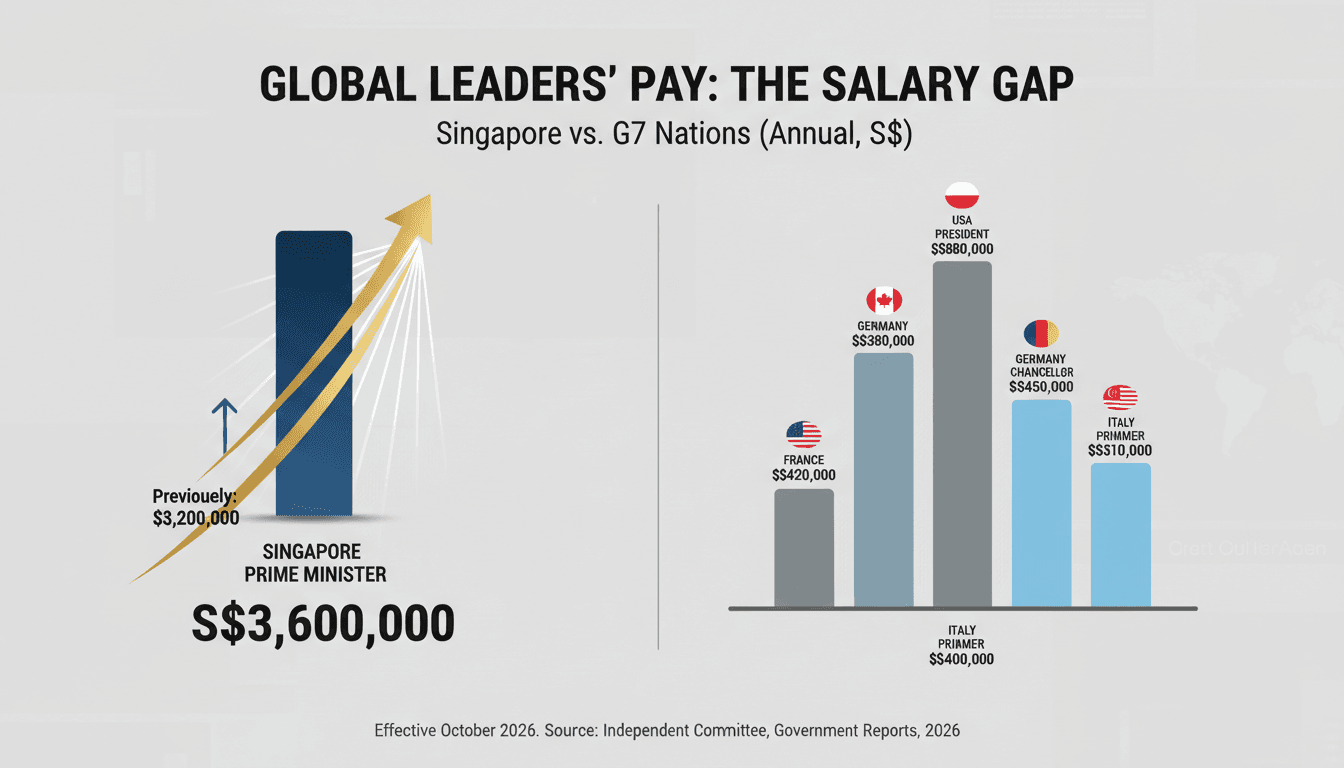
- The Prime Minister's salary will increase from S$2.2 million to S$3.6 million annually, effective October 15, 2026.
- Existing ministers will receive a one-off adjustment of up to 9%, with Prime Minister Wong pledging to donate his increment to charity.
The context you actually need
- Last adjustment occurred in 2011-2012, when salaries were reduced by 36% due to public concerns over compensation levels.
- An independent review committee was formed in late 2025 to reassess ministerial pay after a deferral caused by geopolitical uncertainties.
- Singapore's governance model emphasizes performance-linked compensation, aiming to maintain a low-corruption environment and attract top talent.
What's really happening
On September 8, 2026, Prime Minister Lawrence Wong addressed Parliament to announce a significant salary adjustment for Singapore's political office holders. The independent review committee's recommendations led to the MR4 ministerial reference salary being raised from S$1.1 million to S$1.8 million annually, with the Prime Minister's salary pegged at twice that amount, now set at S$3.6 million. This marks the first major salary update in 15 years, a period during which public sentiment regarding political compensation has evolved significantly.
The government justifies this increase as essential for attracting and retaining high-quality leaders in a competitive global landscape. Singapore's political environment is unique, characterized by a dominant-party system where performance-linked pay is a long-standing policy. The adjustment aims to ensure that the salaries of political leaders remain competitive compared to their counterparts in other developed nations, particularly in the G7, where Singaporean salaries have historically exceeded those of leaders in the US and UK.
Existing ministers will not receive the full increase immediately; instead, they will benefit from a one-off adjustment of up to 9% starting October 15, 2026. This phased approach is designed to align salary increases with performance metrics and prior adjustments, rather than granting immediate full benchmark attainment. Wong's commitment to donate his S$1.4 million annual increment to charitable causes for the next five years adds a layer of public goodwill to the announcement, potentially softening criticism regarding the salary hikes.
The adjustment comes at a politically sensitive time, as public sentiment towards government salaries has been mixed. While the government maintains that competitive pay is crucial for governance quality, the disparity between ministerial salaries and average citizen incomes raises questions about equity and public trust. The last salary adjustment in 2011-2012 was a direct response to public outcry over perceived excesses in political compensation, leading to a 36% reduction. This new increase, therefore, must navigate the delicate balance between attracting talent and addressing public concerns about governance and accountability.
Who feels it first (and how)
- Current political office holders: They will see immediate financial benefits from the one-off salary adjustments.
- Future political candidates: The increased salary benchmarks may attract more qualified individuals to consider running for office.
- Singaporean citizens: Public perception of government salaries may shift, impacting trust in political leadership.
What to watch next
- Public sentiment: Monitor how citizens react to the salary adjustments and whether it affects trust in government.
- Talent recruitment: Watch for changes in the caliber of candidates entering politics, as higher salaries may attract more experienced professionals.
- Performance metrics: Keep an eye on how the government links future salary adjustments to performance outcomes, which could set precedents for accountability.
The new benchmark salary for the Prime Minister is S$3.6 million.
Increased competition for political roles as higher salaries attract more candidates.
The long-term public reaction to these salary increases and their impact on governance quality.
Frequently Asked Questions
- Why it matters?
- This adjustment reflects Singapore's strategy to attract and retain high-caliber political leaders amid rising public scrutiny.
- What happened (in 30 seconds)?
- Singapore announced a ministerial salary adjustment on September 8, 2026, raising the benchmark pay for political office holders. The Prime Minister's salary will increase from S$2.2 million to S$3.6 million annually, effective October 15, 2026. Existing ministers will receive a one-off adjustment of up to 9%, with Prime Minister Wong pledging to donate his increment to charity.
- What's really happening?
- On September 8, 2026, Prime Minister Lawrence Wong addressed Parliament to announce a significant salary adjustment for Singapore's political office holders. The independent review committee's recommendations led to the MR4 ministerial reference salary being raised from S$1.1 million to S$1.8 million annually, with the Prime Minister's salary pegged at twice that amount, now set at S$3.6 million. This marks the first major salary update in 15 years, a period during which public sentiment regardi
- Who feels it first (and how)?
- Current political office holders: They will see immediate financial benefits from the one-off salary adjustments. Future political candidates: The increased salary benchmarks may attract more qualified individuals to consider running for office. Singaporean citizens: Public perception of government salaries may shift, impacting trust in political leadership.
- What to watch next?
- Public sentiment: Monitor how citizens react to the salary adjustments and whether it affects trust in government. Talent recruitment: Watch for changes in the caliber of candidates entering politics, as higher salaries may attract more experienced professionals. Performance metrics: Keep an eye on how the government links future salary adjustments to performance outcomes, which could set precedents for accountability.
International coverage from The Guardian's global desks.
"The Guardian is known for its progressive editorial stance and in-depth analysis."
— A47 Editor
Singapore boosts PM’s salary by $1m amid major pay rise for ministers
Singapore's Prime Minister has received a $1 million salary increase as part of a significant pay rise for government ministers, which adds over 60% to their already high salaries, recognized as the highest in the world. This decision reflects the go...
Political developments, policy debates, elections, and government affairs in the UK.
"BBC News is widely regarded as a reputable international news organization, known for its impartial tone and public service mandate."
— A47 Editor
Highest paid world leader to get $1m salary increase
Singapore's government has announced an increase in the annual salaries of its ministers and other office holders, including a $1 million raise for its prime minister, who is recognized as the highest paid political leader globally. This decision ref...
Global political, business, and cultural coverage from WSJ international desks.
"The Wall Street Journal offers extensive international reporting with a reputation for financial insight and a center-right editorial stance."
— A47 Editor
One of the World’s Highest-Paid Political Leaders Just Got a Big Raise
Singapore's government has announced a significant salary increase for its ministers, including a $1 million raise for the Prime Minister, who is recognized as the highest-paid political leader in the world. This adjustment reflects the ongoing trend...