
US Secretary of State Marco Rubio Advocates for Economic and Security Ties with Latin America
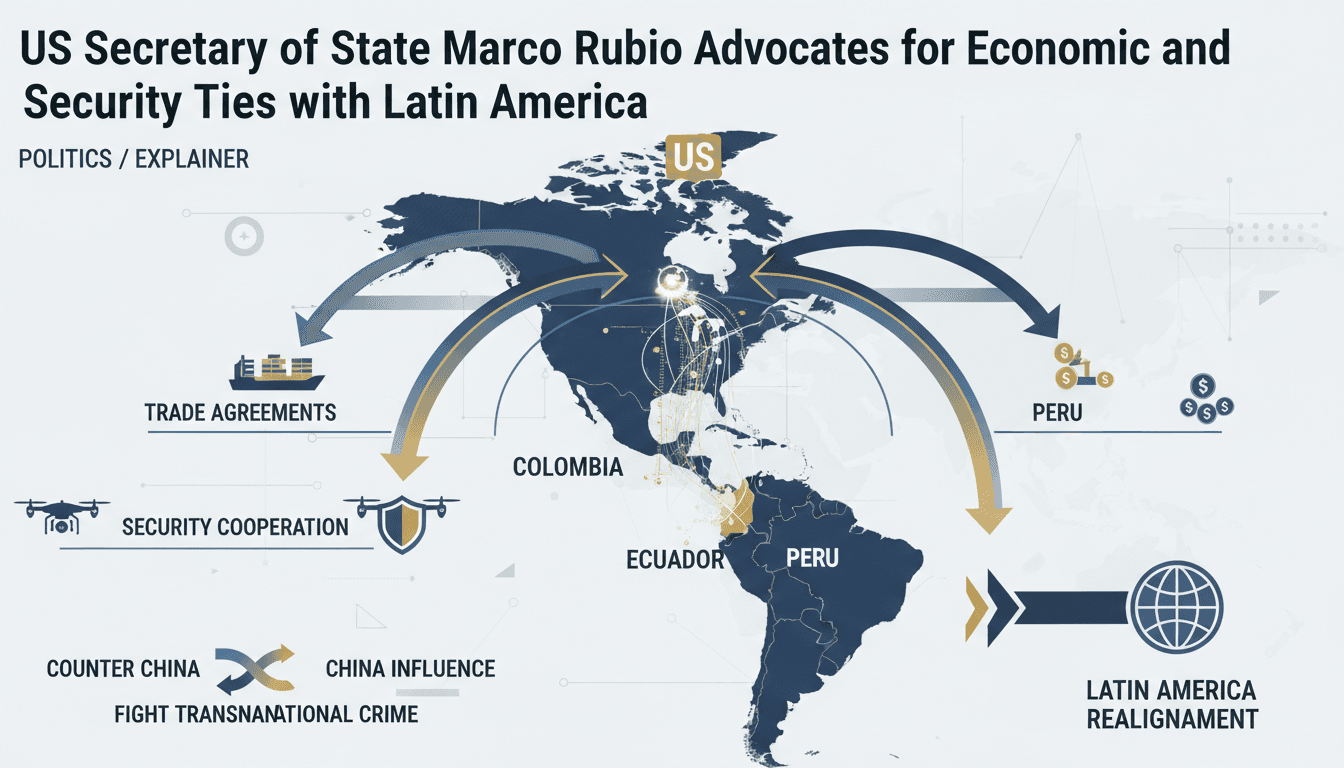
Here's what it means for you.
If you’re in the energy or security sectors, the US's renewed focus on Latin America could reshape investment opportunities and market dynamics.
Why it matters
This initiative signals a strategic pivot in US foreign policy, emphasizing economic and security cooperation in a region increasingly influenced by right-wing governments.
What happened (in 30 seconds)
- Marco Rubio announced expanded economic and security cooperation with Colombia, Ecuador, and Peru during a diplomatic visit on September 8-9, 2026.
- Agreements were signed focusing on critical minerals and civil nuclear cooperation, aiming to combat transnational crime and drug trafficking.
- The Trump administration seeks to counter Chinese influence in the region following recent right-wing electoral victories.
The context you actually need
- Right-wing victories in Latin America have shifted the political landscape, aligning more closely with US interests and policies.
- China's trade dominance in the region, particularly through a 2009 free-trade agreement with Peru, has prompted the US to reassert its influence.
- Colombia's recent political changes, including the inauguration of President Abelardo de la Espriella, have created a favorable environment for US engagement.
What's really happening
The recent diplomatic outreach by US Secretary of State Marco Rubio marks a significant shift in the United States' approach to Latin America, particularly in light of the recent electoral victories of right-wing governments in Colombia, Ecuador, and Peru. This initiative is not merely about fostering trade; it is a calculated strategy to enhance US influence in a region where China has made substantial inroads over the past decade.
Rubio's visit to Barranquilla included the signing of agreements focused on critical minerals and civil nuclear cooperation, which are essential for both energy security and technological advancement. The emphasis on these sectors highlights the US's intent to secure resources that are increasingly vital in the global economy, especially as the world transitions to greener technologies. The agreements also aim to bolster military cooperation, with Colombia seeking advanced military technology to combat drug trafficking and transnational crime.
The backdrop of this initiative is the Trump administration's broader strategy, often referred to as the "Donroe Doctrine," which seeks to reassert US control and influence in the Western Hemisphere. This approach is particularly relevant given the geopolitical tensions with China, which has established a strong economic presence in Latin America through investments and trade agreements. The US's renewed focus on Latin America is a direct response to these challenges, aiming to create a counterbalance to Chinese influence.
Moreover, the timing of Rubio's visit coincides with Colombia's request for the suspension of US tariffs imposed in July, indicating a willingness to negotiate terms that could benefit both nations economically. The US's emergency aid of $27 million following a recent earthquake in Colombia further underscores the administration's commitment to strengthening ties with its southern neighbors.
However, this push for deeper cooperation is not without its critics. Colombian opposition figures have raised concerns about sovereignty and the implications of closer military ties with the US. They argue that such agreements could lead to increased militarization and a potential erosion of local governance. Despite these criticisms, the Colombian government, under President de la Espriella, defends the agreements as necessary for addressing internal conflicts and crime.
In summary, the US's renewed engagement with Latin America is a multifaceted strategy aimed at securing economic interests, enhancing security cooperation, and countering Chinese influence. The implications of this initiative will be felt across various sectors, particularly in energy and security, as the US seeks to solidify its presence in a rapidly changing geopolitical landscape.
Who feels it first (and how)
- Energy companies: Increased opportunities for investment in critical minerals and energy infrastructure.
- Security contractors: Potential for contracts related to military technology and training.
- Local governments: Changes in governance and policy as they align more closely with US interests.
- Consumers in Colombia: Possible shifts in pricing and availability of goods due to new trade agreements.
What to watch next
- Trade deal negotiations: Watch for developments in trade agreements that could reshape market dynamics in the region.
- Military cooperation agreements: Monitor the implementation of military technology transfers and their impact on local security.
- Public sentiment: Keep an eye on public reactions in Colombia and neighboring countries regarding US influence and sovereignty concerns.
The US is actively pursuing deeper economic and security ties with right-wing Latin American governments.
Increased US investment in energy and security sectors in Colombia, Ecuador, and Peru.
The long-term impact of these agreements on local governance and public sentiment in the region.
Frequently Asked Questions
- Why it matters?
- This initiative signals a strategic pivot in US foreign policy, emphasizing economic and security cooperation in a region increasingly influenced by right-wing governments.
- What happened (in 30 seconds)?
- Marco Rubio announced expanded economic and security cooperation with Colombia, Ecuador, and Peru during a diplomatic visit on September 8-9, 2026. Agreements were signed focusing on critical minerals and civil nuclear cooperation, aiming to combat transnational crime and drug trafficking. The Trump administration seeks to counter Chinese influence in the region following recent right-wing electoral victories.
- What's really happening?
- The recent diplomatic outreach by US Secretary of State Marco Rubio marks a significant shift in the United States' approach to Latin America, particularly in light of the recent electoral victories of right-wing governments in Colombia, Ecuador, and Peru. This initiative is not merely about fostering trade; it is a calculated strategy to enhance US influence in a region where China has made substantial inroads over the past decade. Rubio's visit to Barranquilla included the signing of agreemen
- Who feels it first (and how)?
- Energy companies: Increased opportunities for investment in critical minerals and energy infrastructure. Security contractors: Potential for contracts related to military technology and training. Local governments: Changes in governance and policy as they align more closely with US interests. Consumers in Colombia: Possible shifts in pricing and availability of goods due to new trade agreements.
- What to watch next?
- Trade deal negotiations: Watch for developments in trade agreements that could reshape market dynamics in the region. Military cooperation agreements: Monitor the implementation of military technology transfers and their impact on local security. Public sentiment: Keep an eye on public reactions in Colombia and neighboring countries regarding US influence and sovereignty concerns.
Global news coverage with extensive reporting on Middle Eastern conflicts and geopolitics.
"Al Jazeera is a Qatar-based broadcaster known for wide regional coverage and alternative perspectives."
— A47 Editor
Marco Rubio says US seeks more economic and security ties in Latin America
U.S. Secretary of State Marco Rubio has embarked on a tour of Latin America, visiting Colombia, Ecuador, and Peru, with the aim of strengthening economic and security ties with right-wing allies in the region. This visit follows recent electoral vict...
Comprehensive coverage of Middle Eastern and global issues.
"Al Jazeera is a prominent voice from the Global South, especially the Middle East, with an emphasis on underreported stories."
— A47 Editor
Marco Rubio says US seeks more economic and security ties in Latin America
U.S. Secretary of State Marco Rubio has embarked on a tour of Latin America, visiting Colombia, Ecuador, and Peru, with the aim of strengthening economic and security ties with right-wing allies in the region. This visit follows recent electoral vict...
News across North, Central, and South America including politics and economics.
"France 24 is viewed as a globally focused outlet with balanced coverage and a European perspective."
— A47 Editor
Rubio kicks off tour in Latin America as US vies for regional influence
United States Secretary of State Marco Rubio commenced a tour in Latin America, starting in Colombia, following the election of right-wing President Abelardo de la Espriella. This visit aims to strengthen ties with pro-US leaders amid a series of rig...
Global news coverage with extensive reporting on Middle Eastern conflicts and geopolitics.
"Al Jazeera is a Qatar-based broadcaster known for wide regional coverage and alternative perspectives."
— A47 Editor
Rubio heads to Ecuador, Colombia, Peru after right-wing victories in region
Marco Rubio, the U.S. Secretary of State, is set to visit Ecuador, Colombia, and Peru following a series of right-wing electoral victories in the region. This visit comes as Washington aims to enhance its influence in Latin America while adopting a m...
Comprehensive coverage of Middle Eastern and global issues.
"Al Jazeera is a prominent voice from the Global South, especially the Middle East, with an emphasis on underreported stories."
— A47 Editor
Rubio heads to Ecuador, Colombia, Peru after right-wing victories in region
Marco Rubio, the U.S. Secretary of State, is set to visit Ecuador, Colombia, and Peru following a series of right-wing electoral victories in the region. This visit comes as Washington aims to enhance its influence in Latin America while adopting a m...
International stories from NPR’s global desk.
"NPR is an American public media organization known for thoughtful reporting and a slightly left-leaning editorial tone."
— A47 Editor
Rubio to visit 3 Latin American countries this week
Secretary of State Marco Rubio is set to visit Colombia, Peru, and Ecuador this week, coinciding with President Trump's endorsement of a political shift to the right in Latin America, which is seen as a new era of U.S. influence in the region.