
UK Foreign Secretary Ed Miliband Announces Sanctions Against Israel Over West Bank Ethnic Cleansing Accusations
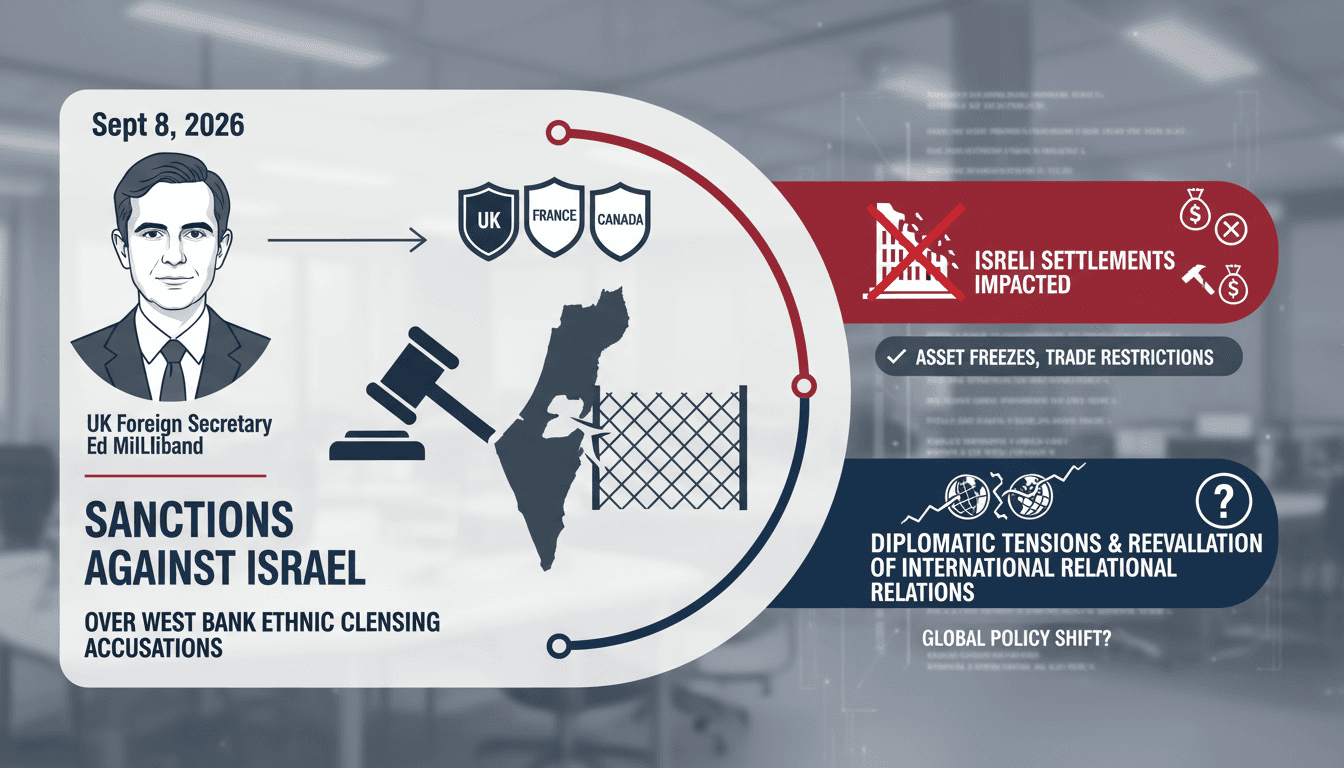
Here's what it means for you.
If you engage in international trade or investment, these sanctions could reshape market dynamics and supply chains.
Why it matters
The UK's shift in policy signals a potential realignment in international relations regarding the Israeli-Palestinian conflict.
What happened (in 30 seconds)
- UK Foreign Secretary Ed Miliband accused Israel of ignoring ethnic cleansing in the West Bank and announced a sanctions package.
- Sanctions include import bans on goods from illegal settlements and restrictions on arms exports contributing to the occupation.
- Israel's response involved closing the UK consulate in Jerusalem and labeling the accusations as "outrageous lies."
The context you actually need
- Settlement expansion in the West Bank has surged, with settler numbers increasing from 270,000 in 1993 to 770,000 today.
- Violence and displacement have escalated, with 65 Palestinian communities expelled since 2023, resulting in over 4,000 evictions.
- Previous UK actions included suspending over 30 arms export licenses related to operations in Gaza.
What's really happening
On September 8, 2026, UK Foreign Secretary Ed Miliband's statement in the House of Commons marked a pivotal moment in UK foreign policy regarding Israel and Palestine. By labeling the actions of the Israeli government as "ethnic cleansing," Miliband invoked UN definitions and highlighted the severity of the situation in the West Bank. This declaration is not merely rhetorical; it is backed by a series of sanctions aimed at curbing the expansion of Israeli settlements deemed illegal under international law.
The sanctions package includes a coordinated effort with France and Canada, indicating a broader Western response to the ongoing conflict. The import bans on goods from illegal settlements are particularly significant, as they target the economic underpinnings of settlement expansion. By restricting trade with these settlements, the UK aims to diminish their viability and signal to Israel that continued expansion will have tangible consequences.
Moreover, the sanctions against companies and individuals supporting settlement growth reflect a shift towards accountability for those facilitating the occupation. This move aligns with a growing international sentiment that seeks to hold actors responsible for actions that violate human rights. The refusal to grant arms export licenses for materials contributing to the occupation further underscores the UK's commitment to reassessing its military and economic ties with Israel.
The Israeli government's response, including the closure of the UK consulate in Jerusalem, illustrates the potential for diplomatic fallout. Such retaliatory measures could strain UK-Israel relations and complicate future negotiations regarding the Israeli-Palestinian conflict. The UK’s stance may embolden other nations to adopt similar policies, potentially leading to a more unified international front against settlement expansion.
This situation is not just a matter of foreign policy; it has direct implications for global trade, investment, and diplomatic relations. Companies operating in or with ties to Israel may need to reassess their strategies in light of these sanctions, particularly those involved in sectors related to construction, agriculture, and arms manufacturing. The long-term effects of these sanctions could reshape the landscape of international business and diplomacy in the region.
Who feels it first (and how)
- Businesses in the UK: Companies involved in trade with Israeli settlements may face new restrictions and compliance challenges.
- Israeli settlers: Those involved in settlement activities could experience economic repercussions due to import bans and sanctions.
- Palestinian communities: Increased international scrutiny may lead to improved conditions or further displacement depending on the response from Israeli authorities.
What to watch next
- Implementation timeline: Monitor the rollout of sanctions within the next six to nine months to gauge their effectiveness and impact.
- International response: Watch for reactions from other countries, particularly those in the EU, which may influence broader diplomatic strategies.
- Market shifts: Keep an eye on changes in trade patterns, especially in sectors linked to settlement goods and arms exports.
The UK has announced sanctions and import bans targeting Israeli settlements.
Other nations may follow suit, leading to a potential shift in international policy towards Israel.
The long-term impact on UK-Israel relations and the effectiveness of sanctions in curbing settlement expansion.
Frequently Asked Questions
- Why it matters?
- The UK's shift in policy signals a potential realignment in international relations regarding the Israeli-Palestinian conflict.
- What happened (in 30 seconds)?
- UK Foreign Secretary Ed Miliband accused Israel of ignoring ethnic cleansing in the West Bank and announced a sanctions package. Sanctions include import bans on goods from illegal settlements and restrictions on arms exports contributing to the occupation. Israel's response involved closing the UK consulate in Jerusalem and labeling the accusations as "outrageous lies."
- What's really happening?
- On September 8, 2026, UK Foreign Secretary Ed Miliband's statement in the House of Commons marked a pivotal moment in UK foreign policy regarding Israel and Palestine. By labeling the actions of the Israeli government as "ethnic cleansing," Miliband invoked UN definitions and highlighted the severity of the situation in the West Bank. This declaration is not merely rhetorical; it is backed by a series of sanctions aimed at curbing the expansion of Israeli settlements deemed illegal under interna
- Who feels it first (and how)?
- Businesses in the UK: Companies involved in trade with Israeli settlements may face new restrictions and compliance challenges. Israeli settlers: Those involved in settlement activities could experience economic repercussions due to import bans and sanctions. Palestinian communities: Increased international scrutiny may lead to improved conditions or further displacement depending on the response from Israeli authorities.
- What to watch next?
- Implementation timeline: Monitor the rollout of sanctions within the next six to nine months to gauge their effectiveness and impact. International response: Watch for reactions from other countries, particularly those in the EU, which may influence broader diplomatic strategies. Market shifts: Keep an eye on changes in trade patterns, especially in sectors linked to settlement goods and arms exports.
English-language news from Qatar covering domestic and regional affairs.
"Gulf Times reflects Qatari perspectives on regional developments."
— A47 Editor
UK FM says Israel turning 'blind eye' to 'ethnic cleansing' in West Bank
British Foreign Minister Ed Miliband has accused the Israeli government of ignoring what he termed 'ethnic cleansing' by settlers in the West Bank, addressing Parliament on the matter. He emphasized the UK’s growing concern over the actions of Israel...
International coverage from The Guardian's global desks.
"The Guardian is known for its progressive editorial stance and in-depth analysis."
— A47 Editor
Ed Miliband has overturned decades of Foreign Office inertia on illegal Israeli settlements
The UK government, under Foreign Secretary Ed Miliband, has announced a ban on trade with illegal Israeli settlements, marking a significant shift from decades of inaction by the Foreign Office regarding the issue of Israeli settlements in occupied t...
UK politics, business, and social stories.
"Sky News is a UK-based 24-hour channel known for fast-breaking news and political coverage."
— A47 Editor
<a href='https://news.sky.com/story/politics-latest-burnham-labour-farage-badenoch-reform-macron-12593360?postid=12395036#liveblog-body'>UK to ban trade with illegal Israeli settlements</a>
The UK government has announced a ban on trade with illegal Israeli settlements, a move led by Foreign Secretary Ed Miliband, which aims to address ongoing concerns regarding the legality and ethics of such settlements in occupied territories. This d...