
Iran Establishes Restricted Maritime Zone and Shipping Corridor with Oman
Here's what it means for you.
If you rely on shipping routes through the Strait of Hormuz, expect increased costs and delays due to new Iranian restrictions.
Why it matters
This development could significantly disrupt global oil supply chains and elevate shipping costs, impacting markets worldwide.
What happened (in 30 seconds)
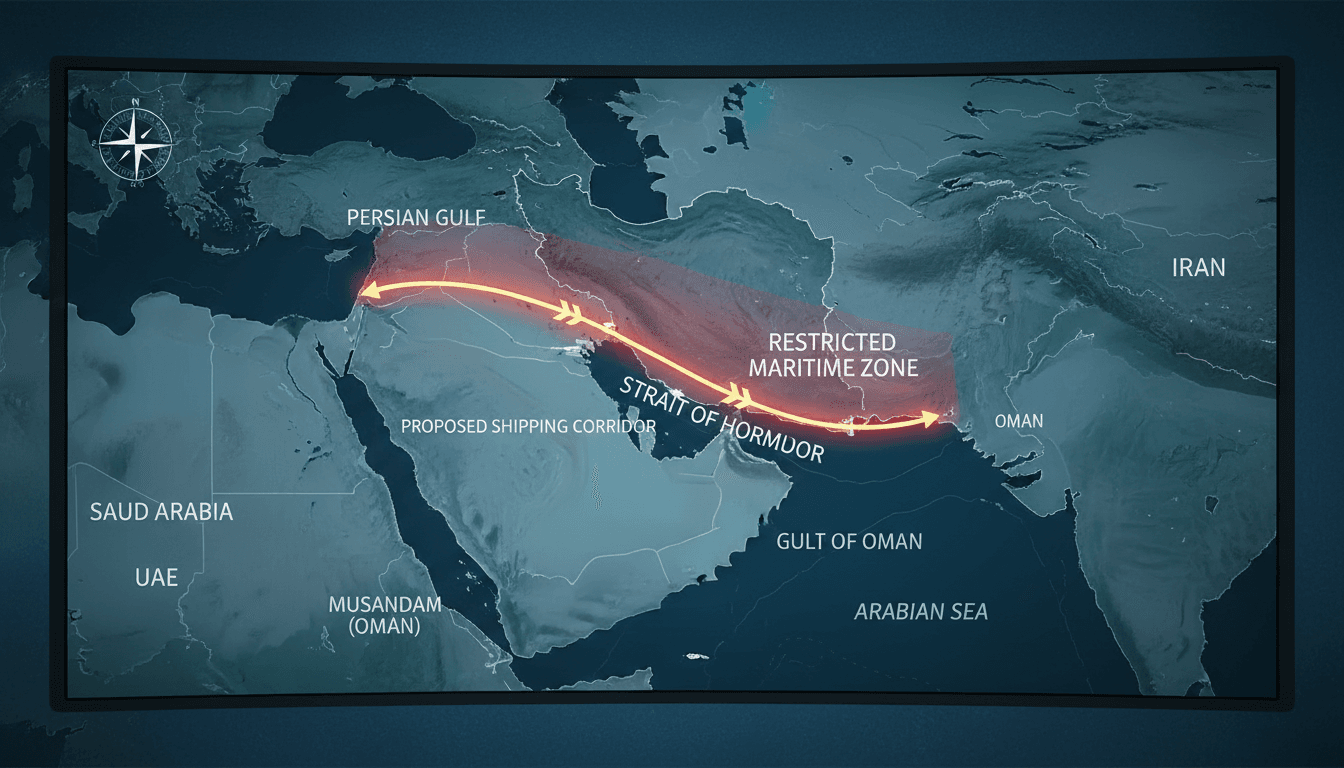
- Iran announced a new restricted maritime zone in the Persian Gulf, extending from the U.S. Navy's blockade line.
- Oman and Iran agreed on maps for a new shipping corridor through the Strait of Hormuz, with Iranian oversight expected to be signed imminently.
- Commercial traffic through the Strait has sharply declined, with oil transit dropping from 21.6 million barrels per day in late 2025 to 4.9 million in mid-2026.
The context you actually need
- The Strait of Hormuz is a critical chokepoint for global oil, with about one-fifth of the world's petroleum liquids transiting through it.
- Recent tensions between U.S. and Iranian forces have led to increased risks for shipping, including mine threats and naval confrontations.
- Negotiations between Iran and Oman regarding corridor management have been ongoing, reflecting the complexities of regional maritime security.
What's really happening
Iran's announcement of a restricted maritime zone and the pending shipping corridor agreement with Oman is a strategic maneuver amid escalating regional tensions. The new zone, which extends from the U.S. Navy's blockade line into Gulf waters, places non-compliant vessels on Iranian sanctions lists, although specific boundaries and penalties remain undisclosed. This lack of clarity raises concerns for international shipping companies that rely on these routes.
The corridor agreement with Oman, which is expected to be signed soon, aims to facilitate navigation through the Strait of Hormuz while granting Iran a management role. This arrangement is particularly significant given the ongoing risks associated with U.S. military presence and sanctions in the region. Iranian Supreme National Security Council Secretary Mohsen Rezaei has conditioned the full openness of the strait on the cessation of U.S. actions perceived as sabotage and threats, indicating a tit-for-tat dynamic that could further complicate maritime operations.
The backdrop to this announcement includes a dramatic decline in commercial traffic through the Strait, with the U.S. Energy Information Administration reporting an average of only 4.9 million barrels per day transiting in Q2 2026, down from 21.6 million in Q4 2025. This drop reflects the heightened security risks and the impact of recent military exchanges between U.S. and Iranian forces, which have included strikes on tankers and claims of attacks on warships.
As oil markets reacted to the announcement, Brent crude prices surged above $97 per barrel, signaling the market's sensitivity to developments in the Strait of Hormuz. The International Maritime Organization and Joint Maritime Information Center have issued advisories regarding mine risks and naval activity, urging shipping companies to reassess their routes and security measures. The ongoing negotiations between Iran and Oman on corridor management, including routing and oversight, underscore the complexities of ensuring safe passage through this vital maritime corridor.
Who feels it first (and how)
- Shipping companies: Increased operational costs and potential delays due to new restrictions.
- Energy traders: Fluctuating oil prices and supply chain uncertainties.
- Insurance providers: Heightened risk assessments leading to increased premiums for maritime coverage.
- Dubai-based businesses: Potential disruptions in trade and logistics, impacting local economies.
What to watch next
- Implementation of the corridor agreement: The specifics of the agreement and its enforcement will determine the impact on shipping traffic.
- U.S. military response: Any changes in U.S. naval presence or strategy in the region could alter the dynamics of maritime security.
- Market reactions: Continued fluctuations in oil prices will signal the market's response to developments in the Strait of Hormuz.
Iran's announcement of a restricted maritime zone and the agreement with Oman.
Increased shipping costs and delays as companies navigate new restrictions.
The exact boundaries and enforcement mechanisms of the new maritime zone.
Frequently Asked Questions
- Why it matters?
- This development could significantly disrupt global oil supply chains and elevate shipping costs, impacting markets worldwide.
- What happened (in 30 seconds)?
- Iran announced a new restricted maritime zone in the Persian Gulf, extending from the U.S. Navy's blockade line. Oman and Iran agreed on maps for a new shipping corridor through the Strait of Hormuz, with Iranian oversight expected to be signed imminently. Commercial traffic through the Strait has sharply declined, with oil transit dropping from 21.6 million barrels per day in late 2025 to 4.9 million in mid-2026.
- What's really happening?
- Iran's announcement of a restricted maritime zone and the pending shipping corridor agreement with Oman is a strategic maneuver amid escalating regional tensions. The new zone, which extends from the U.S. Navy's blockade line into Gulf waters, places non-compliant vessels on Iranian sanctions lists, although specific boundaries and penalties remain undisclosed. This lack of clarity raises concerns for international shipping companies that rely on these routes. The corridor agreement with Oman,
- Who feels it first (and how)?
- Shipping companies: Increased operational costs and potential delays due to new restrictions. Energy traders: Fluctuating oil prices and supply chain uncertainties. Insurance providers: Heightened risk assessments leading to increased premiums for maritime coverage. Dubai-based businesses: Potential disruptions in trade and logistics, impacting local economies.
- What to watch next?
- Implementation of the corridor agreement: The specifics of the agreement and its enforcement will determine the impact on shipping traffic. U.S. military response: Any changes in U.S. naval presence or strategy in the region could alter the dynamics of maritime security. Market reactions: Continued fluctuations in oil prices will signal the market's response to developments in the Strait of Hormuz.
English-language digital publication covering business, politics, technology, and current affairs.
"The Arabian Post mixes original and syndicated-style coverage with a broad regional and global business-news orientation."
— A47 Editor
Iran outlines Gulf restricted zone, Oman corridor plan
Iran is set to announce a new restricted maritime zone near the Strait of Hormuz and finalize a shipping corridor agreement with Oman, as stated by Mohsen Rezaei, secretary of Iran's Supreme National Security Council. This restricted area will extend...
Regional coverage and analysis focused on politics, diplomacy, and business across the Middle East.
"Al-Monitor is known for analytical reporting on Middle East politics and policy developments."
— A47 Editor
Iran to announce new Gulf restricted zone, Hormuz route: What we know
Iran's Supreme National Security Council, led by Mohsen Rezaei, announced the establishment of a new restricted zone in the Gulf, starting from the point of the US blockade of Iranian ports and extending into the Gulf. This decision follows a series ...
RT is a Russian state-funded network covering global events from a Russian perspective.
"RT is widely criticized for promoting pro-Kremlin narratives and is considered by many to be a state propaganda outlet."
— A47 Editor
Iran to declare new ‘restricted zone’ outside Strait of Hormuz – official
Iran is set to announce a new 'restricted zone' outside the Strait of Hormuz, as indicated by a senior security official. This move comes amid ongoing tensions in the region, particularly concerning maritime security and international shipping routes...
English-language reporting on Saudi politics, policy, and society.
"Saudi Gazette reflects mainstream Saudi institutional perspectives."
— A47 Editor
Iran plans maritime exclusion zone near Strait of Hormuz after US strikes on tankers
Iran has announced plans to establish a maritime exclusion zone near the Strait of Hormuz, following recent U.S. military strikes on three Iranian oil tankers. The zone will reportedly extend from the U.S. Navy's existing blockade into the Arabian Gu...