
Kenya Implements 90-Day Regularization for Foreign Small-Scale Traders Amid Immigration Crackdown
Why it matters
This initiative reflects a broader trend of tightening immigration policies in East Africa, affecting regional trade dynamics and migrant communities.
What happened (in 30 seconds)
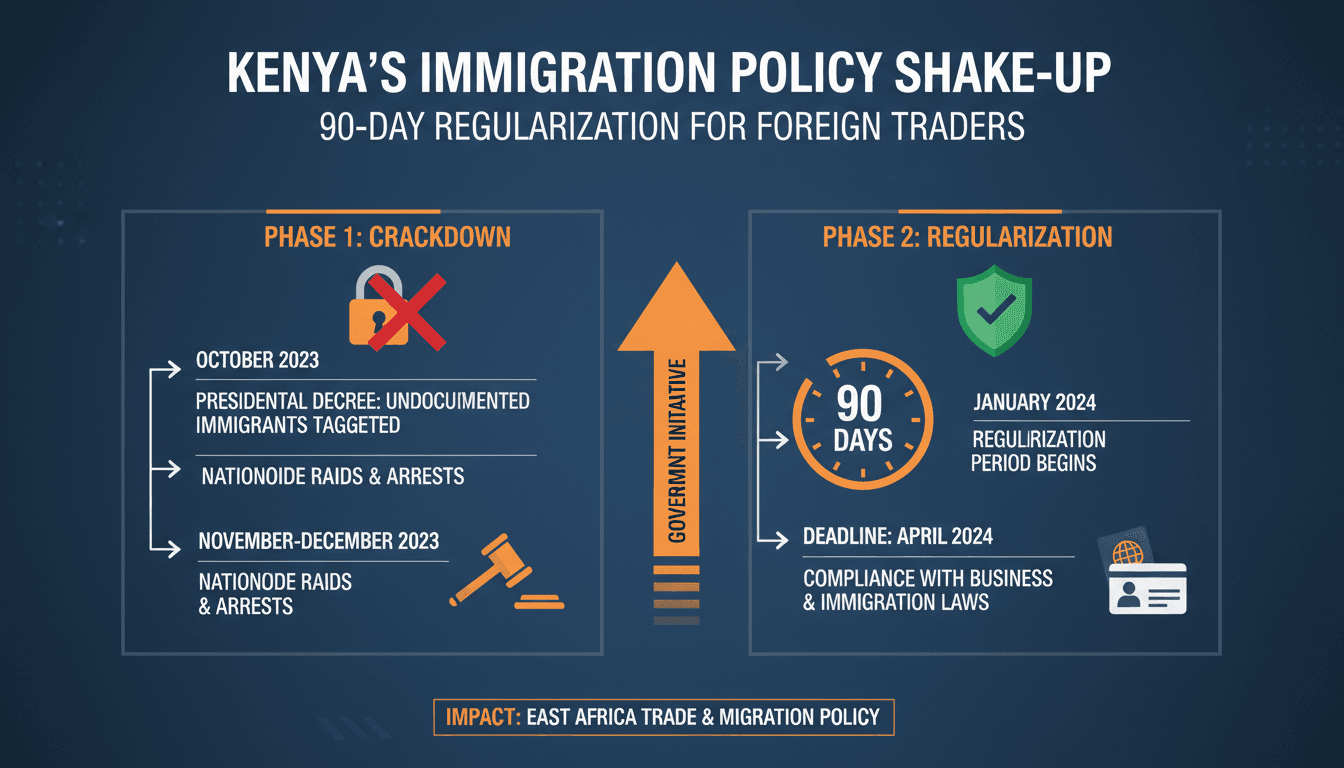
- September 2026: President William Ruto ordered a crackdown on undocumented foreign small-scale traders in Kenya.
- September 8: A 90-day grace period for compliance was announced, following concerns from the Burundian community in Nairobi.
- Current Status: The Kenyan government is investigating harassment incidents while emphasizing orderly enforcement of immigration laws.
The context you actually need
- Kenya's Role: Kenya is a significant host for East African migrants, including approximately 16,000 Burundian refugees and asylum seekers.
- Policy Shift: The crackdown aims to prioritize local employment and curb the misuse of visitor visas, distinguishing between informal traders and large-scale foreign investments.
- Regional Dynamics: Similar measures in neighboring countries, like Tanzania, highlight a regional trend of reserving certain business opportunities for citizens.
What's really happening
In early September 2026, President William Ruto's administration initiated a crackdown on undocumented foreign small-scale traders and hawkers, particularly targeting Burundian nationals in Nairobi. This directive was rooted in concerns over local employment and the perceived exploitation of visa regulations by informal traders. The Kenyan government aims to balance attracting foreign investment while protecting local jobs from informal competition, a challenge that has become increasingly pressing in the context of regional economic integration.
The immediate response from the Burundian community was one of panic, with hundreds seeking emergency travel documents at their embassy amid reports of harassment. This situation prompted the Kenyan government to announce a 90-day regularization window for compliance with immigration and business licensing requirements. The government also issued apologies and condemned any violence against foreign traders, emphasizing that the policy was compliance-focused rather than aimed at expelling documented residents.
The formation of a joint task team involving the Burundian government, UNHCR, and IOM indicates a commitment to addressing the concerns of the immigrant community while ensuring that enforcement actions are conducted without xenophobia. Arrests have been made for alleged harassment and incitement, reflecting a serious approach to maintaining order and security in immigrant areas.
This crackdown and subsequent regularization period are significant as they highlight the delicate balance between national sovereignty and regional cooperation under the East African Community Common Market Protocol. While the protocol allows for the movement of labor and services, it also permits individual countries to enforce their regulatory compliance, leading to tensions between local and foreign traders.
The implications of this policy extend beyond immediate compliance issues; they signal a potential shift in how East African countries manage immigration and trade. As regional economies become more interconnected, the enforcement of such policies could influence migration patterns, trade dynamics, and the overall economic landscape in East Africa.
Who feels it first (and how)
- Burundian Nationals: Facing immediate compliance challenges and potential harassment.
- Local Kenyan Traders: May benefit from reduced competition from undocumented foreign traders.
- Government Officials: Tasked with enforcing new regulations and managing community relations.
- Regional Businesses: Those involved in cross-border trade may need to adapt to changing compliance landscapes.
What to watch next
- Compliance Rates: Monitor how many foreign traders successfully regularize their status within the 90-day window, as this will indicate the policy's effectiveness.
- Community Reactions: Watch for responses from the Burundian community and other immigrant groups, which could influence future policy adjustments.
- Regional Policy Trends: Keep an eye on similar measures in neighboring countries, as they may signal a broader shift in immigration enforcement across East Africa.
The 90-day regularization window is currently in effect.
Increased scrutiny on foreign traders and potential policy adjustments based on community feedback.
The long-term impact on regional trade dynamics and migrant communities.
Frequently Asked Questions
- Why it matters?
- This initiative reflects a broader trend of tightening immigration policies in East Africa, affecting regional trade dynamics and migrant communities.
- What happened (in 30 seconds)?
- September 2026: President William Ruto ordered a crackdown on undocumented foreign small-scale traders in Kenya. September 8: A 90-day grace period for compliance was announced, following concerns from the Burundian community in Nairobi. Current Status: The Kenyan government is investigating harassment incidents while emphasizing orderly enforcement of immigration laws.
- What's really happening?
- In early September 2026, President William Ruto's administration initiated a crackdown on undocumented foreign small-scale traders and hawkers, particularly targeting Burundian nationals in Nairobi. This directive was rooted in concerns over local employment and the perceived exploitation of visa regulations by informal traders. The Kenyan government aims to balance attracting foreign investment while protecting local jobs from informal competition, a challenge that has become increasingly press
- Who feels it first (and how)?
- Burundian Nationals: Facing immediate compliance challenges and potential harassment. Local Kenyan Traders: May benefit from reduced competition from undocumented foreign traders. Government Officials: Tasked with enforcing new regulations and managing community relations. Regional Businesses: Those involved in cross-border trade may need to adapt to changing compliance landscapes.
- What to watch next?
- Compliance Rates: Monitor how many foreign traders successfully regularize their status within the 90-day window, as this will indicate the policy's effectiveness. Community Reactions: Watch for responses from the Burundian community and other immigrant groups, which could influence future policy adjustments. Regional Policy Trends: Keep an eye on similar measures in neighboring countries, as they may signal a broader shift in immigration enforcement across East Africa.
24/7 international news from a French perspective in multiple languages.
"France 24 is viewed as a globally focused outlet with balanced coverage and a European perspective."
— A47 Editor
Kenya's crackdown on foreign workers raises concern among Burundians
Kenya's recent crackdown on foreign workers has instilled fear among the Burundian community, which comprises approximately 16,000 refugees and asylum seekers. Many of these individuals rely on informal jobs, such as carpentry and motorcycle taxi dri...
International stories from NPR’s global desk.
"NPR is an American public media organization known for thoughtful reporting and a slightly left-leaning editorial tone."
— A47 Editor
Kenya's foreign trader crackdown sparks fear among migrant communities
Kenya's President has initiated a crackdown on foreign nationals operating small businesses, a move that has raised concerns of xenophobia within migrant communities. This decision follows accusations that foreigners are taking jobs from locals, lead...
International coverage of politics, culture, and current affairs.
"BBC News is widely regarded as a reputable international news organization, known for its impartial tone and public service mandate."
— A47 Editor
Burundians rush to leave Kenya ahead of crackdown on unregistered traders
Burundians are fleeing Kenya as the country prepares to enforce new regulations restricting foreign nationals from operating small-scale businesses. This crackdown is expected to significantly impact the livelihoods of many Burundians who have establ...