
IAEA Board Refers Iran Nuclear Compliance Issue to UN Security Council
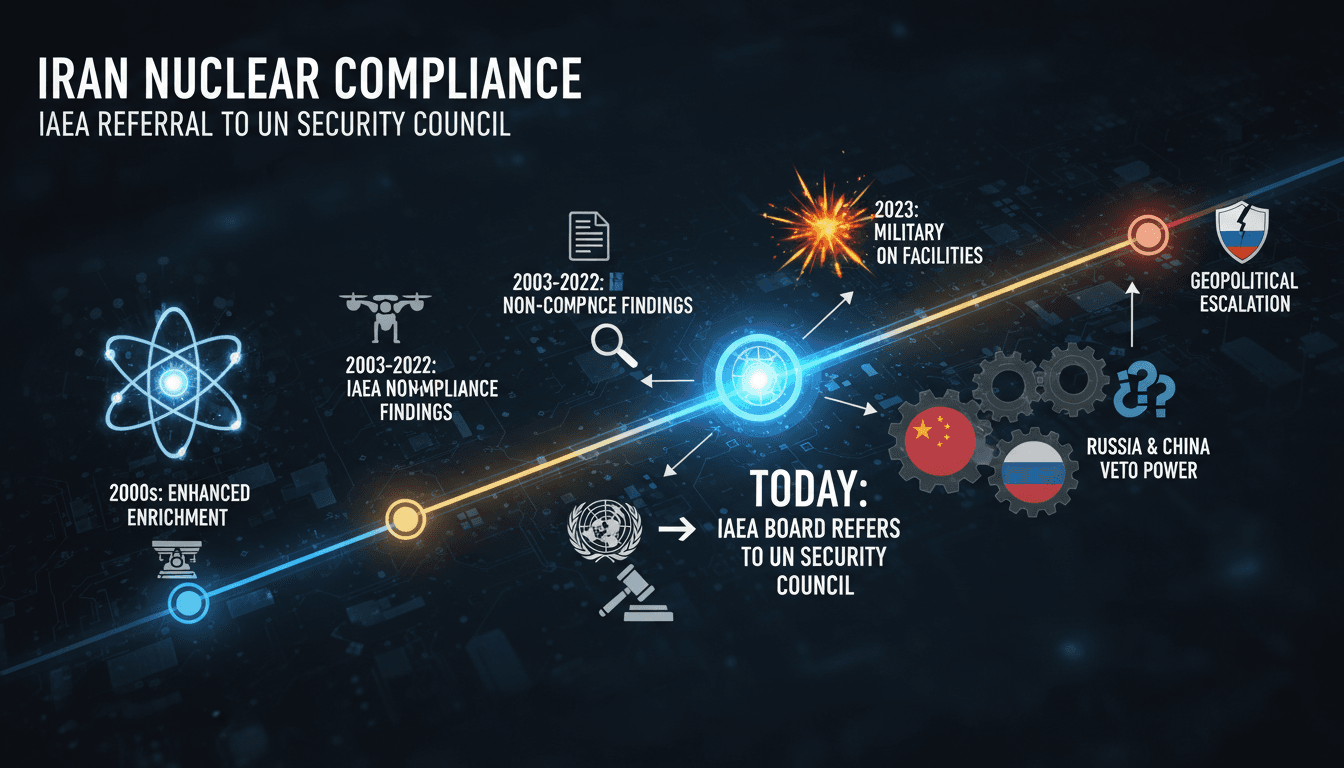
Why it matters
This referral marks a significant escalation in international scrutiny of Iran's nuclear activities, impacting global energy markets and diplomatic relations.
What happened (in 30 seconds)
- The IAEA Board voted on September 9, 2026, to refer Iran's nuclear safeguards non-compliance to the UN Security Council.
- The resolution passed with 23 votes in favor, marking the first such referral in 20 years, amid ongoing disputes over Iran's nuclear program.
- Iran condemned the vote as politically motivated, while Western powers emphasized unresolved proliferation concerns.
The context you actually need
- Iran's nuclear program has faced scrutiny since a June 2025 IAEA finding of non-compliance, including unexplained uranium particles at undeclared sites.
- Military strikes in 2025 disrupted IAEA access to Iranian facilities, complicating verification of enriched uranium inventories.
- The referral to the UN Security Council introduces a complex dynamic, as Russia and China hold veto power, limiting immediate punitive measures against Iran.
What's really happening
On September 9, 2026, the International Atomic Energy Agency (IAEA) Board of Governors convened in Vienna and voted to refer Iran's nuclear safeguards non-compliance to the UN Security Council. This decision, supported by the United States, United Kingdom, France, and Germany, is a pivotal moment in international diplomacy regarding Iran's nuclear ambitions. The resolution passed with 23 votes in favor, three against, and eight abstentions, marking the first such referral in two decades.
The backdrop to this referral is a series of escalating tensions surrounding Iran's nuclear program. In June 2025, the IAEA reported that Iran had failed to comply with its safeguards obligations, particularly regarding unexplained uranium particles found at undeclared sites. This finding came on the heels of military strikes by the US and Israel on Iranian nuclear facilities, which severely disrupted IAEA access and verification processes. As a result, the continuity of knowledge regarding Iran's enriched uranium stocks has been compromised, raising serious proliferation risks.
IAEA Director General Rafael Grossi emphasized the urgency of the situation, noting that Iran's stockpile of uranium enriched to 60% purity is estimated at 440.9 kilograms. This level of enrichment is significantly above what is necessary for peaceful purposes, raising alarms among Western powers about potential weapons development. Iran, however, maintains that its nuclear program is peaceful and attributes the inspection issues to the military actions that have hindered IAEA operations.
The referral to the UN Security Council shifts the issue to a forum where geopolitical dynamics come into play. Russia and China, both of whom have historically supported Iran, hold veto power, which complicates the prospects for new sanctions or punitive measures. This means that while the referral escalates diplomatic pressure on Tehran, the immediate impact may be limited due to the potential for vetoes from these nations.
As the situation unfolds, the implications for regional stability and global energy markets are significant. Heightened tensions could lead to volatility in oil prices, affecting economies worldwide, including those in the UAE and Dubai. Stakeholders in the energy sector and investors should remain vigilant as the geopolitical landscape evolves.
Who feels it first (and how)
- Energy sector professionals: Increased scrutiny may lead to market volatility, impacting pricing and investment strategies.
- Investors: Fluctuations in energy prices could affect portfolio valuations and investment decisions.
- Dubai residents: While no immediate economic impacts have been reported, future energy price changes could influence living costs.
What to watch next
- Iran's response: Monitor how Iran reacts to the referral and whether it will alter its nuclear activities or engage in further diplomatic negotiations.
- UN Security Council discussions: Watch for any resolutions or statements from the Security Council that could signal shifts in international policy toward Iran.
- Energy market trends: Keep an eye on oil prices and market stability, as geopolitical tensions often lead to fluctuations that can affect consumer costs.
The IAEA has referred Iran's nuclear file to the UN Security Council.
Diplomatic tensions will escalate, impacting energy markets and international relations.
The immediate actions of the UN Security Council and their potential impact on Iran's nuclear program remain uncertain.
Frequently Asked Questions
- Why it matters?
- This referral marks a significant escalation in international scrutiny of Iran's nuclear activities, impacting global energy markets and diplomatic relations.
- What happened (in 30 seconds)?
- The IAEA Board voted on September 9, 2026, to refer Iran's nuclear safeguards non-compliance to the UN Security Council. The resolution passed with 23 votes in favor, marking the first such referral in 20 years, amid ongoing disputes over Iran's nuclear program. Iran condemned the vote as politically motivated, while Western powers emphasized unresolved proliferation concerns.
- What's really happening?
- On September 9, 2026, the International Atomic Energy Agency (IAEA) Board of Governors convened in Vienna and voted to refer Iran's nuclear safeguards non-compliance to the UN Security Council. This decision, supported by the United States, United Kingdom, France, and Germany, is a pivotal moment in international diplomacy regarding Iran's nuclear ambitions. The resolution passed with 23 votes in favor, three against, and eight abstentions, marking the first such referral in two decades. The ba
- Who feels it first (and how)?
- Energy sector professionals: Increased scrutiny may lead to market volatility, impacting pricing and investment strategies. Investors: Fluctuations in energy prices could affect portfolio valuations and investment decisions. Dubai residents: While no immediate economic impacts have been reported, future energy price changes could influence living costs.
- What to watch next?
- Iran's response: Monitor how Iran reacts to the referral and whether it will alter its nuclear activities or engage in further diplomatic negotiations. UN Security Council discussions: Watch for any resolutions or statements from the Security Council that could signal shifts in international policy toward Iran. Energy market trends: Keep an eye on oil prices and market stability, as geopolitical tensions often lead to fluctuations that can affect consumer costs.
English-language digital publication covering business, politics, technology, and current affairs.
"The Arabian Post mixes original and syndicated-style coverage with a broad regional and global business-news orientation."
— A47 Editor
IAEA vote sends Iran file to Security Council
The International Atomic Energy Agency (IAEA) board has voted to refer Iran to the UN Security Council due to its failures in adhering to nuclear safeguards, marking the first such referral in two decades. The resolution passed with 23 votes in favor...
Global news coverage with extensive reporting on Middle Eastern conflicts and geopolitics.
"Al Jazeera is a Qatar-based broadcaster known for wide regional coverage and alternative perspectives."
— A47 Editor
IAEA board refers Iran to UN Security Council over nuclear ‘non-compliance’
The International Atomic Energy Agency (IAEA) board has referred Iran to the UN Security Council due to its non-compliance with nuclear regulations, a decision driven by the United States, Germany, France, and the United Kingdom. This escalation mark...
Comprehensive coverage of Middle Eastern and global issues.
"Al Jazeera is a prominent voice from the Global South, especially the Middle East, with an emphasis on underreported stories."
— A47 Editor
IAEA board refers Iran to UN Security Council over nuclear ‘non-compliance’
The International Atomic Energy Agency (IAEA) board has referred Iran to the UN Security Council due to its non-compliance with nuclear regulations, a decision driven by the United States, Germany, France, and the United Kingdom. This escalation mark...
International coverage of politics, culture, and current affairs.
"BBC News is widely regarded as a reputable international news organization, known for its impartial tone and public service mandate."
— A47 Editor
Iran referred to UN Security Council for nuclear non-compliance
Iran has been referred to the UN Security Council for non-compliance with nuclear regulations, a move that Tehran condemns, attributing the disruption of inspections to US and Israeli military strikes on its nuclear facilities.
Global business headlines with AI angles.
"General business outlet that frequently covers AI."
— A47 Editor
UN Watchdog Says Iran Is Not Cooperating With Investigation Into Uranium Traces At Undeclared Sites. It's Reporting It.
The International Atomic Energy Agency (IAEA) has reported that Iran is not cooperating with an investigation into traces of uranium found at undeclared sites, marking the first time in two decades that Tehran has been referred to the UN Security Cou...
Regional coverage and analysis focused on politics, diplomacy, and business across the Middle East.
"Al-Monitor is known for analytical reporting on Middle East politics and policy developments."
— A47 Editor
IAEA board refers Iran to UN Security Council
The International Atomic Energy Agency (IAEA) board of governors voted to refer Iran to the UN Security Council due to its nuclear non-compliance, a significant diplomatic move aimed at increasing pressure on the Islamic Republic. This decision follo...
Regional coverage and analysis focused on politics, diplomacy, and business across the Middle East.
"Al-Monitor is known for analytical reporting on Middle East politics and policy developments."
— A47 Editor
IAEA board passes resolution reporting Iran to UN Security Council
The International Atomic Energy Agency (IAEA) board of governors has passed a resolution to report Iran to the UN Security Council for the first time in two decades due to its violations of nuclear non-proliferation obligations. This decision reflect...