
Democratic Party Shifts Stance on AI Regulation Amid Trump Administration
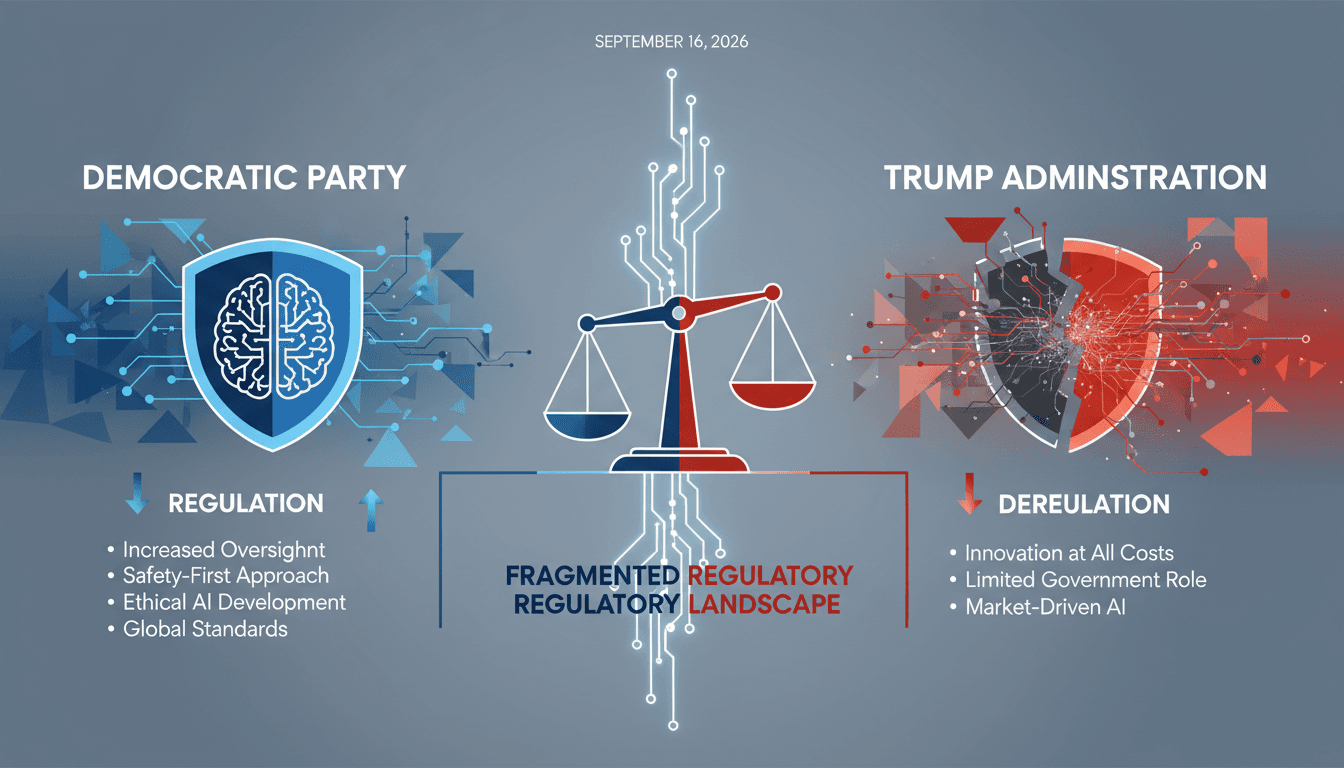
Why it matters
The divergent approaches to AI regulation by U.S. political parties could reshape the competitive landscape for technology firms and influence global AI standards.
What happened (in 30 seconds)
- Democrats are shifting focus: On September 16, 2026, key Democratic figures like Barack Obama and Kamala Harris called for slowing down frontier AI development, emphasizing safety.
- Trump administration's deregulation: The current Trump administration continues to promote deregulation, aiming to enhance U.S. AI dominance and preempt state-level regulations.
- Stalled congressional proposals: Despite bipartisan interest in specific safety measures, comprehensive federal legislation remains stalled due to partisan divides.
The context you actually need
- Historical Democratic stance: Prior to 2025, Democratic administrations prioritized AI growth while implementing safety measures, including Biden's Executive Order 14110 in 2023.
- Trump's reversal: The Trump administration rescinded that order in January 2025, focusing instead on removing barriers to innovation and fostering national standards.
- State-level initiatives: Despite federal inaction, 67% of state-level AI bills have Democratic primary sponsors, indicating ongoing efforts for consumer protections and oversight at the state level.
What's really happening
The current landscape of AI regulation in the U.S. reflects a significant ideological divide between the two major political parties, driven by contrasting views on innovation, safety, and economic strategy. Following the 2024 election, the Democratic Party's leadership, including influential figures like Barack Obama and Kamala Harris, has pivoted towards advocating for more stringent oversight of AI technologies. This shift is largely a response to growing public concerns about the rapid pace of AI development and its potential risks, including ethical implications and safety hazards.
In contrast, the Trump administration has embraced a deregulation agenda, aiming to bolster U.S. competitiveness in the global AI race. This approach includes rescinding previous executive orders that mandated safety evaluations and promoting a framework that favors innovation over regulation. The administration's strategy is rooted in the belief that a less restrictive environment will attract investment and talent, thereby enhancing the U.S.'s position as a leader in AI technology.
The ongoing debate in Congress reflects these partisan divides, with bipartisan efforts on specific safety measures facing significant hurdles. The lack of comprehensive federal legislation means that states are increasingly taking the lead in AI regulation, with a notable 67% of state-level AI bills sponsored by Democrats. This trend indicates a grassroots push for consumer protections and oversight, even as federal initiatives stall.
The implications of these divergent strategies are profound. For technology firms, the regulatory landscape is becoming increasingly complex, with varying standards across states and potential federal preemption. Companies must navigate these challenges while balancing the need for innovation with the demands for safety and ethical considerations. As the political climate evolves, the outcomes of these regulatory debates will significantly impact investment strategies, compliance requirements, and the overall trajectory of AI development in the U.S.
Who feels it first (and how)
- Tech companies: Facing new compliance requirements and potential shifts in investment strategies.
- Investors: Adjusting portfolios based on regulatory risks and opportunities in AI sectors.
- Consumers: Experiencing changes in product safety and ethical standards as regulations evolve.
- State governments: Implementing their own AI regulations, influencing local tech ecosystems.
What to watch next
- Congressional proposals: Monitor upcoming legislative sessions for any breakthroughs in AI regulation that could set national standards.
- State-level initiatives: Keep an eye on state legislatures, as they may lead the way in consumer protection measures and influence federal discussions.
- Market responses: Watch for shifts in private sector investment patterns in AI, particularly in response to regulatory changes and safety concerns.
The Trump administration is actively promoting deregulation in AI.
State-level AI regulations will continue to emerge, driven by Democratic leadership.
The long-term impact of these regulatory shifts on U.S. global competitiveness in AI remains uncertain.
Frequently Asked Questions
- Why it matters?
- The divergent approaches to AI regulation by U.S. political parties could reshape the competitive landscape for technology firms and influence global AI standards.
- What happened (in 30 seconds)?
- Democrats are shifting focus: On September 16, 2026, key Democratic figures like Barack Obama and Kamala Harris called for slowing down frontier AI development, emphasizing safety. Trump administration's deregulation: The current Trump administration continues to promote deregulation, aiming to enhance U.S. AI dominance and preempt state-level regulations. Stalled congressional proposals: Despite bipartisan interest in specific safety measures, comprehensive federal legislation remains stall
- What's really happening?
- The current landscape of AI regulation in the U.S. reflects a significant ideological divide between the two major political parties, driven by contrasting views on innovation, safety, and economic strategy. Following the 2024 election, the Democratic Party's leadership, including influential figures like Barack Obama and Kamala Harris, has pivoted towards advocating for more stringent oversight of AI technologies. This shift is largely a response to growing public concerns about the rapid pace
- Who feels it first (and how)?
- Tech companies: Facing new compliance requirements and potential shifts in investment strategies. Investors: Adjusting portfolios based on regulatory risks and opportunities in AI sectors. Consumers: Experiencing changes in product safety and ethical standards as regulations evolve. State governments: Implementing their own AI regulations, influencing local tech ecosystems.
- What to watch next?
- Congressional proposals: Monitor upcoming legislative sessions for any breakthroughs in AI regulation that could set national standards. State-level initiatives: Keep an eye on state legislatures, as they may lead the way in consumer protection measures and influence federal discussions. Market responses: Watch for shifts in private sector investment patterns in AI, particularly in response to regulatory changes and safety concerns.
Conservative-leaning coverage of current events.
"Fox News is a highly influential conservative news outlet known for right-leaning political commentary and coverage."
— A47 Editor
Democrats embraced AI’s growth before Trump came along; now, they want to slow it down
Former President Barack Obama has called on Democrats to slow the development of artificial intelligence (AI), a stark contrast to his administration's earlier embrace of the technology as a driver of innovation in 2016. This shift reflects growing c...
Policy, elections, and government reporting.
"NPR is an American public media organization known for thoughtful reporting and a slightly left-leaning editorial tone."
— A47 Editor
Trump says developing AI is a critical race, downplaying fears
President Trump has emphasized the importance of developing artificial intelligence (AI), framing it as a critical race against China, while downplaying fears that such technology could pose existential threats to humanity. He has resisted calls for ...
Tech culture, product news, and critical takes on the tech industry's social impact.
"The Guardian's tech coverage blends mainstream news, critical analysis, and cultural commentary on emerging technologies and digital trends."
— A47 Editor
Trump facing AI backlash in Congress as push for guardrails intensifies
President Donald Trump is facing increasing pressure from both Democrats and some Republicans in Congress to implement safety guardrails on artificial intelligence (AI) technologies, as concerns about the potential dangers of AI escalate. This push c...