
US Links Chinese Satellite Imagery to Iranian Missile Strike Killing Three Troops in Jordan
Here's what it means for you.
If you’re involved in defense, energy, or international relations, this incident could reshape your understanding of geopolitical risks.
Why it matters
This incident highlights the growing interconnectedness of military capabilities and commercial technology, raising concerns for US forces and allies in the region.
What happened (in 30 seconds)
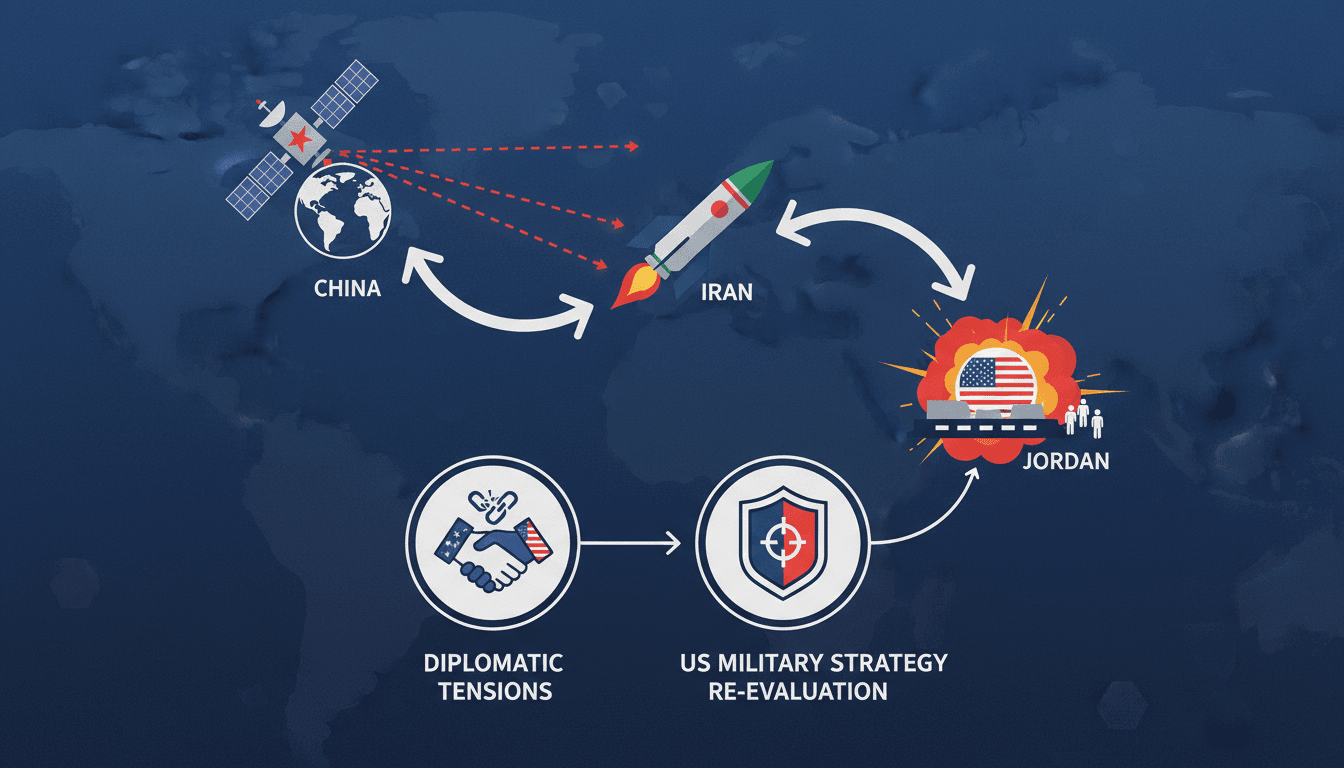
- On July 17, 2026, Iranian ballistic missiles struck Muwaffaq Salti Air Base in Jordan, killing three US soldiers.
- US officials linked the attack to high-resolution satellite imagery obtained by Iran from Chinese commercial entities.
- Diplomatic tensions are escalating as the US seeks to address the implications of this incident ahead of a planned summit with China.
The context you actually need
- Iran has been increasingly aggressive in the region, utilizing advanced technology to enhance its military operations against US forces.
- Chinese commercial entities have been sanctioned by the US for providing satellite imagery that could be used against American troops, indicating a troubling trend in military support.
- The US has warned China about the risks of such transfers, yet the recent attack demonstrates a failure to deter these actions effectively.
What's really happening
The July 17 missile strike on Muwaffaq Salti Air Base represents a significant escalation in the ongoing conflict involving Iran and its proxies. The attack, which resulted in the deaths of three US soldiers and injuries to four others, was reportedly facilitated by high-resolution satellite imagery acquired by Iran from Chinese commercial sources. This imagery allowed for improved targeting of the base, specifically a housing area where US troops were sleeping.
Prior to the strike, US officials had already expressed concerns about the potential military applications of satellite imagery provided by Chinese firms to Iran. In May 2026, the US sanctioned three Chinese companies—MizarVision, Earth Eye, and Chang Guang—over their involvement in supplying such imagery. These sanctions were a response to warnings that such commercial transfers could lead to lethal outcomes for US forces stationed in the region.
Following the attack, Iranian state media quickly published high-resolution images of the damage, further indicating the effectiveness of the intelligence Iran had received. US officials have since raised the issue with their Chinese counterparts, seeking to clarify the extent of Chinese involvement. However, China has denied any direct involvement and has accused unnamed parties of politicizing the situation.
This incident underscores a broader trend where commercial technology is increasingly intertwined with military operations. The implications are profound: as nations like Iran gain access to advanced satellite capabilities, the risks to US forces and allies in the region grow. The US military must now reassess its operational security and intelligence-gathering strategies to mitigate these risks.
Moreover, the diplomatic fallout from this incident could influence upcoming negotiations between the US and China, particularly with a summit scheduled for September 24, 2026. The US aims to avoid public escalation while addressing the underlying issues of military support and technology transfers. The situation is fluid, and the outcomes of these discussions could have lasting impacts on US-China relations and regional security dynamics.
Who feels it first (and how)
- US military personnel stationed in the Middle East, facing increased risks from enhanced targeting capabilities of adversaries.
- Defense contractors involved in military technology, who may see shifts in demand for protective measures and intelligence solutions.
- Energy markets in the Gulf region, as heightened tensions could lead to instability affecting oil prices and supply chains.
What to watch next
- Diplomatic engagements: Monitor the outcomes of the US-China summit on September 24, as discussions may address military technology transfers and regional security.
- Military readiness: Watch for changes in US military posture in the Middle East, including potential increases in troop deployments or enhanced defensive measures.
- Iran's military capabilities: Keep an eye on further developments in Iran's missile technology and satellite capabilities, which could influence regional power dynamics.
Three US soldiers were killed in the missile strike on July 17, 2026.
Diplomatic tensions between the US and China will escalate as the US seeks accountability for the satellite imagery transfers.
The long-term impact on US military strategy and regional security dynamics remains uncertain.
Frequently Asked Questions
- Why it matters?
- This incident highlights the growing interconnectedness of military capabilities and commercial technology, raising concerns for US forces and allies in the region.
- What happened (in 30 seconds)?
- On July 17, 2026, Iranian ballistic missiles struck Muwaffaq Salti Air Base in Jordan, killing three US soldiers. US officials linked the attack to high-resolution satellite imagery obtained by Iran from Chinese commercial entities. Diplomatic tensions are escalating as the US seeks to address the implications of this incident ahead of a planned summit with China.
- What's really happening?
- The July 17 missile strike on Muwaffaq Salti Air Base represents a significant escalation in the ongoing conflict involving Iran and its proxies. The attack, which resulted in the deaths of three US soldiers and injuries to four others, was reportedly facilitated by high-resolution satellite imagery acquired by Iran from Chinese commercial sources. This imagery allowed for improved targeting of the base, specifically a housing area where US troops were sleeping. Prior to the strike, US official
- Who feels it first (and how)?
- US military personnel stationed in the Middle East, facing increased risks from enhanced targeting capabilities of adversaries. Defense contractors involved in military technology, who may see shifts in demand for protective measures and intelligence solutions. Energy markets in the Gulf region, as heightened tensions could lead to instability affecting oil prices and supply chains.
- What to watch next?
- Diplomatic engagements: Monitor the outcomes of the US-China summit on September 24, as discussions may address military technology transfers and regional security. Military readiness: Watch for changes in US military posture in the Middle East, including potential increases in troop deployments or enhanced defensive measures. Iran's military capabilities: Keep an eye on further developments in Iran's missile technology and satellite capabilities, which could influence regional power dynamic
English-language reporting on Saudi politics, policy, and society.
"Saudi Gazette reflects mainstream Saudi institutional perspectives."
— A47 Editor
Chinese satellite imagery linked to Iranian strike that killed 3 US troops: Report
US officials have linked high-resolution satellite imagery from Chinese entities to an Iranian missile strike that killed three American soldiers at the Muwaffaq Salti Air Base in Jordan on July 17. The imagery was reportedly obtained by Iran before ...
Egyptian politics, economy, and society coverage.
"Al Masry Al Youm is a major Egyptian newspaper with broad national coverage."
— A47 Editor
وول ستريت جورنال: صور أقمار صناعية صينية ساعدت إيران بضرب قاعدة أمريكية في الأردن
According to U.S. officials cited by the Wall Street Journal, Iran obtained high-resolution satellite images prior to an attack that resulted in the deaths of three American soldiers in July. This intelligence reportedly played a crucial role in the ...
European coverage of Middle East politics and security issues.
"France 24 offers international reporting with a European editorial perspective."
— A47 Editor
Iran got Chinese satellite images before deadly strike on US troops, report reveals
A report from The Wall Street Journal indicates that Chinese entities provided Iran with satellite images of a military base in Jordan prior to and following an attack that resulted in the deaths of three U.S. soldiers. This incident highlights the o...
Coverage of current events and conflicts in the Middle East.
"France 24 is viewed as a globally focused outlet with balanced coverage and a European perspective."
— A47 Editor
Iran got Chinese satellite images before deadly strike on US troops, report reveals
A report from The Wall Street Journal indicates that Chinese entities provided Iran with satellite images of a military base in Jordan prior to and following an attack that resulted in the deaths of three U.S. soldiers. This incident highlights the o...
Pan-Arab political news and analysis.
"Al-Quds Al-Arabi is a London-based Arabic newspaper known for political coverage."
— A47 Editor
وول ستريت جورنال: إيران حصلت على صور أقمار صناعية من جهات صينية قبل قصفها قاعدة بالأردن
U.S. officials reported that Iran obtained high-resolution satellite images of a military base in Jordan from Chinese sources prior to a missile attack in July that resulted in the deaths of three American soldiers. This incident raises concerns abou...
Global political, business, and cultural coverage from WSJ international desks.
"The Wall Street Journal offers extensive international reporting with a reputation for financial insight and a center-right editorial stance."
— A47 Editor
U.S. Links Chinese Satellite Imagery to Iranian Strike That Killed Three Troops
The U.S. has linked Chinese satellite imagery to an Iranian strike that resulted in the deaths of three American troops, escalating tensions between the U.S. and China ahead of a scheduled summit between President Trump and President Xi. This finding...