
Houthi Forces Expand Control in Yemen, Threatening Bab al-Mandeb Strait Shipping
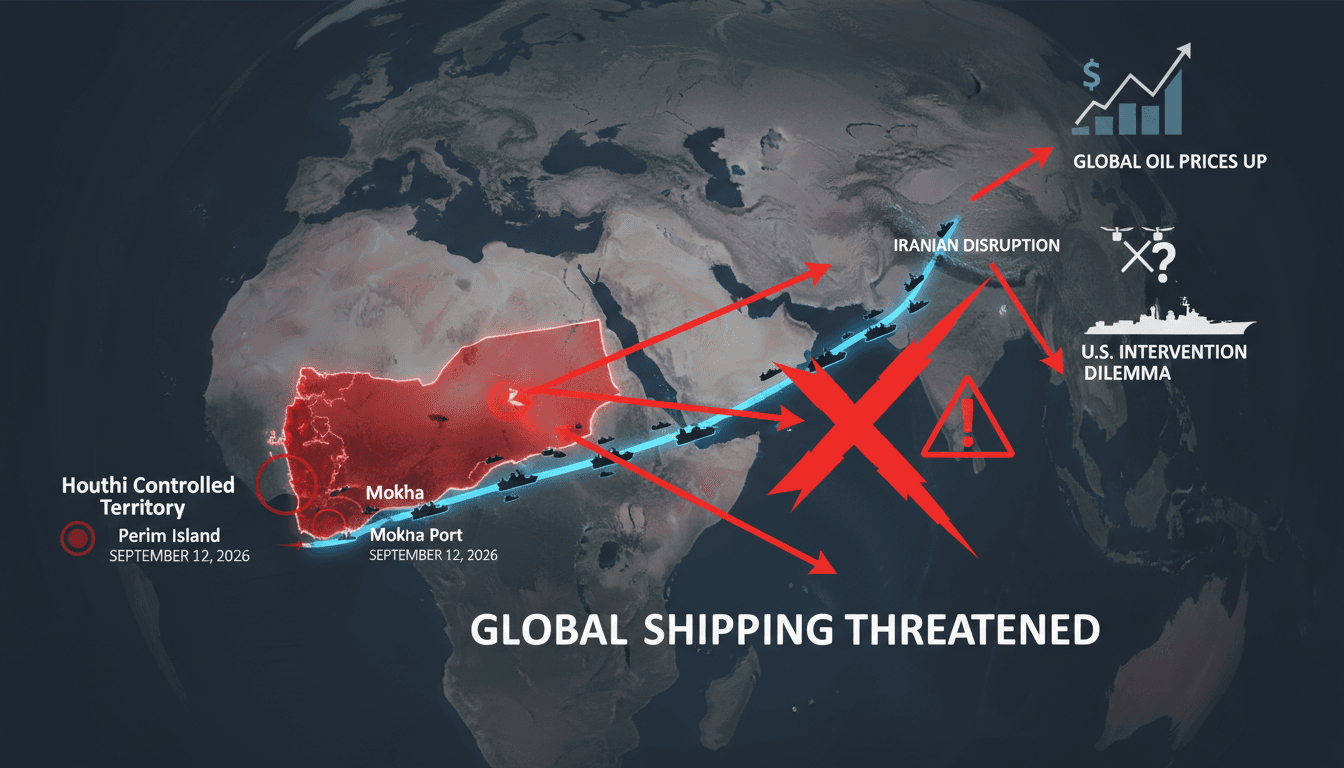
Here's what it means for you.
Rising tensions in the Red Sea could lead to increased energy prices and shipping disruptions affecting global markets.
Why it matters
The Houthi advances threaten key maritime routes, impacting global oil supply and U.S. foreign policy.
What happened (in 30 seconds)
- Houthi forces seized key positions including Perim Island and Mokha port on Yemen's western coast on September 12, 2026.
- The U.S. faces a dilemma between military engagement and allowing Iranian-aligned leverage over global energy routes.
- Oil prices surged, with Brent crude reaching approximately $104.60 per barrel amid rising geopolitical tensions.
The context you actually need
- The U.S.-Iran conflict has been ongoing since February 2026, with Iran disrupting shipping in the Strait of Hormuz, which carries about one-fifth of global oil supplies.
- Saudi Arabia has rerouted oil exports via Red Sea ports to bypass the blockage, increasing reliance on this alternative route.
- Houthi forces have previously attacked Red Sea shipping and announced a maritime embargo on Saudi-linked vessels, escalating regional tensions.
What's really happening
In early September 2026, Houthi forces launched a rapid offensive along Yemen's western coast, capturing Mokha port on September 11 and advancing to seize Perim Island (Mayyun) in the center of the Bab al-Mandeb Strait on September 12. These strategic gains enhance their ability to monitor and potentially interdict maritime traffic, which is crucial for global shipping routes. The Bab al-Mandeb Strait is a vital chokepoint for oil shipments, and the closure of this route could constrain approximately 7% of global petroleum supplies, compounding the disruptions already caused by the Strait of Hormuz.
The Trump administration is now faced with difficult choices. Saudi Crown Prince Mohammed bin Salman contacted President Trump on September 11, requesting direct U.S. military assistance. However, the administration declined direct intervention, opting instead to offer intelligence support. This decision reflects a broader strategy to prioritize U.S. national security interests, particularly freedom of navigation, while enabling regional partners to address their challenges. The administration's reluctance to engage militarily is compounded by rising domestic political pressures, particularly as energy prices climb due to these geopolitical tensions.
Iran's response has been to call for dialogue over military solutions in Yemen, indicating a potential avenue for de-escalation. However, the reality on the ground suggests that the Houthis, emboldened by their recent territorial gains, may continue to assert their influence over maritime routes. This situation places additional pressure on Saudi Arabia, which faces increased risks to its Red Sea oil exports and has sought, but not received, direct U.S. strikes on Houthi positions.
As the conflict unfolds, the implications for global energy markets are significant. Elevated oil prices and potential further shipping disruptions through the Red Sea route may increase fuel and import costs for countries reliant on regional energy markets and trade flows, including Dubai. The interconnectedness of these geopolitical events means that businesses and consumers alike will feel the impact of these developments.
Who feels it first (and how)
- Energy sector companies: Increased operational costs and potential supply chain disruptions.
- Consumers in Dubai: Higher fuel prices and increased costs for imported goods.
- Shipping companies: Greater risks and insurance costs associated with navigating the Red Sea.
What to watch next
- U.S. military posture: Monitor any changes in U.S. military presence or actions in the region, as this will indicate the administration's response to Houthi advances.
- Oil price fluctuations: Keep an eye on Brent crude prices, as they will reflect market reactions to ongoing tensions and potential supply disruptions.
- Houthi communications: Watch for any announcements from Houthi leaders regarding maritime operations, as these could signal further escalations or attempts at negotiation.
Houthi forces have gained control of key maritime positions.
Continued tensions will affect global oil prices and shipping routes.
The U.S. administration's long-term strategy in response to these developments.
Frequently Asked Questions
- Why it matters?
- The Houthi advances threaten key maritime routes, impacting global oil supply and U.S. foreign policy.
- What happened (in 30 seconds)?
- Houthi forces seized key positions including Perim Island and Mokha port on Yemen's western coast on September 12, 2026. The U.S. faces a dilemma between military engagement and allowing Iranian-aligned leverage over global energy routes. Oil prices surged, with Brent crude reaching approximately $104.60 per barrel amid rising geopolitical tensions.
- What's really happening?
- In early September 2026, Houthi forces launched a rapid offensive along Yemen's western coast, capturing Mokha port on September 11 and advancing to seize Perim Island (Mayyun) in the center of the Bab al-Mandeb Strait on September 12. These strategic gains enhance their ability to monitor and potentially interdict maritime traffic, which is crucial for global shipping routes. The Bab al-Mandeb Strait is a vital chokepoint for oil shipments, and the closure of this route could constrain approxim
- Who feels it first (and how)?
- Energy sector companies: Increased operational costs and potential supply chain disruptions. Consumers in Dubai: Higher fuel prices and increased costs for imported goods. Shipping companies: Greater risks and insurance costs associated with navigating the Red Sea.
- What to watch next?
- U.S. military posture: Monitor any changes in U.S. military presence or actions in the region, as this will indicate the administration's response to Houthi advances. Oil price fluctuations: Keep an eye on Brent crude prices, as they will reflect market reactions to ongoing tensions and potential supply disruptions. Houthi communications: Watch for any announcements from Houthi leaders regarding maritime operations, as these could signal further escalations or attempts at negotiation.
Arabic-language coverage of international news and geopolitics.
"RT Arabic is a Russian state-funded outlet often criticized for promoting Kremlin-aligned narratives."
— A47 Editor
من هرمز إلى باب المندب.. الحوثيون يضعون ترامب أمام خيارين حلوهما مر وأزمة جديدة
Recent reports indicate that the Houthis are making significant advances along Yemen's western coast, prompting an analysis by Reuters that highlights the implications of these developments for the United States, which now faces a new crisis.
Regional coverage and analysis focused on politics, diplomacy, and business across the Middle East.
"Al-Monitor is known for analytical reporting on Middle East politics and policy developments."
— A47 Editor
Analysis-Houthi advance in Yemen puts U.S. in a new bind
The Iran-aligned Houthi rebels have launched a rapid offensive in Yemen, capturing the strategic port city of Mocha and tightening their control over the Bab al-Mandeb Strait, a vital maritime route. This escalation poses a significant challenge for ...
Top international stories selected by The Guardian editors.
"The Guardian is known for its progressive editorial stance and in-depth analysis."
— A47 Editor
The rapid Houthi advance in Yemen: why it matters and what’s at stake
The Houthi forces have rapidly advanced along Yemen's Red Sea coast, seizing control of the strategic port city of Mocha and intensifying their military offensive against the Saudi-backed government. This escalation has resulted in over 1,000 casualt...