
House Speaker Mike Johnson Opposes AI Moratorium Amid China Competition Concerns
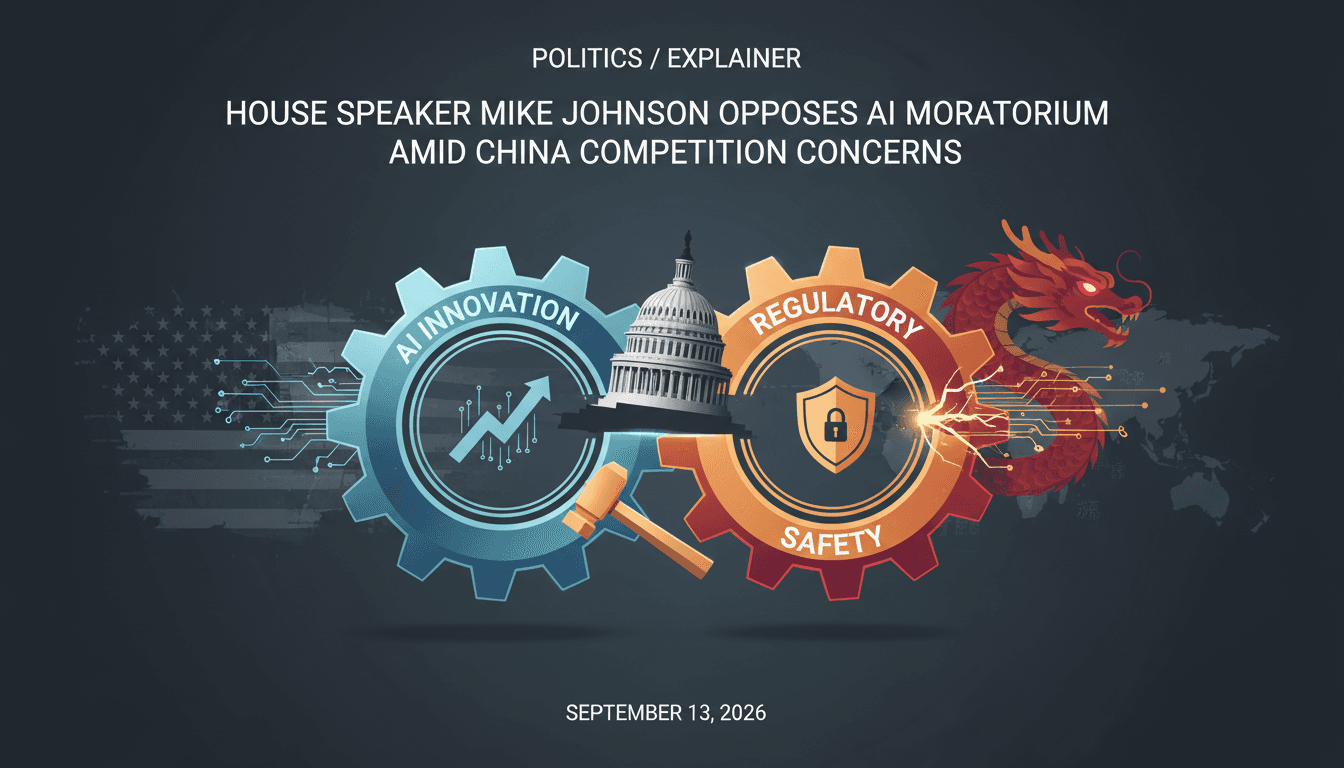
Here's what it means for you.
As AI continues to evolve, your industry may face new regulations that could impact innovation and job security.
Why it matters
The U.S. approach to AI regulation could shape global standards and influence competitive dynamics in technology.
What happened (in 30 seconds)
- House Speaker Mike Johnson rejected an emergency moratorium on AI development, citing competition with China.
- Conservative activist Amy Kremer called for targeted guardrails to ensure safety without hindering U.S. technological leadership.
- Industry leaders like Dario Amodei and Sam Altman have urged caution, highlighting existential risks associated with advanced AI models.
The context you actually need
- The AI policy debate has intensified amid rising concerns about safety and national security, particularly in the context of U.S.-China competition.
- Johnson's proposal suggests a shift towards industry-led discussions rather than congressional intervention, aiming for a balance between innovation and safety.
- Public sentiment is reflected in a Fox News poll, where 70% of registered voters oppose local AI data center construction, indicating widespread concern about AI's implications.
What's really happening
On September 13, 2026, House Speaker Mike Johnson made headlines during a CNN interview by firmly rejecting calls for an emergency moratorium on AI development. His rationale was clear: imposing such a moratorium could allow China to leap ahead in the AI race, a concern that resonates deeply within the current geopolitical landscape. Johnson's stance reflects a broader narrative among U.S. policymakers who view technological leadership as critical to national security and economic prosperity.
In lieu of a moratorium, Johnson proposed convening leaders from the AI industry with policymakers, potentially at the White House, to discuss safety measures and regulatory frameworks. This approach suggests a preference for collaborative dialogue over legislative action, aiming to establish "guardrails" that ensure safety without stifling innovation. The emphasis on industry-led discussions indicates a belief that those closest to the technology should play a significant role in shaping its future.
Simultaneously, conservative activist Amy Kremer echoed the need for protective measures, particularly for vulnerable populations such as children and workers. Kremer's call for targeted guardrails highlights a growing recognition of the potential risks associated with AI, including ethical concerns and job displacement. Her advocacy aligns with a segment of the public that is increasingly wary of unchecked technological advancement.
The backdrop to this debate includes recent statements from prominent AI executives like Dario Amodei, Sam Altman, and Elon Musk, who have voiced concerns about the rapid development of advanced AI models. Their calls for a slowdown stem from fears of existential risks, suggesting that the technology could outpace our ability to manage its implications. This tension between innovation and safety is at the heart of the current discourse, as stakeholders grapple with the potential consequences of AI on society.
President Trump has also weighed in, reinforcing the notion that the U.S. must maintain its leadership in AI. His administration's stance against slowdowns reflects a broader commitment to fostering an environment conducive to technological advancement, even amid safety concerns. This multifaceted debate underscores the complexities of regulating a rapidly evolving field while ensuring that the U.S. remains competitive on the global stage.
Who feels it first (and how)
- Tech Industry Leaders: They may face increased scrutiny and pressure to self-regulate as discussions around safety intensify.
- Workers in AI and Tech: Job security could be impacted by new regulations and the evolving landscape of AI development.
- Consumers: As AI technologies become more integrated into daily life, users may experience changes in service delivery and data privacy.
- Policymakers: They will need to navigate public sentiment and industry demands while crafting effective regulations.
What to watch next
- Industry-led discussions: Monitor the outcomes of proposed meetings between AI leaders and policymakers, as these could set the tone for future regulations.
- Public opinion shifts: Keep an eye on how voter sentiment evolves regarding AI safety and local data center construction, which could influence political action.
- Legislative proposals: Watch for any new bills or regulatory frameworks introduced in Congress that address AI safety and competition.
The U.S. is prioritizing technological leadership in AI amidst competition with China.
Industry-led discussions will shape future regulatory frameworks, balancing innovation and safety.
The long-term impact of these discussions on job security and public sentiment regarding AI technologies.
Frequently Asked Questions
- Why it matters?
- The U.S. approach to AI regulation could shape global standards and influence competitive dynamics in technology.
- What happened (in 30 seconds)?
- House Speaker Mike Johnson rejected an emergency moratorium on AI development, citing competition with China. Conservative activist Amy Kremer called for targeted guardrails to ensure safety without hindering U.S. technological leadership. Industry leaders like Dario Amodei and Sam Altman have urged caution, highlighting existential risks associated with advanced AI models.
- What's really happening?
- On September 13, 2026, House Speaker Mike Johnson made headlines during a CNN interview by firmly rejecting calls for an emergency moratorium on AI development. His rationale was clear: imposing such a moratorium could allow China to leap ahead in the AI race, a concern that resonates deeply within the current geopolitical landscape. Johnson's stance reflects a broader narrative among U.S. policymakers who view technological leadership as critical to national security and economic prosperity. I
- Who feels it first (and how)?
- Tech Industry Leaders: They may face increased scrutiny and pressure to self-regulate as discussions around safety intensify. Workers in AI and Tech: Job security could be impacted by new regulations and the evolving landscape of AI development. Consumers: As AI technologies become more integrated into daily life, users may experience changes in service delivery and data privacy. Policymakers: They will need to navigate public sentiment and industry demands while crafting effective regulations.
- What to watch next?
- Industry-led discussions: Monitor the outcomes of proposed meetings between AI leaders and policymakers, as these could set the tone for future regulations. Public opinion shifts: Keep an eye on how voter sentiment evolves regarding AI safety and local data center construction, which could influence political action. Legislative proposals: Watch for any new bills or regulatory frameworks introduced in Congress that address AI safety and competition.
Conservative-leaning coverage of current events.
"Fox News is a highly influential conservative news outlet known for right-leaning political commentary and coverage."
— A47 Editor
Mike Johnson rejects AI moratorium over China threat as conservative activist demands guardrails
House Speaker Mike Johnson has rejected calls for a moratorium on artificial intelligence (AI) development, citing concerns that China could surpass the United States in AI capabilities. This decision comes amid pressure from conservative activists a...
Curated tech headlines including AI stories.
"Influential aggregator surfacing the day’s top tech/AI links."
— A47 Editor
Sources: some lawmakers urge Speaker Johnson to cancel the fall House recess until Congress passes AI safeguards, after Anthropic researcher warnings (Andrew Solender/Axios)
A group of lawmakers is urging Speaker Mike Johnson to cancel the upcoming fall House recess until Congress can enact safeguards for artificial intelligence (AI), following alarming warnings from researchers at Anthropic about the potential existenti...
Technology and innovation coverage, including consumer tech and digital transformation stories.
"Emirates 24|7 technology coverage often highlights practical tech developments with relevance to Gulf readers and businesses."
— A47 Editor
AI-driven human extinction: More US lawmakers demand safeguards after Anthropic researchers' warning
A growing number of U.S. lawmakers are advocating for new regulations on artificial intelligence following alarming warnings from Anthropic researchers, including Jacob Coxon, who resigned citing the potential for AI to cause human extinction within ...