
First Deportation Under Alien Terrorist Removal Court Occurs in the US
Here's what it means for you.
The deportation of a lawful permanent resident under secretive court proceedings raises critical questions about national security and civil liberties.
Why it matters
This case sets a precedent for how the U.S. handles terrorism-related deportations, potentially impacting immigration policies and civil rights.
What happened (in 30 seconds)
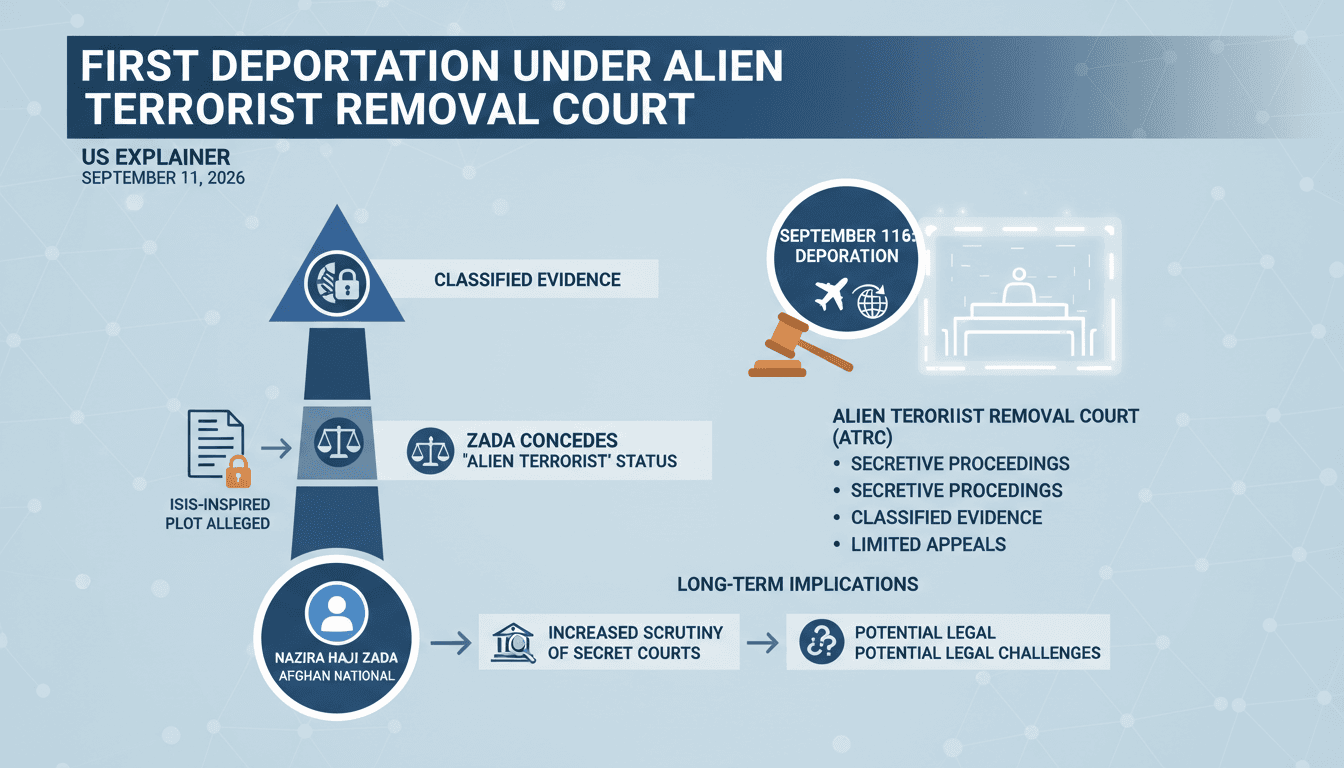
- Nazira Haji Zada, a 47-year-old Afghan national, was deported from the U.S. on September 11, 2026, marking the first use of the Alien Terrorist Removal Court (ATRC).
- Zada conceded her status as an 'alien terrorist' based on classified evidence related to her alleged support for an ISIS-inspired plot involving her family.
- The ATRC, established in 1996, had remained dormant for 30 years until this landmark case, which concluded with Zada waiving her right to appeal.
The context you actually need
- The ATRC was created to handle cases involving non-citizens accused of terrorism when evidence is classified, balancing national security with due process.
- Zada's family members were convicted in 2024 for planning a mass shooting, which brought her alleged involvement to light and prompted the DOJ's action.
- The legal process faced criticism for its lack of transparency, raising concerns about the implications for due process rights in similar future cases.
What's really happening
The deportation of Nazira Haji Zada under the Alien Terrorist Removal Court (ATRC) represents a significant shift in how the U.S. government addresses national security threats posed by non-citizens. Established in 1996, the ATRC was designed to expedite the removal of individuals deemed a threat to national security while allowing the use of classified evidence. However, it remained unused for three decades, highlighting a historical reluctance to employ such measures.
Zada's case emerged after her son and son-in-law were arrested and convicted for plotting a mass shooting on Election Day 2024, an ISIS-inspired scheme that underscored the potential for radicalization within families. The Department of Justice (DOJ) filed a petition for her removal in July 2026, presenting classified evidence that implicated her as a key figure in the radicalization of her family. This evidence was not disclosed to her legal team, raising significant due process concerns.
The ATRC's proceedings are shrouded in secrecy, which has led to criticism from civil rights advocates who argue that the lack of transparency undermines the fundamental principles of justice. Zada's public defenders contended that the process violated her rights, emphasizing the need for a balance between national security and individual liberties. Despite these challenges, Zada ultimately waived her right to appeal, leading to her deportation.
The implications of this case extend beyond Zada herself. It sets a precedent for future deportations under the ATRC, potentially leading to an increase in cases where classified evidence is used to justify removals. This could create a chilling effect on lawful permanent residents and immigrants, who may fear that their status could be jeopardized by secretive proceedings. Furthermore, the case raises questions about the broader implications for civil liberties in the context of national security, as the government may increasingly rely on classified evidence to take action against individuals without full transparency.
As the U.S. grapples with the balance between security and civil rights, Zada's deportation could signal a new era of immigration enforcement that prioritizes national security over individual rights, potentially reshaping the landscape of immigration law and policy.
Who feels it first (and how)
- Lawful permanent residents: Increased scrutiny and potential risk of deportation based on classified evidence.
- Immigration attorneys: Need to adapt to new legal precedents and challenges in defending clients.
- Civil rights advocates: Heightened concerns over due process and transparency in legal proceedings.
What to watch next
- Future ATRC cases: Monitor how many more cases are brought before the ATRC and the outcomes, which will indicate the court's role in national security.
- Legal challenges: Watch for potential constitutional challenges to the ATRC's processes, which could reshape its operation and impact civil liberties.
- Public sentiment: Observe shifts in public opinion regarding national security versus civil rights, which may influence future policy decisions.
The ATRC has been activated for the first time in 30 years, leading to Zada's deportation.
Increased use of classified evidence in future deportation cases, raising concerns about due process.
The long-term impact on immigration policy and civil rights protections in the U.S.
Frequently Asked Questions
- Why it matters?
- This case sets a precedent for how the U.S. handles terrorism-related deportations, potentially impacting immigration policies and civil rights.
- What happened (in 30 seconds)?
- Nazira Haji Zada, a 47-year-old Afghan national, was deported from the U.S. on September 11, 2026, marking the first use of the Alien Terrorist Removal Court (ATRC). Zada conceded her status as an 'alien terrorist' based on classified evidence related to her alleged support for an ISIS-inspired plot involving her family. The ATRC, established in 1996, had remained dormant for 30 years until this landmark case, which concluded with Zada waiving her right to appeal.
- What's really happening?
- The deportation of Nazira Haji Zada under the Alien Terrorist Removal Court (ATRC) represents a significant shift in how the U.S. government addresses national security threats posed by non-citizens. Established in 1996, the ATRC was designed to expedite the removal of individuals deemed a threat to national security while allowing the use of classified evidence. However, it remained unused for three decades, highlighting a historical reluctance to employ such measures. Zada's case emerged afte
- Who feels it first (and how)?
- Lawful permanent residents: Increased scrutiny and potential risk of deportation based on classified evidence. Immigration attorneys: Need to adapt to new legal precedents and challenges in defending clients. Civil rights advocates: Heightened concerns over due process and transparency in legal proceedings.
- What to watch next?
- Future ATRC cases: Monitor how many more cases are brought before the ATRC and the outcomes, which will indicate the court's role in national security. Legal challenges: Watch for potential constitutional challenges to the ATRC's processes, which could reshape its operation and impact civil liberties. Public sentiment: Observe shifts in public opinion regarding national security versus civil rights, which may influence future policy decisions.
International coverage of politics, culture, and current affairs.
"BBC News is widely regarded as a reputable international news organization, known for its impartial tone and public service mandate."
— A47 Editor
Afghan woman deported from US in first use of 'alien terrorist' court
An Afghan woman, a legal resident of the United States, has been deported in a landmark case that marks the first application of the 'alien terrorist' court. Despite not being charged with any crime, her deportation was influenced by her familial con...
Global news coverage with extensive reporting on Middle Eastern conflicts and geopolitics.
"Al Jazeera is a Qatar-based broadcaster known for wide regional coverage and alternative perspectives."
— A47 Editor
Afghan woman deported in first use of US Alien Terrorist Removal Court
Nazira Haji Zada, an Afghan woman, has been deported in a landmark case that marks the first use of the US Alien Terrorist Removal Court, a legal body established in 1996 but never previously utilized. This unprecedented action highlights the court's...
Comprehensive coverage of Middle Eastern and global issues.
"Al Jazeera is a prominent voice from the Global South, especially the Middle East, with an emphasis on underreported stories."
— A47 Editor
Afghan woman deported in first use of US Alien Terrorist Removal Court
Nazira Haji Zada, an Afghan woman, has been deported in a landmark case that marks the first use of the US Alien Terrorist Removal Court, a legal body established in 1996 but never previously utilized. This unprecedented action highlights the court's...
Regional coverage and analysis focused on politics, diplomacy, and business across the Middle East.
"Al-Monitor is known for analytical reporting on Middle East politics and policy developments."
— A47 Editor
Afghan woman deported from US in first use of secretive terrorism court
An Afghan woman, Nazira Haji Zada, has been deported from the United States after being accused of supporting the Islamic State. This marks the first case processed through the Alien Terrorist Removal Court, a little-known court established 30 years ...