
Trump Advocates for U.S. AI Leadership Amid Calls for Regulatory Restraint
Here's what it means for you.
As the U.S. prioritizes AI development over regulation, tech professionals may face a rapidly evolving landscape that demands agility and foresight.
Why it matters
The U.S. approach to AI regulation could shape global technology standards and competitive dynamics, impacting businesses and economies worldwide.
What happened (in 30 seconds)
- Trump defended minimal regulation on AI during a speech in Ireland, emphasizing the need for U.S. leadership against China.
- Industry executives called for a slowdown in AI development due to safety concerns, which Trump dismissed as detrimental to U.S. competitiveness.
- The administration aims to maintain a light-touch regulatory environment to foster innovation and infrastructure growth.
The context you actually need
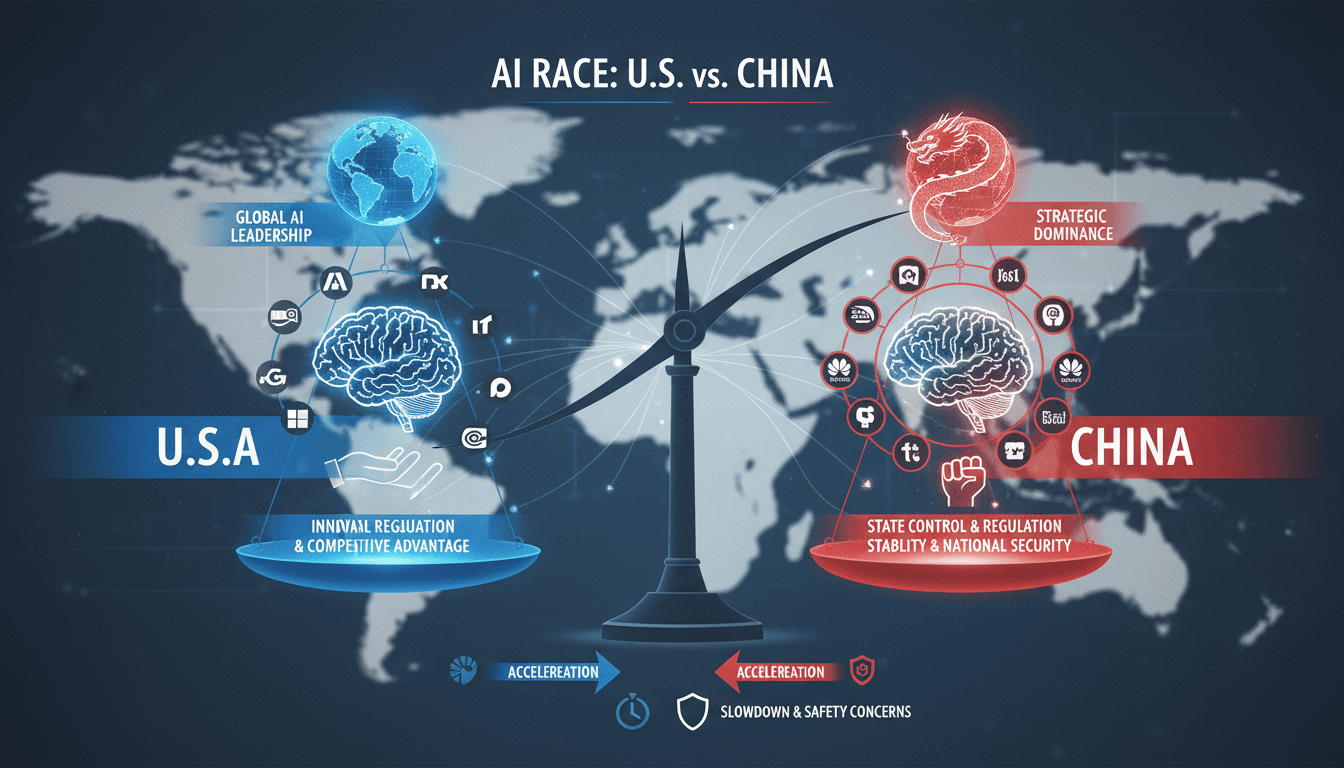
- AI as a strategic domain: The U.S. and China view advanced AI as critical for military and economic supremacy, influencing global standards.
- Concerns over rapid advancement: Executives from leading AI firms have raised alarms about the pace of development, advocating for coordinated slowdowns.
- Election-year dynamics: The debate over AI regulation intersects with broader discussions on infrastructure and energy demands as the U.S. approaches elections.
What's really happening
On September 13, 2026, President Donald Trump made headlines during a public statement at his Doonbeg resort in Ireland, where he firmly rejected calls for a slowdown in AI development. His remarks came in response to growing concerns from industry leaders about the rapid pace of AI advancements and the potential risks associated with unchecked growth. Trump framed the competition with China as a critical national priority, asserting that "whoever wins AI wins," thereby emphasizing the strategic importance of maintaining U.S. superiority in this domain.
The backdrop to Trump's comments is a complex landscape where both the U.S. and China are treating advanced AI as a strategic asset. In 2026, Chinese AI models have significantly narrowed the performance gap with their U.S. counterparts, prompting the U.S. government to implement export controls on semiconductor chips and closely monitor foreign AI projects. This competitive tension has led to a heightened focus on AI as not just a technological frontier but a battleground for geopolitical influence.
Despite the concerns raised by tech executives, including figures like Dario Amodei of Anthropic, who have advocated for a more cautious approach to AI development, the Trump administration has doubled down on its strategy of minimal regulation. White House AI adviser David Sacks echoed Trump's sentiments, reinforcing the idea that excessive regulatory measures could hinder U.S. innovation and cede ground to adversaries. This stance aligns with the administration's broader goals of infrastructure expansion and reducing barriers to foster competitive momentum in the AI sector.
As the U.S. prepares for a planned meeting between Trump and Chinese President Xi Jinping later in September, where AI governance is expected to be a key topic, the implications of this regulatory approach are profound. The administration's commitment to a light-touch regulatory framework could lead to a rapid acceleration of AI technologies, but it also raises questions about safety, ethical considerations, and the long-term sustainability of such an approach.
Who feels it first (and how)
- Tech executives: They face pressure to balance innovation with safety concerns, influencing corporate strategies.
- Investors: They must navigate a volatile market driven by rapid advancements and geopolitical tensions.
- Regulators: They will grapple with the implications of a federal standard versus state-level regulations, impacting compliance and enforcement.
- Consumers: They may experience the effects of AI advancements in everyday products and services, raising questions about privacy and security.
What to watch next
- Upcoming U.S.-China meetings: The outcomes of discussions on AI governance could set the tone for international standards and cooperation.
- Industry responses to regulatory pressures: Watch how tech companies adapt their strategies in light of the administration's stance on minimal regulation.
- Public sentiment on AI safety: Growing concerns among consumers and advocacy groups may influence future regulatory discussions and corporate practices.
The U.S. administration prioritizes AI development over regulation to maintain competitive advantage.
Continued tension between the U.S. and China will shape the global AI landscape and regulatory approaches.
The long-term implications of minimal regulation on safety and ethical standards in AI development.
Frequently Asked Questions
- Why it matters?
- The U.S. approach to AI regulation could shape global technology standards and competitive dynamics, impacting businesses and economies worldwide.
- What happened (in 30 seconds)?
- Trump defended minimal regulation on AI during a speech in Ireland, emphasizing the need for U.S. leadership against China. Industry executives called for a slowdown in AI development due to safety concerns, which Trump dismissed as detrimental to U.S. competitiveness. The administration aims to maintain a light-touch regulatory environment to foster innovation and infrastructure growth.
- What's really happening?
- On September 13, 2026, President Donald Trump made headlines during a public statement at his Doonbeg resort in Ireland, where he firmly rejected calls for a slowdown in AI development. His remarks came in response to growing concerns from industry leaders about the rapid pace of AI advancements and the potential risks associated with unchecked growth. Trump framed the competition with China as a critical national priority, asserting that "whoever wins AI wins," thereby emphasizing the strategic
- Who feels it first (and how)?
- Tech executives: They face pressure to balance innovation with safety concerns, influencing corporate strategies. Investors: They must navigate a volatile market driven by rapid advancements and geopolitical tensions. Regulators: They will grapple with the implications of a federal standard versus state-level regulations, impacting compliance and enforcement. Consumers: They may experience the effects of AI advancements in everyday products and services, raising questions about privacy and secur
- What to watch next?
- Upcoming U.S.-China meetings: The outcomes of discussions on AI governance could set the tone for international standards and cooperation. Industry responses to regulatory pressures: Watch how tech companies adapt their strategies in light of the administration's stance on minimal regulation. Public sentiment on AI safety: Growing concerns among consumers and advocacy groups may influence future regulatory discussions and corporate practices.
Tech business coverage, major deals, product launches, and Silicon Valley trends.
"WSJ’s tech section offers authoritative reporting on the intersection of technology and business, including exclusive industry analysis."
— A47 Editor
Trump Sees Race Against China as Key Issue on AI Regulation
President Trump has identified the competition with China as a critical issue in the regulation of artificial intelligence (AI), advocating for light regulation to maintain the U.S. technological lead. He defended this stance amidst concerns raised b...
Technology business and AI-related headlines.
"Data-driven tech newsroom with global scope."
— A47 Editor
Trump Brushes Off AI Doomsaying to Guard US Lead Over China
During a campaign stop in Las Vegas in June 2024, Donald Trump dismissed concerns about the potential dangers of artificial intelligence (AI) while emphasizing the importance of maintaining the United States' technological lead over China. This momen...
Technology business news, market impacts, and innovation trends.
"Bloomberg is a premier financial and tech news provider, respected for its in-depth reporting and analytical rigor."
— A47 Editor
Trump Brushes Off AI Doomsaying to Guard US Lead Over China
During a campaign stop in Las Vegas in June 2024, Donald Trump dismissed concerns about the potential dangers of artificial intelligence (AI) while emphasizing the importance of maintaining the United States' technological lead over China. This momen...
English-language reporting on Saudi politics, policy, and society.
"Saudi Gazette reflects mainstream Saudi institutional perspectives."
— A47 Editor
Trump says US is ‘winning’ AI race against China
US President Donald Trump asserted that the United States is leading the artificial intelligence race against China, highlighting the safeguards in place under his administration. In a recent Fox News interview, Trump cited the swift action taken aga...
News and guidance for IT pros on AI adoption.
"Enterprise-focused tips, explainers, and news for professionals."
— A47 Editor
Trump on AI Extinction: Beating China Is the Bigger Concern
Former President Donald Trump has downplayed concerns regarding potential AI extinction, emphasizing that the primary focus should be on outpacing China in the AI race. This statement comes amid calls from researchers and lawmakers for stronger regul...