
Israeli Culture Minister Threatens Citizenship Revocation for Filmmakers of Gaza Documentary
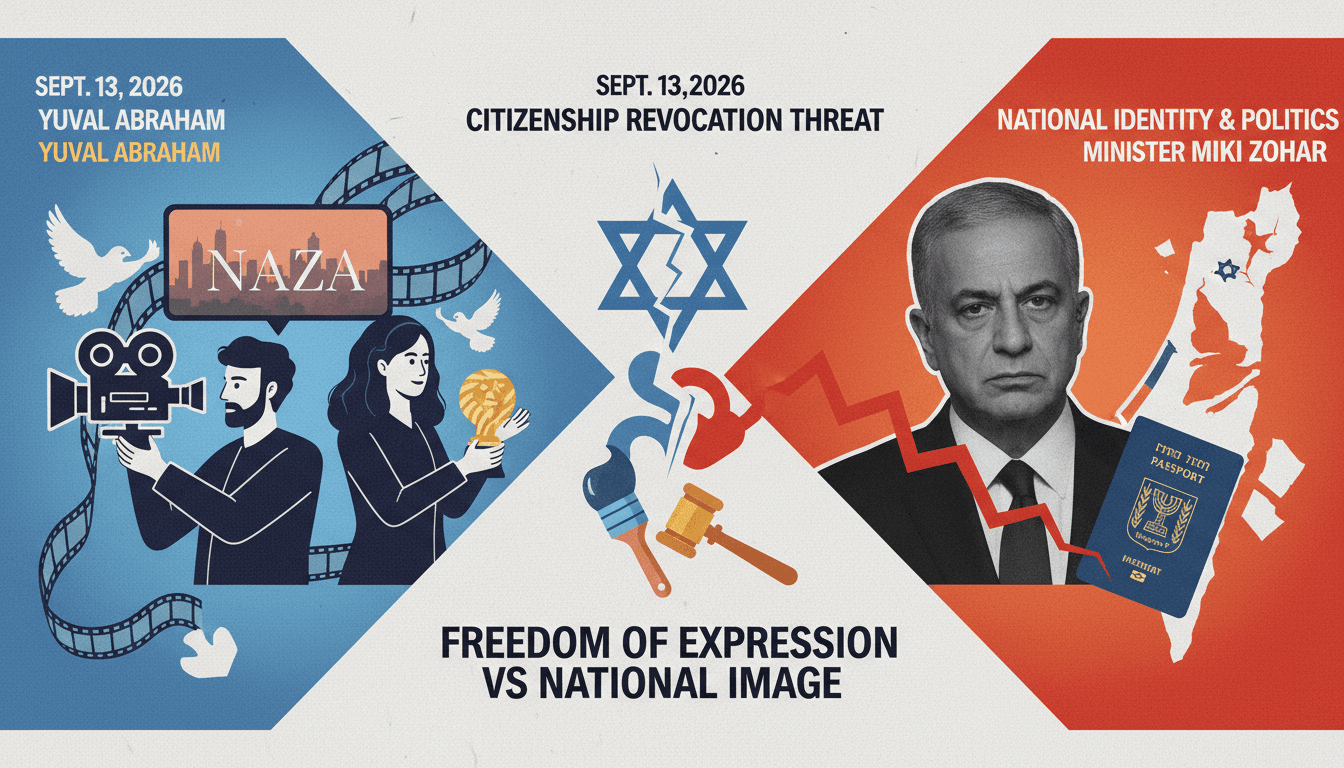
Here's what it means for you.
The intersection of art and politics can have profound implications for creators and their audiences worldwide.
Why it matters
This incident highlights the tensions between national identity and artistic expression, impacting how cultural narratives are shaped globally.
What happened (in 30 seconds)
- On September 13, 2026, Israeli Culture Minister Miki Zohar threatened to revoke the citizenship of filmmakers Yuval Abraham and Rachel Szor.
- The threat followed the premiere of their documentary NAZA at the Venice Film Festival, which critiques Israeli military actions in Gaza.
- Zohar accused the filmmakers of betraying Israel, igniting a broader debate on freedom of expression and national loyalty.
The context you actually need
- NAZA explores alleged AI-assisted targeting protocols used by Israeli forces, based on testimonies from military personnel.
- The film received no public funding from Israel, indicating a level of independence from state influence.
- This threat comes amid ongoing conflict between Israel and Hamas, intensifying scrutiny on artistic representations of the situation.
What's really happening
The threat from Minister Zohar is emblematic of a broader cultural and political struggle within Israel, particularly in the context of the ongoing Israel-Hamas conflict. The filmmakers, Yuval Abraham and Rachel Szor, have previously garnered acclaim for their work, including the Oscar-winning documentary No Other Land, which documented settler violence in the West Bank. Their latest film, NAZA, has drawn significant attention for its critical examination of Israeli military practices in Gaza, particularly the use of AI in targeting civilians.
Zohar's public condemnation of the filmmakers reflects a growing sentiment among certain Israeli officials who view artistic criticism as a betrayal of national identity. This perspective is not new; it taps into a long-standing tension between artistic freedom and national loyalty in Israel. The threat to revoke citizenship, while legally possible under Israeli law for acts deemed treasonous, is rarely enacted and raises questions about the limits of free expression in a democratic society.
The filmmakers' acceptance of the Special Jury Prize at the Venice Film Festival, where they received a historic 24.5-minute standing ovation, further complicates the narrative. Their call for international audiences to view NAZA underscores a desire to engage in a global dialogue about the realities of the Israeli-Palestinian conflict. However, this has been met with backlash from Israeli officials, including National Security Minister Itamar Ben-Gvir, who echoed Zohar's sentiments.
The implications of this incident extend beyond the filmmakers themselves. It signals to other artists and creators that engaging in politically sensitive topics may come with significant personal and professional risks. The potential for citizenship revocation, while not commonly applied, serves as a chilling reminder of the stakes involved in artistic expression in politically charged environments.
As the situation unfolds, it will be crucial to monitor how this incident influences the broader landscape of artistic freedom in Israel and beyond. The filmmakers' commitment to their work, despite the threats, may inspire others to continue exploring difficult subjects, but it also raises concerns about the potential repercussions they may face.
Who feels it first (and how)
- Filmmakers and artists: Increased scrutiny and potential backlash for politically charged content.
- Cultural institutions: Pressure to align with national narratives, affecting funding and support for critical works.
- International audiences: Heightened awareness of the complexities surrounding artistic expression in conflict zones.
What to watch next
- Reactions from the international film community: How will global filmmakers respond to the threat against Abraham and Szor?
- Legal developments regarding citizenship revocation: Will there be any formal actions taken against the filmmakers, or will this remain a political statement?
- Public discourse in Israel: How will Israeli society react to the tension between national loyalty and artistic freedom?
The filmmakers received a significant international accolade for their work.
The incident will spark further debate on artistic freedom in Israel and abroad.
Whether any legal actions will be taken against the filmmakers regarding their citizenship.
Frequently Asked Questions
- Why it matters?
- This incident highlights the tensions between national identity and artistic expression, impacting how cultural narratives are shaped globally.
- What happened (in 30 seconds)?
- On September 13, 2026, Israeli Culture Minister Miki Zohar threatened to revoke the citizenship of filmmakers Yuval Abraham and Rachel Szor. The threat followed the premiere of their documentary NAZA at the Venice Film Festival, which critiques Israeli military actions in Gaza. Zohar accused the filmmakers of betraying Israel, igniting a broader debate on freedom of expression and national loyalty.
- What's really happening?
- The threat from Minister Zohar is emblematic of a broader cultural and political struggle within Israel, particularly in the context of the ongoing Israel-Hamas conflict. The filmmakers, Yuval Abraham and Rachel Szor, have previously garnered acclaim for their work, including the Oscar-winning documentary No Other Land, which documented settler violence in the West Bank. Their latest film, NAZA, has drawn significant attention for its critical examination of Israeli military practices in Gaza, p
- Who feels it first (and how)?
- Filmmakers and artists: Increased scrutiny and potential backlash for politically charged content. Cultural institutions: Pressure to align with national narratives, affecting funding and support for critical works. International audiences: Heightened awareness of the complexities surrounding artistic expression in conflict zones.
- What to watch next?
- Reactions from the international film community: How will global filmmakers respond to the threat against Abraham and Szor? Legal developments regarding citizenship revocation: Will there be any formal actions taken against the filmmakers, or will this remain a political statement? Public discourse in Israel: How will Israeli society react to the tension between national loyalty and artistic freedom?
Hollywood business, film/TV deals, awards, and industry analysis.
"Variety is a leading entertainment trade publication covering Hollywood, film, TV, and media business."
— A47 Editor
Israel’s Minister of Culture Threatens to Revoke Israeli Citizenships of ‘NAZA’ Filmmakers
Israel’s Minister of Culture, Miki Zohar, has threatened to revoke the Israeli citizenships of filmmakers Yuval Abraham and Rachel Szor, co-directors of the documentary 'NAZA.' Zohar criticized the film as 'shocking' and accused the creators of betra...
Pan-Arab political news and analysis.
"Al-Quds Al-Arabi is a London-based Arabic newspaper known for political coverage."
— A47 Editor
وزير الثقافة الإسرائيلي يدعو لسحب الجنسية من مُعدّي وثائقي “نازا” عن قتل المدنيين في غزة
Israeli Culture Minister Miki Zohar announced his intention to revoke the citizenship of the directors of the documentary 'Naza,' which was awarded at the Venice Film Festival. The documentary is based on testimonies from soldiers regarding the Israe...
Jordanian news and regional updates.
"Roya News is a Jordanian outlet focused on breaking news and local affairs."
— A47 Editor
وزير ثقافة الاحتلال يدعو لسحب الجنسية من مُعدّي وثائقي نازا عن قتل المدنيين في غزة
On Sunday, the Minister of Culture of the occupying forces, Miki Zohar, announced his intention to revoke the citizenship of those involved in producing the documentary 'Naza,' which addresses the killing of civilians in Gaza. This statement reflects...