
Iran and Oman Postpone Salalah Meeting on Strait of Hormuz Amid Regional Tensions
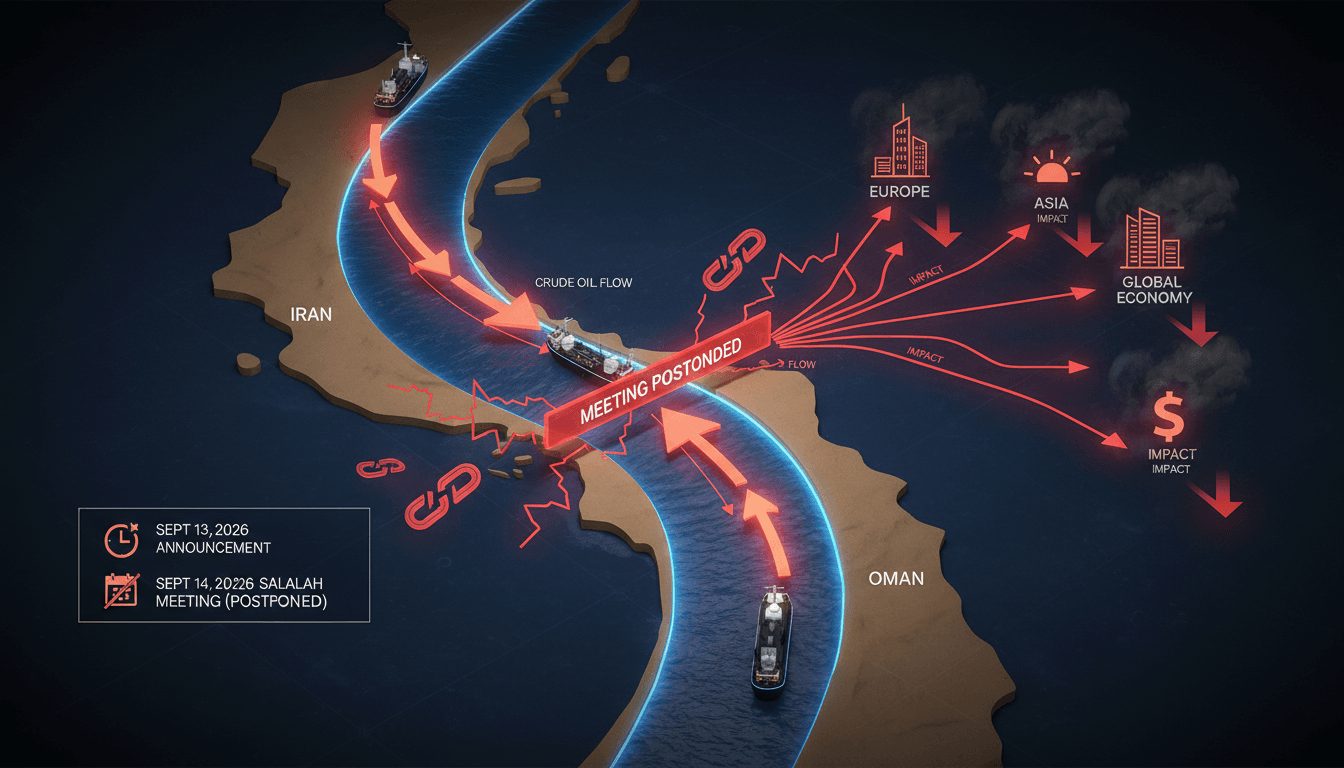
Here's what it means for you.
If you rely on Gulf trade or energy, this postponement signals ongoing instability that could affect costs and logistics.
Why it matters
The postponement reflects deeper regional tensions that could disrupt global energy markets and trade routes.
What happened (in 30 seconds)
- Iran and Oman announced the postponement of a key foreign ministers' meeting originally set for September 14, 2026.
- The decision was made to allow for better conditions for dialogue among Gulf Cooperation Council states, Iran, and Iraq.
- Heightened tensions in the Strait of Hormuz, including a reported 97% drop in tanker traffic, prompted the delay.
The context you actually need
- The Strait of Hormuz is a critical maritime route for global oil transit, making any disruptions significant for international markets.
- Oman has played a mediating role in regional discussions, attempting to stabilize relations between Iran and Gulf states amid rising tensions.
- Bahrain's reported boycott of the meeting and Saudi Arabia's concerns over proposed maritime arrangements highlight the fragility of regional consensus.
What's really happening
The postponement of the Salalah meeting is a reflection of the complex geopolitical landscape in the Gulf region, particularly concerning the Strait of Hormuz. This strait is not just a narrow waterway; it is a vital artery for global energy supplies, with approximately 20% of the world's oil passing through it. The decision to delay the meeting, announced on September 13, 2026, was made jointly by Iran and Oman, indicating a collaborative approach to managing regional tensions.
The backdrop to this postponement is the escalating conflict between the U.S. and Iran, which has intensified since February 2026. This conflict has manifested in various forms, including military strikes and blockades, leading to significant disruptions in maritime traffic. Reports indicate a staggering 97% drop in tanker traffic through the Strait of Hormuz, underscoring the urgency of addressing these tensions. The meeting was intended to facilitate discussions on new maritime arrangements, particularly an Iran-Oman agreement that would establish entry and exit paths primarily through Iranian waters.
Oman's role as a mediator is crucial. The country has historically maintained a neutral stance in regional conflicts, positioning itself as a facilitator of dialogue. The Omani Foreign Minister, Badr Albusaidi, emphasized the need for constructive dialogue and consensus, suggesting that the current environment is not conducive to productive discussions. Iran's Foreign Ministry echoed this sentiment, highlighting the importance of coordination with Oman to reschedule the meeting.
The implications of this postponement extend beyond diplomatic circles. The ongoing instability in the Strait of Hormuz could lead to increased oil prices, affecting global markets and, by extension, consumers and businesses reliant on stable energy costs. The uncertainty surrounding the meeting also reflects broader regional dynamics, including Bahrain's non-participation and potential Saudi concerns regarding the proposed arrangements. These factors contribute to a complex web of interests that complicate the path toward stability in the region.
Who feels it first (and how)
- Energy companies: Increased oil prices and supply chain disruptions could impact profitability and operational costs.
- Logistics firms: Delays in shipping routes may lead to increased costs and longer delivery times.
- Consumers: Rising fuel prices could affect transportation costs, impacting everyday expenses.
- Regional governments: Economic instability may lead to political pressures and shifts in public sentiment.
What to watch next
- Future meeting date: Watch for announcements regarding the rescheduling of the Salalah meeting, as it will indicate the potential for renewed dialogue.
- Tanker traffic trends: Monitor changes in maritime traffic through the Strait of Hormuz, as fluctuations could signal shifts in regional stability.
- Regional diplomatic efforts: Keep an eye on Oman's mediation initiatives and any responses from other Gulf states, particularly Saudi Arabia and Bahrain.
The meeting has been postponed indefinitely at the request of regional countries.
Ongoing tensions in the Strait of Hormuz will continue to affect global energy markets.
The timeline for rescheduling the meeting and the potential outcomes of future discussions remain uncertain.
Frequently Asked Questions
- Why it matters?
- The postponement reflects deeper regional tensions that could disrupt global energy markets and trade routes.
- What happened (in 30 seconds)?
- Iran and Oman announced the postponement of a key foreign ministers' meeting originally set for September 14, 2026. The decision was made to allow for better conditions for dialogue among Gulf Cooperation Council states, Iran, and Iraq. Heightened tensions in the Strait of Hormuz, including a reported 97% drop in tanker traffic, prompted the delay.
- What's really happening?
- The postponement of the Salalah meeting is a reflection of the complex geopolitical landscape in the Gulf region, particularly concerning the Strait of Hormuz. This strait is not just a narrow waterway; it is a vital artery for global energy supplies, with approximately 20% of the world's oil passing through it. The decision to delay the meeting, announced on September 13, 2026, was made jointly by Iran and Oman, indicating a collaborative approach to managing regional tensions. The backdrop to
- Who feels it first (and how)?
- Energy companies: Increased oil prices and supply chain disruptions could impact profitability and operational costs. Logistics firms: Delays in shipping routes may lead to increased costs and longer delivery times. Consumers: Rising fuel prices could affect transportation costs, impacting everyday expenses. Regional governments: Economic instability may lead to political pressures and shifts in public sentiment.
- What to watch next?
- Future meeting date: Watch for announcements regarding the rescheduling of the Salalah meeting, as it will indicate the potential for renewed dialogue. Tanker traffic trends: Monitor changes in maritime traffic through the Strait of Hormuz, as fluctuations could signal shifts in regional stability. Regional diplomatic efforts: Keep an eye on Oman's mediation initiatives and any responses from other Gulf states, particularly Saudi Arabia and Bahrain.
Arabic-language coverage of international news and geopolitics.
"RT Arabic is a Russian state-funded outlet often criticized for promoting Kremlin-aligned narratives."
— A47 Editor
إيران: تأجيل اجتماع صلالة جاء بناء على طلب بعض دول المنطقة وقرار مشترك من طهران ومسقط
The Iranian Foreign Ministry's Director General for Gulf Affairs, Mohammad Ali Bak, announced that the meeting of foreign ministers from Gulf coastal countries has been postponed at the request of several regional nations and through a mutual decisio...
Arabic-language coverage of international news and geopolitics.
"RT Arabic is a Russian state-funded outlet often criticized for promoting Kremlin-aligned narratives."
— A47 Editor
اتصالات خليجية مكثفة بعد تأجيل اجتماع صلالة بشأن مضيق هرمز
Following the announcement by Oman to postpone the regional meeting scheduled in Salalah, which was set to bring together Gulf Cooperation Council (GCC) countries with Iran and Iraq to discuss the Strait of Hormuz, intensive Gulf communications have ...
Arabic-language coverage of political affairs and current events.
"Okaz political coverage typically follows mainstream Saudi framing on national and regional affairs."
— A47 Editor
لماذا أجّلت عُمان الاجتماع الإقليمي؟
The Sultanate of Oman has postponed the regional meeting originally scheduled for today in Salalah, with a new date to be determined later. The decision, as reported by the Oman News Agency, aims to create favorable conditions for consensus and ensur...
Jordanian news and regional updates.
"Roya News is a Jordanian outlet focused on breaking news and local affairs."
— A47 Editor
الخارجية العمانية: تأجيل الاجتماع الإقليمي في صلالة إلى موعد لاحق لتهيئة ظروف الحوار
The Ministry of Foreign Affairs in the Sultanate of Oman announced on Sunday the postponement of a regional meeting in Salalah to a later date in order to prepare the conditions for dialogue. This decision reflects the ongoing efforts to create a con...
Arabic-language coverage of international news and geopolitics.
"RT Arabic is a Russian state-funded outlet often criticized for promoting Kremlin-aligned narratives."
— A47 Editor
وزير خارجية عمان: تأجيل اجتماع صلالة حرصا على تحقيق التوافق
Oman's Foreign Minister, Badr al-Busaidi, announced the postponement of the regional meeting scheduled to take place today in Salalah, emphasizing the importance of achieving consensus among the participants.