
Leaders of Scotland, Wales, and Northern Ireland Sign Pact for Independence Referendums
Why it matters
This pact signals a significant challenge to Westminster's authority, which could reshape governance and economic policies across the UK.
What happened (in 30 seconds)
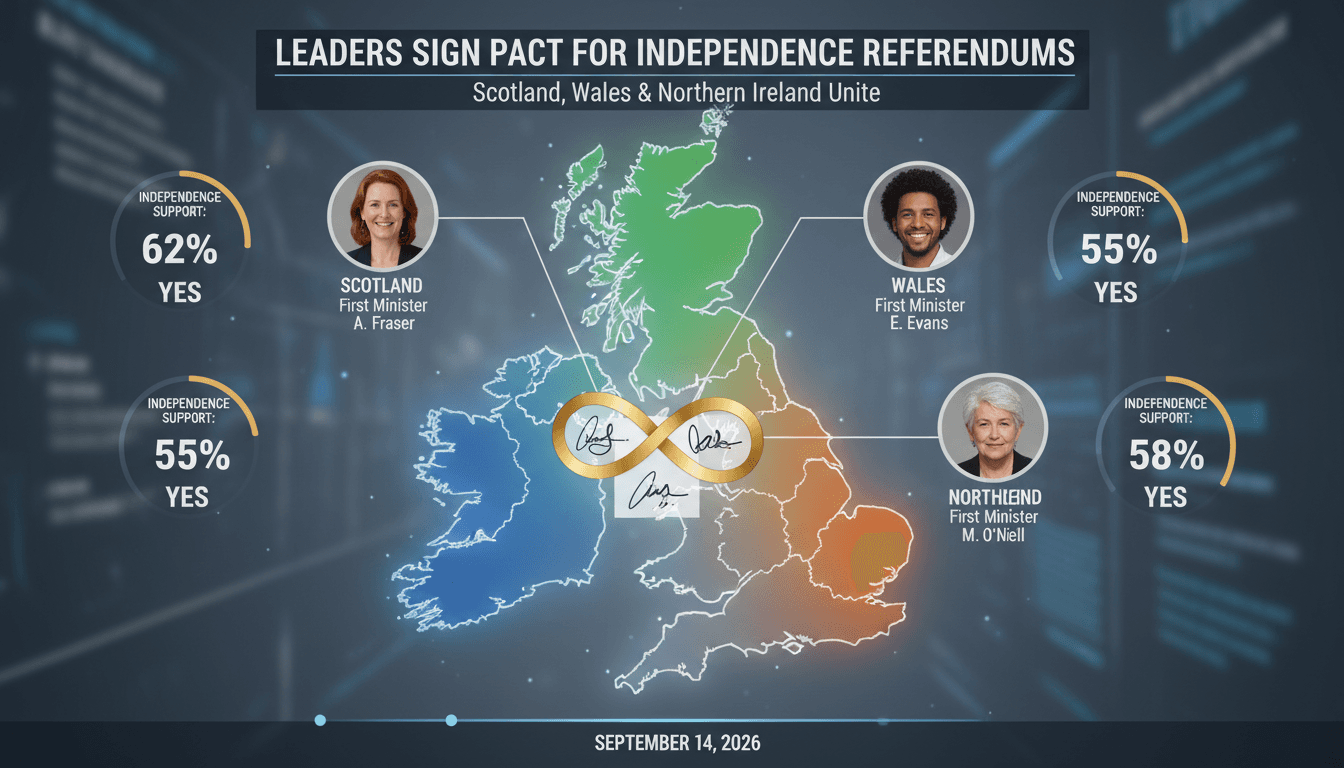
- On September 14, 2026, leaders from Scotland, Wales, and Northern Ireland signed a memorandum in Cardiff asserting their right to self-determination.
- The agreement calls for the UK government to facilitate independence referendums, marking a historic moment for separatist parties.
- This development follows the recent electoral victories of nationalist parties, indicating a growing momentum for independence across the devolved nations.
The context you actually need
- For the first time, separatist parties lead all three devolved nations, reflecting a shift in political power dynamics.
- The UK government, under Prime Minister Andy Burnham, has previously resisted calls for immediate referendums, creating tension between Westminster and the devolved administrations.
- Polling indicates that 47% of Scots support independence in a hypothetical referendum, highlighting significant public interest in self-determination.
What's really happening
The memorandum signed by the leaders of Scotland, Wales, and Northern Ireland represents a coordinated effort to assert their rights against Westminster's authority. This is not merely a symbolic gesture; it reflects a growing sentiment among the populations of these nations for greater autonomy and self-governance. The leaders emphasized the importance of self-determination, rejecting any attempts by Westminster to block democratic processes.
The political landscape has shifted dramatically since the May 2026 Senedd elections, where Plaid Cymru's victory allowed separatist parties to gain control across all three devolved administrations. This unprecedented alignment among nationalist parties has created a unified front advocating for constitutional change and independence referendums. The memorandum outlines a vision for enhanced cooperation among the nations, focusing on economic collaboration, energy policy, and international relations, particularly with European partners.
The implications of this pact extend beyond mere political posturing. It signals a potential reconfiguration of the UK's governance structure, which could lead to significant constitutional changes. The UK government has maintained its stance against immediate referendums, but the pressure from these devolved nations is mounting. The leaders have framed this agreement as a momentum shift, suggesting that the call for independence is gaining traction among the electorate.
As these discussions unfold, the economic ramifications could be substantial. The uncertainty surrounding potential referendums may affect investment decisions, market stability, and international relations. Businesses operating in the UK, particularly those with interests in Scotland, Wales, and Northern Ireland, should prepare for a landscape that may be increasingly influenced by nationalist agendas and calls for independence.
Who feels it first (and how)
- Political leaders in the devolved nations will feel the pressure to deliver on promises of referendums.
- Businesses operating in the UK may experience shifts in investment and operational strategies due to political uncertainty.
- Voters in Scotland, Wales, and Northern Ireland will be directly impacted by the outcomes of any future referendums, influencing their economic and social landscapes.
What to watch next
- Referendum timelines: Keep an eye on any announcements regarding the scheduling of independence referendums, as these will be critical in shaping public sentiment and market reactions.
- Polling data: Monitor changes in public opinion regarding independence, particularly in Scotland, where recent polls show 47% support for independence.
- UK government responses: Watch for any shifts in the UK government's stance on referendums, as this could indicate how seriously they are taking the pressures from devolved nations.
The memorandum has been signed, and nationalist parties are united in their push for independence.
Increased public discourse around independence referendums will continue, influencing political and economic landscapes.
The UK government's future actions regarding referendums and constitutional changes remain uncertain.
Frequently Asked Questions
- Why it matters?
- This pact signals a significant challenge to Westminster's authority, which could reshape governance and economic policies across the UK.
- What happened (in 30 seconds)?
- On September 14, 2026, leaders from Scotland, Wales, and Northern Ireland signed a memorandum in Cardiff asserting their right to self-determination. The agreement calls for the UK government to facilitate independence referendums, marking a historic moment for separatist parties. This development follows the recent electoral victories of nationalist parties, indicating a growing momentum for independence across the devolved nations.
- What's really happening?
- The memorandum signed by the leaders of Scotland, Wales, and Northern Ireland represents a coordinated effort to assert their rights against Westminster's authority. This is not merely a symbolic gesture; it reflects a growing sentiment among the populations of these nations for greater autonomy and self-governance. The leaders emphasized the importance of self-determination, rejecting any attempts by Westminster to block democratic processes. The political landscape has shifted dramatically s
- Who feels it first (and how)?
- Political leaders in the devolved nations will feel the pressure to deliver on promises of referendums. Businesses operating in the UK may experience shifts in investment and operational strategies due to political uncertainty. Voters in Scotland, Wales, and Northern Ireland will be directly impacted by the outcomes of any future referendums, influencing their economic and social landscapes.
- What to watch next?
- Referendum timelines: Keep an eye on any announcements regarding the scheduling of independence referendums, as these will be critical in shaping public sentiment and market reactions. Polling data: Monitor changes in public opinion regarding independence, particularly in Scotland, where recent polls show 47% support for independence. UK government responses: Watch for any shifts in the UK government's stance on referendums, as this could indicate how seriously they are taking the pressures
United Kingdom-focused news including local politics, business, and social issues.
"BBC News is widely regarded as a reputable international news organization, known for its impartial tone and public service mandate."
— A47 Editor
Westminster's time is coming to an end, Welsh, Scottish, Northern Irish leaders say
Leaders from Plaid Cymru, the Scottish National Party (SNP), and Sinn Féin have called for the UK government to prepare for constitutional change, signaling a potential shift in the political landscape of the United Kingdom. This statement comes as d...
Top international stories selected by The Guardian editors.
"The Guardian is known for its progressive editorial stance and in-depth analysis."
— A47 Editor
Westminster’s time is coming to an end, say first ministers of UK’s Celtic nations
At a summit in Cardiff, the first ministers of Wales, Scotland, and Northern Ireland declared that Westminster's influence is waning, advocating for independence referendums and constitutional changes. They signed a memorandum of understanding to rec...
International coverage from The Guardian's global desks.
"The Guardian is known for its progressive editorial stance and in-depth analysis."
— A47 Editor
Leaders at Celtic summit to affirm right to seek independence from UK
The first ministers of Wales, Scotland, and Northern Ireland are set to affirm their right to seek independence from the UK at a summit in Cardiff, where they will sign a memorandum calling for constitutional change. This meeting is expected to chall...