
Research Reveals British Crown Emblem Used to Brand Enslaved Africans by South Sea Company
Why it matters
This research exposes the deep-rooted connections between British institutions and the transatlantic slave trade, prompting a reevaluation of historical narratives and accountability.
What happened (in 30 seconds)
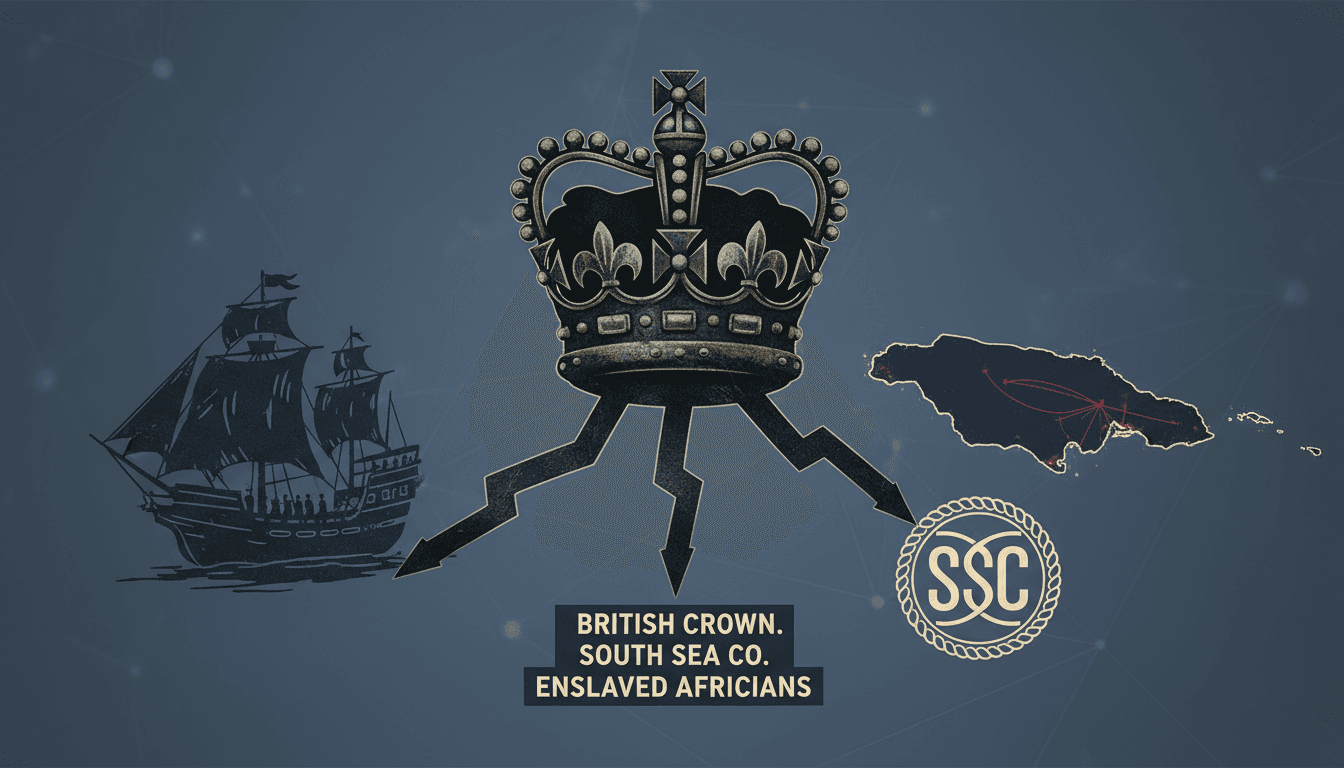
- Research published on September 14, 2026, reveals that enslaved Africans were branded with a British Crown emblem by the South Sea Company.
- Historians William Pettigrew and Nicholas Radburn uncovered archival evidence of this branding practice in records at the British Library.
- The findings highlight the institutional ties between the British monarchy and the slave trade, raising questions about historical accountability.
The context you actually need
- British monarchs chartered and invested in slave-trading companies, including the South Sea Company, which operated under royal authority.
- Approximately three million Africans were enslaved during this period, with significant mortality rates during transport to the Americas.
- The Register of British Slave Traders project documents 13,000 individuals and institutions involved in the slave trade, underscoring its extensive reach and impact on British economic development.
What's really happening
The recent findings regarding the branding of enslaved Africans by the South Sea Company reveal a complex interplay of economic interests, institutional power, and historical narratives. The South Sea Company, established in 1711, was one of several chartered companies that operated under the auspices of the British monarchy, which provided them with both legitimacy and financial backing. This relationship underscores the monarchy's vested interest in the slave trade, as it was not merely a passive observer but an active participant in the economic exploitation of enslaved individuals.
The branding practice, as documented in a February 1714 letter from company directors, was a method of asserting ownership over enslaved Africans. The use of a British Crown emblem in the branding process served to reinforce the connection between the monarchy and the institution of slavery, marking these individuals as property of the company and differentiating them from others in the trade. This practice not only dehumanized the enslaved but also commodified them in a manner that was sanctioned by the highest levels of British authority.
The implications of this research extend beyond historical curiosity; they challenge contemporary understandings of accountability and reparations. Buckingham Palace has acknowledged the findings, with King Charles expressing a commitment to understanding the history of slavery and addressing its legacy. However, the UK government's stance against reparations complicates the conversation, as it raises questions about how societies reckon with their pasts and the responsibilities they hold towards descendants of those affected.
The release of the Register of British Slave Traders, which catalogs the involvement of 13,000 individuals and institutions in the slave trade, serves as a critical resource for understanding the breadth of complicity in this historical atrocity. It highlights the interconnectedness of various sectors, including finance, religion, and governance, in perpetuating the slave trade. As discussions around reparations gain momentum, particularly from nations like Jamaica, the findings from this research will likely play a pivotal role in shaping the narrative and demands for accountability.
Who feels it first (and how)
- Historians and Academics: Increased scrutiny and demand for research on historical injustices.
- Governments: Pressure to address historical accountability and potential reparations discussions.
- Descendants of Enslaved Individuals: Heightened awareness and advocacy for reparations and recognition of historical wrongs.
- Cultural Institutions: Calls for reevaluation of historical narratives and exhibitions related to colonialism and slavery.
What to watch next
- Public Discourse on Reparations: Monitor how discussions evolve, particularly in the UK and former colonies, as they may influence policy changes.
- Documentary Series Impact: The upcoming BBC documentary series airing on September 21, 2026, could shape public perception and understanding of the slave trade's legacy.
- Institutional Responses: Watch for how institutions, including the monarchy and government, respond to calls for accountability and reparations.
The branding of enslaved Africans by the South Sea Company is documented and verified.
Increased public and governmental discussions on historical accountability and reparations will continue.
The specific outcomes of these discussions and their impact on policy or reparations.
Frequently Asked Questions
- Why it matters?
- This research exposes the deep-rooted connections between British institutions and the transatlantic slave trade, prompting a reevaluation of historical narratives and accountability.
- What happened (in 30 seconds)?
- Research published on September 14, 2026, reveals that enslaved Africans were branded with a British Crown emblem by the South Sea Company. Historians William Pettigrew and Nicholas Radburn uncovered archival evidence of this branding practice in records at the British Library. The findings highlight the institutional ties between the British monarchy and the slave trade, raising questions about historical accountability.
- What's really happening?
- The recent findings regarding the branding of enslaved Africans by the South Sea Company reveal a complex interplay of economic interests, institutional power, and historical narratives. The South Sea Company, established in 1711, was one of several chartered companies that operated under the auspices of the British monarchy, which provided them with both legitimacy and financial backing. This relationship underscores the monarchy's vested interest in the slave trade, as it was not merely a pass
- Who feels it first (and how)?
- Historians and Academics: Increased scrutiny and demand for research on historical injustices. Governments: Pressure to address historical accountability and potential reparations discussions. Descendants of Enslaved Individuals: Heightened awareness and advocacy for reparations and recognition of historical wrongs. Cultural Institutions: Calls for reevaluation of historical narratives and exhibitions related to colonialism and slavery.
- What to watch next?
- Public Discourse on Reparations: Monitor how discussions evolve, particularly in the UK and former colonies, as they may influence policy changes. Documentary Series Impact: The upcoming BBC documentary series airing on September 21, 2026, could shape public perception and understanding of the slave trade's legacy. Institutional Responses: Watch for how institutions, including the monarchy and government, respond to calls for accountability and reparations.
United Kingdom-focused news including local politics, business, and social issues.
"BBC News is widely regarded as a reputable international news organization, known for its impartial tone and public service mandate."
— A47 Editor
British Crown symbol was branded on enslaved Africans, research finds
Research has revealed that the British Crown symbol was branded on enslaved Africans, highlighting the brutal practices associated with the British involvement in the slave trade from the 16th to the 19th centuries. This finding is part of a broader ...
Top international stories selected by The Guardian editors.
"The Guardian is known for its progressive editorial stance and in-depth analysis."
— A47 Editor
How Britain's kings and queens powered the slave trade – video
Recent research has revealed the extensive involvement of Britain's monarchy in the slave trade, particularly after the restoration of the monarchy in 1660, with enslaved Africans branded with the royal crown. This research is part of a broader effor...
Top international stories selected by The Guardian editors.
"The Guardian is known for its progressive editorial stance and in-depth analysis."
— A47 Editor
The royal crown branded on enslaved Africans: Britain’s monarchy and the slave trade
Recent research reveals that Britain's monarchy, from Elizabeth I to contemporary monarchs, played a significant role in the slave trade, with enslaved Africans branded with the royal crown. This historical involvement underscores the monarchy's long...