
Israeli Documentary NAZA Faces Political Backlash and Protests Following Venice Premiere
Why it matters
This documentary's release highlights the growing tension between artistic expression and national security narratives, impacting global discourse on military conduct.
What happened (in 30 seconds)
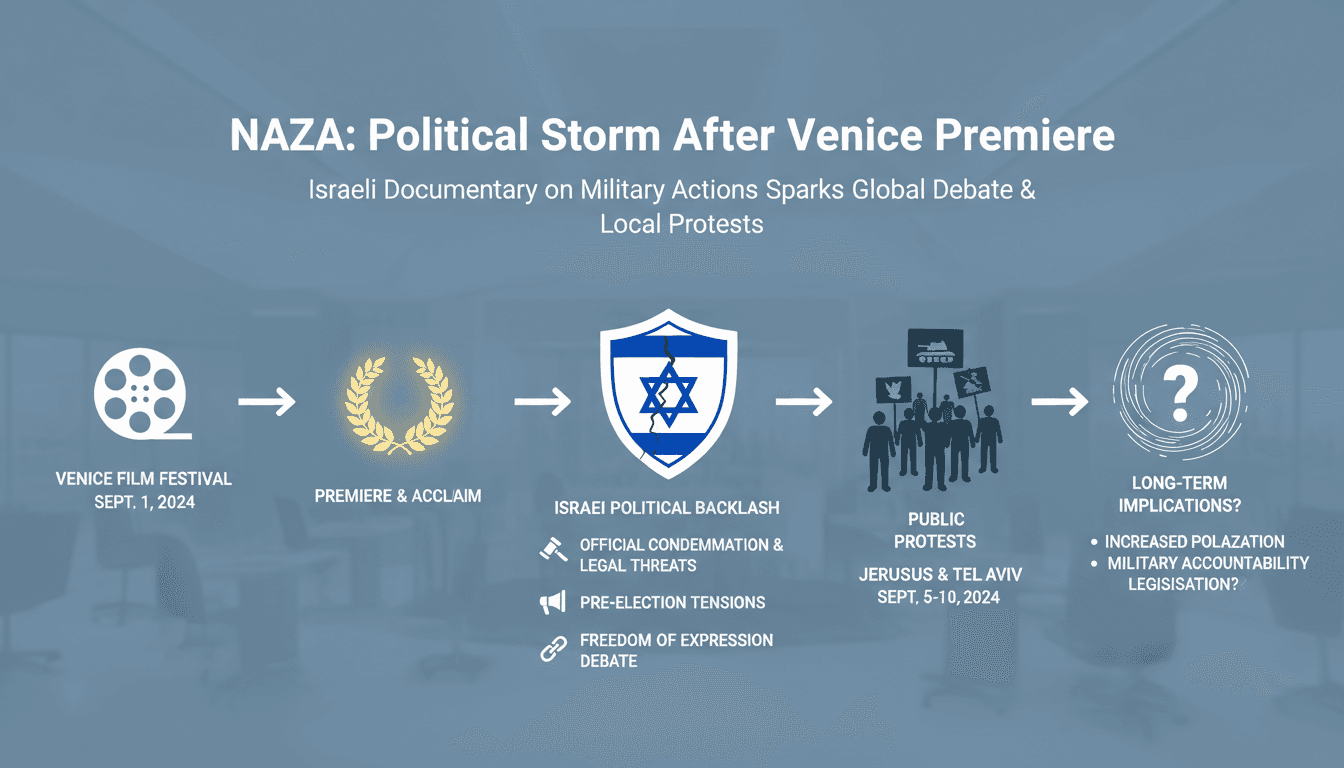
- NAZA premiered at the Venice Film Festival on September 10, 2026, receiving a 25-minute standing ovation.
- Political backlash erupted in Israel, with officials condemning the film and calling for legal actions against its creators.
- Protests occurred outside the filmmakers' homes, reflecting deep divisions in Israeli society regarding military actions in Gaza.
The context you actually need
- The Gaza conflict has been ongoing since 2023, with significant civilian casualties and a largely supportive public discourse on military operations.
- Criticism of the IDF is often viewed as taboo, making NAZA's revelations particularly incendiary.
- The film's production took three years and was conducted in secrecy, using anonymous testimonies from military insiders, which adds to its controversial nature.
What's really happening
The documentary NAZA, directed by Yuval Abraham and Rachel Szor, has ignited a firestorm of political and social reactions in Israel following its premiere at the Venice Film Festival. The film presents anonymous testimonies from 24 Israeli military and intelligence personnel, alleging systematic targeting of Palestinian civilians in Gaza through AI-assisted operations. This revelation comes at a time of heightened political polarization in Israel, particularly as the country approaches elections in October 2026.
The film's acclaim at Venice, marked by a 25-minute standing ovation and the Special Jury Prize, sharply contrasts with the immediate backlash from Israeli officials. Prime Minister Benjamin Netanyahu and Culture Minister Miki Zohar condemned the film as incitement and antisemitism, despite not having viewed it. This reaction underscores a broader trend in which artistic expressions that challenge the status quo are met with hostility, particularly in contexts involving national security.
The Israeli Defense Forces (IDF) Chief of Staff Eyal Zamir ordered investigations into the leaks that led to the film's creation, indicating a defensive posture from military leadership. The protests that erupted outside Szor's family home in Savyon, where demonstrators labeled the filmmakers as traitors, reflect a societal divide over military ethics and accountability. The filmmakers now face threats and calls for citizenship revocation, illustrating the personal risks associated with challenging dominant narratives.
The documentary's ongoing isolation in Israel, with no distributor secured and no public screenings planned, highlights the challenges faced by creators who seek to address controversial topics. Meanwhile, over 40 human rights organizations have rallied in support of the filmmakers, advocating for their right to free expression. This dichotomy between domestic condemnation and international support raises questions about the future of artistic freedom in Israel and the potential for similar projects to emerge.
As the backlash continues, the implications for military accountability and public discourse on the Gaza conflict remain significant. The film's revelations may influence how military actions are perceived both domestically and internationally, potentially leading to increased scrutiny of military practices and a reevaluation of public support for ongoing operations.
Who feels it first (and how)
- Filmmakers: Facing threats and potential citizenship revocation, impacting their safety and freedom of expression.
- Israeli military personnel: Those implicated in the film may experience increased scrutiny and pressure from leadership.
- Human rights organizations: Engaging in advocacy for artistic freedom, potentially affecting their operations and public perception.
- Israeli public: Divided opinions may lead to increased polarization and debate over military ethics and accountability.
What to watch next
- Legislative proposals: Watch for any new laws regarding freedom of expression and military criticism in Israel, as these could set precedents for future artistic endeavors.
- Public opinion shifts: Monitor changes in public sentiment regarding military operations in Gaza, especially in light of NAZA's revelations and ongoing protests.
- International reactions: Observe how global audiences and organizations respond to the film and its implications for military ethics, which could influence international discourse on similar conflicts.
The film NAZA has received international acclaim and sparked significant backlash in Israel.
The ongoing protests and political reactions will continue to shape public discourse on military ethics in Israel.
The long-term impact of NAZA on Israeli society and military policy remains uncertain.
Frequently Asked Questions
- Why it matters?
- This documentary's release highlights the growing tension between artistic expression and national security narratives, impacting global discourse on military conduct.
- What happened (in 30 seconds)?
- NAZA premiered at the Venice Film Festival on September 10, 2026, receiving a 25-minute standing ovation. Political backlash erupted in Israel, with officials condemning the film and calling for legal actions against its creators. Protests occurred outside the filmmakers' homes, reflecting deep divisions in Israeli society regarding military actions in Gaza.
- What's really happening?
- The documentary NAZA, directed by Yuval Abraham and Rachel Szor, has ignited a firestorm of political and social reactions in Israel following its premiere at the Venice Film Festival. The film presents anonymous testimonies from 24 Israeli military and intelligence personnel, alleging systematic targeting of Palestinian civilians in Gaza through AI-assisted operations. This revelation comes at a time of heightened political polarization in Israel, particularly as the country approaches election
- Who feels it first (and how)?
- Filmmakers: Facing threats and potential citizenship revocation, impacting their safety and freedom of expression. Israeli military personnel: Those implicated in the film may experience increased scrutiny and pressure from leadership. Human rights organizations: Engaging in advocacy for artistic freedom, potentially affecting their operations and public perception. Israeli public: Divided opinions may lead to increased polarization and debate over military ethics and accountability.
- What to watch next?
- Legislative proposals: Watch for any new laws regarding freedom of expression and military criticism in Israel, as these could set precedents for future artistic endeavors. Public opinion shifts: Monitor changes in public sentiment regarding military operations in Gaza, especially in light of NAZA's revelations and ongoing protests. International reactions: Observe how global audiences and organizations respond to the film and its implications for military ethics, which could influence inter
24/7 international news from a French perspective in multiple languages.
"France 24 is viewed as a globally focused outlet with balanced coverage and a European perspective."
— A47 Editor
Gaza documentary sparks political storm, protests in Israel
The documentary 'NAZA', directed by Yuval Abraham and Rachel Szor, has ignited a political storm in Israel following its critical portrayal of the Israeli military's actions in Gaza, including testimonies from anonymous military sources about civilia...
Comprehensive coverage of Middle Eastern and global issues.
"Al Jazeera is a prominent voice from the Global South, especially the Middle East, with an emphasis on underreported stories."
— A47 Editor
Jerusalem Daily: Israelis protest outside ‘NAZA’ filmmaker’s home
Dozens of Israelis protested outside the family home of the filmmakers behind the documentary 'NAZA', chanting slogans such as 'death to traitors'. This protest reflects the intense backlash against the film, which has been criticized for its portray...
English-language reporting on Saudi politics, policy, and society.
"Saudi Gazette reflects mainstream Saudi institutional perspectives."
— A47 Editor
Netanyahu steps up threats against directors of Gaza documentary ‘NAZA’
Israeli Prime Minister Benjamin Netanyahu announced plans to introduce legislation that would revoke the citizenship of individuals who defame Israeli soldiers, intensifying his campaign against the filmmakers of the Gaza documentary 'NAZA'. The film...
Regional coverage and analysis focused on politics, diplomacy, and business across the Middle East.
"Al-Monitor is known for analytical reporting on Middle East politics and policy developments."
— A47 Editor
Netanyahu steps up threats against directors of Gaza documentary 'NAZA'
Israeli Prime Minister Benjamin Netanyahu has intensified his threats against the directors of the documentary 'NAZA', which critiques Israeli military actions in Gaza, by proposing a law to revoke citizenship for those who defame Israeli soldiers. T...
National headlines across the United States including breaking stories and societal issues.
"NBC News is a mainstream media outlet known for comprehensive national and international news coverage with a centrist to slightly left-leaning editorial tone."
— A47 Editor
Gaza documentary praised at Venice sparks fury in Israel
The documentary "NAZA," which premiered at the Venice Film Festival, has sparked significant controversy in Israel by alleging that the Israel Defense Forces (IDF) utilized artificial intelligence to intentionally target and kill civilians in Gaza. T...