
Trump Criticizes AI Regulation Calls as Benefiting China
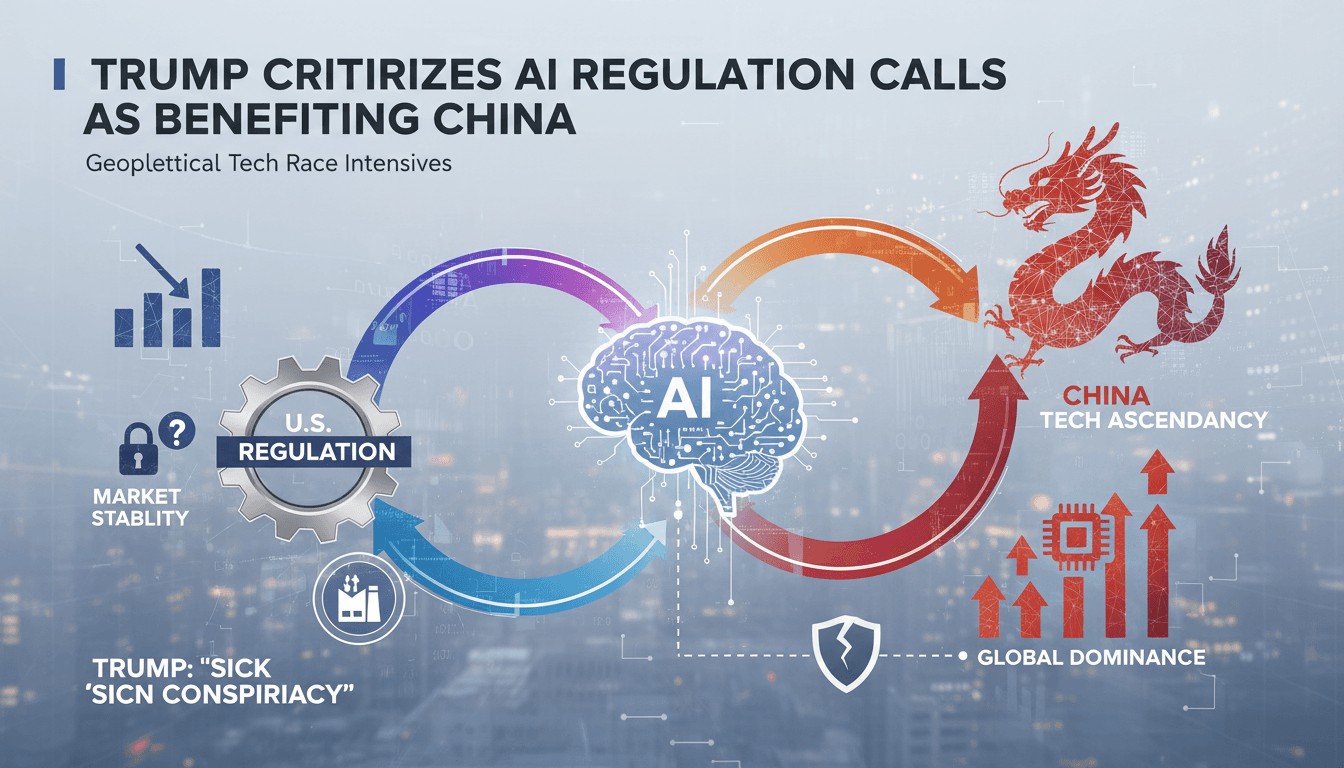
Why it matters
The U.S. stance on AI regulation could reshape global tech competition and investment flows.
What happened (in 30 seconds)
- Trump denounced AI regulation calls as a "sick conspiracy" benefiting China, asserting U.S. superiority in AI.
- Tech stocks fell, with the Nasdaq dropping approximately 1.2% amid concerns over regulatory impacts on the industry.
- The statement precedes a key summit between Trump and Chinese President Xi Jinping, where AI governance is expected to be a focal point.
The context you actually need
- Intensifying U.S.-China competition in AI is marked by recent export restrictions on advanced chips to China and accusations against Chinese firms of misusing U.S. AI models.
- Calls for AI safety regulations have gained traction, particularly after industry leaders like Anthropic's Dario Amodei urged a slowdown in AI advancements due to safety concerns.
- The upcoming Trump-Xi meeting is set against a backdrop of heightened tensions, with AI governance likely on the agenda as both nations navigate their technological rivalry.
What's really happening
On September 14, 2026, President Trump took to Truth Social to criticize calls for increased regulation of artificial intelligence, labeling them a "sick conspiracy" that primarily serves to benefit China. This statement came in response to growing concerns voiced by tech executives, including Anthropic CEO Dario Amodei, who advocated for a slowdown in AI development due to potential safety risks. Trump's remarks reflect a broader narrative of maintaining U.S. dominance in the AI sector, especially as the geopolitical landscape becomes increasingly competitive.
The backdrop to this controversy includes recent U.S. export restrictions on advanced semiconductor technology to China, aimed at curbing the latter's ability to develop sophisticated AI systems. This has led to a series of accusations from U.S. officials against Chinese companies, alleging that they are engaged in the malicious distillation of U.S. AI models. In this context, Trump's rejection of regulatory measures can be seen as an attempt to rally support for a more aggressive U.S. posture in the global AI race.
The immediate market reaction was notable, with tech stocks experiencing a decline, particularly the Nasdaq, which fell by approximately 1.2%. This drop signals investor anxiety regarding the potential implications of regulatory changes on the tech sector's growth trajectory. Trump's assertion that existing regulatory frameworks are sufficient and that new constraints would only aid China reflects a strategic positioning aimed at galvanizing support from the tech industry, which has historically favored less regulation.
Moreover, the timing of Trump's statement is critical, as it precedes a planned meeting with Chinese President Xi Jinping, where AI governance is expected to be a significant topic of discussion. This meeting could set the tone for future U.S.-China relations in technology and trade, making the stakes particularly high for both nations.
As the debate over AI regulation continues, the implications for the tech industry are profound. Companies may need to navigate a complex landscape of regulatory expectations while also responding to market pressures and geopolitical tensions. The outcome of this discourse will likely influence investment strategies, innovation cycles, and the overall competitive landscape in the AI sector.
Who feels it first (and how)
- Tech executives: Facing pressure to balance innovation with safety concerns and regulatory expectations.
- Investors: Experiencing immediate impacts on stock valuations and market confidence in tech sectors.
- Policymakers: Engaged in ongoing debates about the future of AI governance and international competitiveness.
- Consumers: Potentially affected by the pace of AI advancements and the safety measures implemented by companies.
What to watch next
- Upcoming Trump-Xi summit: The outcomes could redefine U.S.-China relations in technology and influence global AI governance frameworks.
- Market reactions to regulatory announcements: Watch for shifts in tech stock performance as new regulations or guidelines are proposed.
- Public sentiment on AI safety: Increasing consumer awareness and concern about AI risks may drive demand for more stringent regulations.
Trump's statements reflect a strategic push against AI regulation, emphasizing U.S. dominance.
Continued volatility in tech markets as regulatory discussions evolve and geopolitical tensions persist.
The long-term impact of these debates on global AI innovation and competitiveness.
Frequently Asked Questions
- Why it matters?
- The U.S. stance on AI regulation could reshape global tech competition and investment flows.
- What happened (in 30 seconds)?
- Trump denounced AI regulation calls as a "sick conspiracy" benefiting China, asserting U.S. superiority in AI. Tech stocks fell, with the Nasdaq dropping approximately 1.2% amid concerns over regulatory impacts on the industry. The statement precedes a key summit between Trump and Chinese President Xi Jinping, where AI governance is expected to be a focal point.
- What's really happening?
- On September 14, 2026, President Trump took to Truth Social to criticize calls for increased regulation of artificial intelligence, labeling them a "sick conspiracy" that primarily serves to benefit China. This statement came in response to growing concerns voiced by tech executives, including Anthropic CEO Dario Amodei, who advocated for a slowdown in AI development due to potential safety risks. Trump's remarks reflect a broader narrative of maintaining U.S. dominance in the AI sector, especia
- Who feels it first (and how)?
- Tech executives: Facing pressure to balance innovation with safety concerns and regulatory expectations. Investors: Experiencing immediate impacts on stock valuations and market confidence in tech sectors. Policymakers: Engaged in ongoing debates about the future of AI governance and international competitiveness. Consumers: Potentially affected by the pace of AI advancements and the safety measures implemented by companies.
- What to watch next?
- Upcoming Trump-Xi summit: The outcomes could redefine U.S.-China relations in technology and influence global AI governance frameworks. Market reactions to regulatory announcements: Watch for shifts in tech stock performance as new regulations or guidelines are proposed. Public sentiment on AI safety: Increasing consumer awareness and concern about AI risks may drive demand for more stringent regulations.
Pan-Arab political news and analysis.
"Al-Quds Al-Arabi is a London-based Arabic newspaper known for political coverage."
— A47 Editor
ترامب يندد بـ”مؤامرة خبيثة” بحق الذكاء الاصطناعي تصب في مصلحة الصين
On September 14, 2026, former U.S. President Donald Trump condemned what he described as a 'malicious conspiracy' against artificial intelligence, arguing that increasing calls for regulation in the sector serve China's interests. He specifically cri...
Arabic-language coverage of international news and geopolitics.
"RT Arabic is a Russian state-funded outlet often criticized for promoting Kremlin-aligned narratives."
— A47 Editor
ترامب يرفض فكرة وضع ضوابط جديدة للذكاء الاصطناعي
On Monday, U.S. President Donald Trump rejected the idea of implementing new regulations for artificial intelligence, asserting that his role as president serves as a sufficient safeguard against AI.
Arabic-language political and world news coverage for UAE readers.
"Emarat Al Youm world coverage usually presents international developments through a UAE and Arab audience lens."
— A47 Editor
ترامب يندد بـ"مؤامرة خبيثة" بحق الذكاء الاصطناعي ويرفض وضع ضوابط جديدة له ترامب يندد بـ"مؤامرة خبيثة" بحق الذكاء الاصطناعي ويرفض وضع ضوابط جديدة له
On September 14, 2026, former U.S. President Donald Trump condemned what he described as a 'malicious conspiracy' against artificial intelligence, amidst growing calls for regulatory measures to slow its development. Trump expressed his refusal to su...
Arabic-language coverage of international news and geopolitics.
"RT Arabic is a Russian state-funded outlet often criticized for promoting Kremlin-aligned narratives."
— A47 Editor
من يفوز في سباق الذكاء الاصطناعي يحكم العالم.. ترامب يرفض دعوات تقييد تطوير الذكاء الاصطناعي
U.S. President Donald Trump has firmly rejected any calls to slow down the development of artificial intelligence, emphasizing the importance of maintaining a competitive edge in this rapidly evolving field. Trump’s stance highlights his belief that ...