
Trump Signs Lindsey O. Graham Sanctions Act Targeting Russia and Iran
Why it matters
This legislation significantly impacts global energy markets and U.S. foreign policy, particularly regarding Russia and Iran.
What happened (in 30 seconds)
- On September 18, 2026, President Trump signed the Lindsey O. Graham Sanctioning Russia and Iran Act into law, targeting Russia's energy sector and Iran's sanctions.
- The bill passed with bipartisan support, receiving an 86-11 vote in the Senate and a 262-159 vote in the House, reflecting a unified stance against Russian aggression.
- Ukrainian President Zelenskyy expressed gratitude for the legislation, emphasizing its importance in the ongoing conflict with Russia.
The context you actually need
- The Russia-Ukraine war has intensified, entering its fifth year with increased Russian military actions against Ukraine.
- Senator Lindsey Graham, a key advocate for the sanctions, passed away in July 2026, but his legacy continues through this legislation.
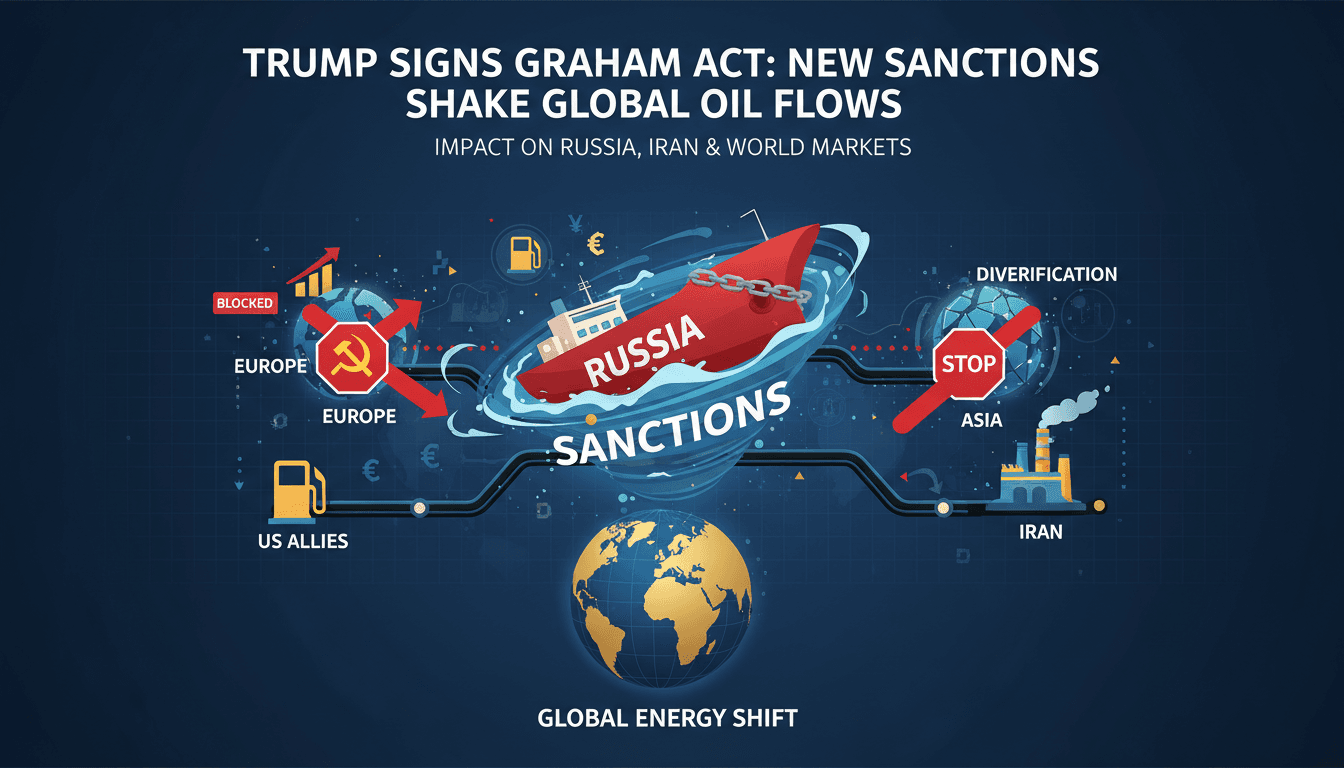
- The act expands existing sanctions and introduces new tariffs, aiming to cut off funding for Russia's military operations and limit Iran's influence.
What's really happening
The Lindsey O. Graham Sanctioning Russia and Iran Act represents a strategic escalation in U.S. efforts to counteract Russian aggression and Iranian influence in the Middle East. By imposing tariffs of up to 100% on major importers of Russian oil and gas, the legislation aims to cripple Russia's energy revenue, which is crucial for funding its military operations in Ukraine. This move comes at a time when diplomatic negotiations have stalled, and the U.S. seeks to leverage economic pressure to bring Russia back to the negotiating table.
The act also extends sanctions on Iran through 2031, reflecting a dual approach to U.S. foreign policy that targets both Russia and Iran simultaneously. The bipartisan support for the bill underscores a rare moment of unity in Congress, driven by a shared concern over national security and the need to support Ukraine. The legislation builds on existing sanctions frameworks, addressing Russia's evasive tactics, such as using a shadow fleet of oil tankers to circumvent previous sanctions.
The implications of this act extend beyond immediate geopolitical concerns. For energy traders and shipping firms, particularly those based in Dubai, compliance risks are heightened. The sanctions on the shadow fleet mean that companies involved in Russian oil logistics must navigate a complex regulatory landscape, potentially leading to increased operational costs and legal liabilities. Furthermore, the potential for rising global oil prices could impact fuel costs in the region, affecting trade volumes and economic stability.
As the U.S. strengthens its leverage in ongoing peace talks regarding Ukraine, the act serves as a reminder of the interconnectedness of global markets and the far-reaching consequences of U.S. foreign policy decisions. The legislation not only aims to pressure Russia but also signals to allies and adversaries alike that the U.S. remains committed to countering aggression through economic means.
Who feels it first (and how)
- Energy traders: Increased compliance risks and potential shifts in trade dynamics.
- Shipping firms: Heightened scrutiny and operational challenges related to Russian oil logistics.
- Consumers: Possible fluctuations in fuel prices affecting household budgets.
- U.S. businesses: Concerns over economic impacts from tariff provisions and potential retaliatory measures.
What to watch next
- Compliance enforcement: Monitor how the U.S. government implements and enforces the new sanctions, as this will affect global trade dynamics.
- Global oil prices: Watch for fluctuations in oil prices, which could signal broader economic impacts and influence regional fuel costs.
- Diplomatic negotiations: Keep an eye on any shifts in peace talks regarding Ukraine, as the effectiveness of these sanctions may influence Russia's willingness to negotiate.
The act has been signed into law and is now in effect.
Increased compliance scrutiny for companies involved in Russian oil logistics.
The long-term economic impact on U.S. consumers and businesses from the new tariffs.
Frequently Asked Questions
- Why it matters?
- This legislation significantly impacts global energy markets and U.S. foreign policy, particularly regarding Russia and Iran.
- What happened (in 30 seconds)?
- On September 18, 2026, President Trump signed the Lindsey O. Graham Sanctioning Russia and Iran Act into law, targeting Russia's energy sector and Iran's sanctions. The bill passed with bipartisan support, receiving an 86-11 vote in the Senate and a 262-159 vote in the House, reflecting a unified stance against Russian aggression. Ukrainian President Zelenskyy expressed gratitude for the legislation, emphasizing its importance in the ongoing conflict with Russia.
- What's really happening?
- The Lindsey O. Graham Sanctioning Russia and Iran Act represents a strategic escalation in U.S. efforts to counteract Russian aggression and Iranian influence in the Middle East. By imposing tariffs of up to 100% on major importers of Russian oil and gas, the legislation aims to cripple Russia's energy revenue, which is crucial for funding its military operations in Ukraine. This move comes at a time when diplomatic negotiations have stalled, and the U.S. seeks to leverage economic pressure to b
- Who feels it first (and how)?
- Energy traders: Increased compliance risks and potential shifts in trade dynamics. Shipping firms: Heightened scrutiny and operational challenges related to Russian oil logistics. Consumers: Possible fluctuations in fuel prices affecting household budgets. U.S. businesses: Concerns over economic impacts from tariff provisions and potential retaliatory measures.
- What to watch next?
- Compliance enforcement: Monitor how the U.S. government implements and enforces the new sanctions, as this will affect global trade dynamics. Global oil prices: Watch for fluctuations in oil prices, which could signal broader economic impacts and influence regional fuel costs. Diplomatic negotiations: Keep an eye on any shifts in peace talks regarding Ukraine, as the effectiveness of these sanctions may influence Russia's willingness to negotiate.
Capitol Hill news, legislation, and policy insight.
"The Hill specializes in U.S. politics and policy, with a focus on Capitol Hill developments and a reputation for insider reporting."
— A47 Editor
Trump officially signs Russia sanctions bill into law
President Trump officially signed the Russia sanctions bill into law, which empowers him to impose tariffs of up to 100 percent on major buyers of Russian energy and implement further sanctions against Russia amid its ongoing conflict with Ukraine. T...
UAE-based English-language newspaper covering regional politics, economics, and global affairs.
"The National reflects Emirati policy perspectives while maintaining international editorial standards."
— A47 Editor
Trump signs Lindsey Graham Russia-Iran sanctions bill into law
President Trump has signed a sanctions bill into law that targets both Russia and Iran, reflecting ongoing geopolitical tensions in the Middle East. This legislation aims to impose economic penalties on these nations for their actions, particularly i...
English-language news from Qatar covering domestic and regional affairs.
"Gulf Times reflects Qatari perspectives on regional developments."
— A47 Editor
Trump signs bill authorizing broad new sanctions to squeeze Russia
US President Donald Trump signed a bill authorizing broad new sanctions against Russia, aimed at pressuring the country over its ongoing military actions in Ukraine. This legislation received congressional approval earlier in the week and is part of ...
News from the United States including domestic politics, society, and culture.
"The Guardian is known for its progressive editorial stance and in-depth analysis, often advocating for social justice, environmental issues, and liberal values."
— A47 Editor
Trump signs bill imposing sanctions on Russia and giving him more power to levy tariffs
On September 18, 2026, President Donald Trump signed the Lindsey O Graham Sanctioning Russia and Iran Act into law, which enables extensive sanctions against Russia and grants him the authority to impose additional tariffs on countries violating the ...
International coverage of politics, culture, and current affairs.
"BBC News is widely regarded as a reputable international news organization, known for its impartial tone and public service mandate."
— A47 Editor
Trump signs sweeping Russia sanctions bill
President Donald Trump has signed a comprehensive sanctions bill targeting Russia, named after the late Senator Lindsey Graham, who was a strong supporter of aid for Ukraine. This legislation aims to impose stricter penalties on major buyers of Russi...