
Ongoing clashes between Israeli military and Hezbollah escalate despite ceasefire
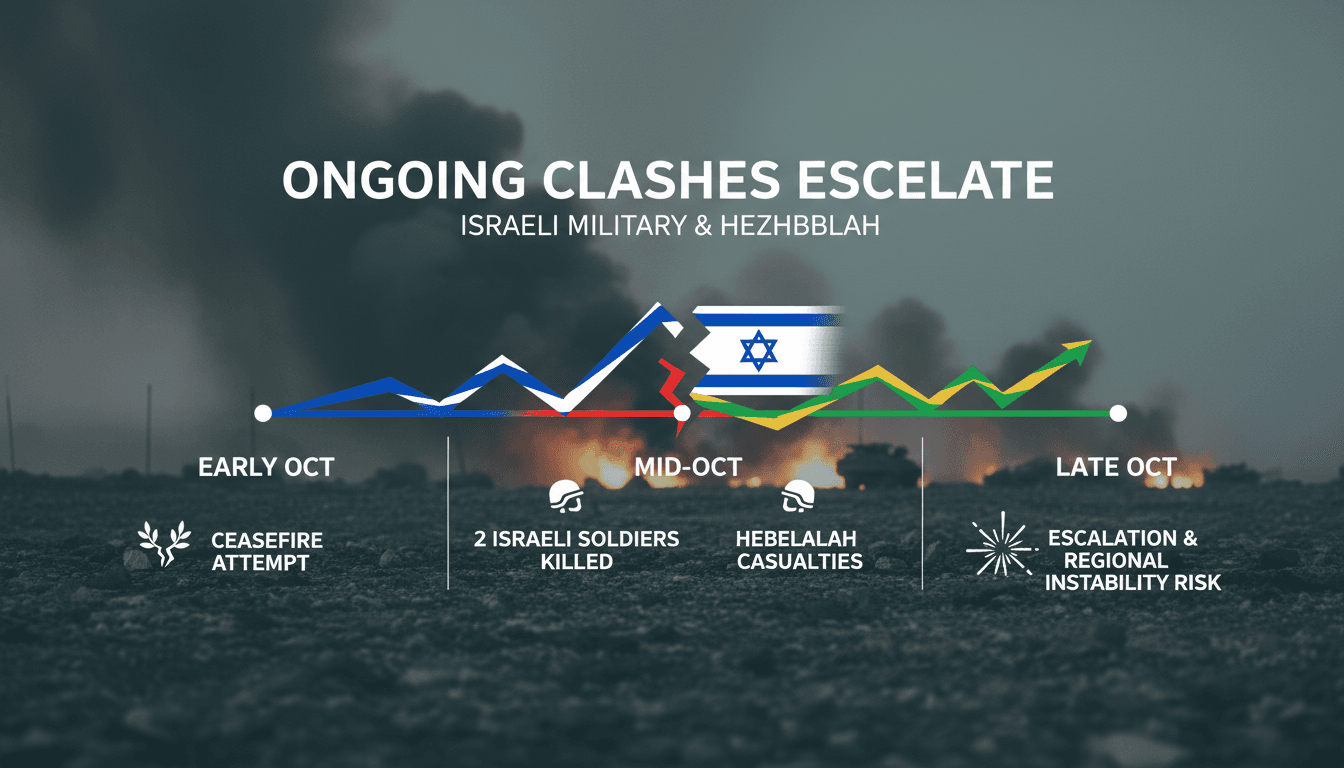
Here's what it means for you.
The recent escalation in violence between Israel and Hezbollah underscores the fragility of the current ceasefire agreement. With the deaths of two Israeli soldiers, the human cost of this conflict is becoming increasingly apparent, raising concerns for regional stability. Stakeholders in international relations and security must closely monitor these developments, as they could have broader implications for peace efforts in the Middle East. The ongoing clashes signal a potential shift in the dynamics of power in the region, which could affect diplomatic relations and military strategies. As tensions rise, the international community may need to reassess its approach to conflict resolution in this volatile area.
What happened
Recent clashes in southern Lebanon have resulted in the deaths of two Israeli soldiers amid ongoing battles with Hezbollah. Despite a formal ceasefire agreement, hostilities have continued, leading to casualties on both sides. The situation remains tense, with reports indicating that fighting persists even after the ceasefire was established.
Israeli military actions have also targeted Lebanese military personnel, further complicating the conflict. The loss of life on both sides highlights the urgent need for a resolution to the ongoing violence.
The Context
The conflict between Israel and Hezbollah has intensified, with the recent clashes marking a significant escalation in hostilities. The ceasefire agreement, intended to halt fighting, has proven ineffective, raising concerns about the stability of southern Lebanon. Both Israeli and Lebanese military personnel have suffered casualties, indicating the broader implications of this conflict.
The timing of these events is critical, as they occur against a backdrop of heightened tensions in the region. The failure of the ceasefire to hold suggests that both parties may be unwilling or unable to de-escalate the situation, which could lead to further violence and instability.
Takeaway
The ongoing violence poses a significant risk to regional stability, and the effectiveness of the ceasefire will be crucial in determining the next steps for both Israel and Hezbollah. Observers should monitor developments regarding the ceasefire's effectiveness and any potential international responses to the escalating conflict. The situation remains fluid, and further escalation could have dire consequences for the region.
As the conflict unfolds, the international community's role in mediating and addressing the underlying issues will be vital in preventing a larger crisis.
Arabic-language coverage of international news and geopolitics.
"RT Arabic is a Russian state-funded outlet often criticized for promoting Kremlin-aligned narratives."
— A47 Editor
لبنان لحظة بلحظة.. وقف إطلاق نار شكلي بين "الحزب" وإسرائيل وضحايا بينهم ضباط لبنانيون
Hezbollah and Israel continue combat operations despite the implementation of a ceasefire agreement, resulting in rising casualties on both sides, including Lebanese army officers and soldiers. The situation remains tense as hostilities persist, unde...
Jordanian news and regional updates.
"Roya News is a Jordanian outlet focused on breaking news and local affairs."
— A47 Editor
إعلام عبري: مقتل ضابط من جيش الاحتلال جنوب لبنان وارتفاع حصيلة القتلى منذ وقف إطلاق النار
Reports from Israeli media indicate the death of an officer from the Israeli army in southern Lebanon, marking a significant escalation in violence since the ceasefire was declared. This incident raises concerns about the stability of the region and ...
Pan-Arab news coverage spanning politics, business, sports, and regional affairs.
"Asharq Al-Awsat reflects a broad Arab editorial perspective with strong attention to regional geopolitics."
— A47 Editor
مقتل عنصرين من الجيش الإسرائيلي في جنوب لبنان
The Israeli army announced on Saturday evening the deaths of two of its soldiers during clashes with Hezbollah in southern Lebanon. This incident highlights the ongoing tensions and hostilities in the region, particularly between Israeli forces and H...