
Senate Democrats Renew Negotiations on CLARITY Act Following Cloture Defeat
Why it matters
The outcome of these negotiations could establish a clearer regulatory framework for digital assets, influencing market stability and investor confidence.
What happened (in 30 seconds)
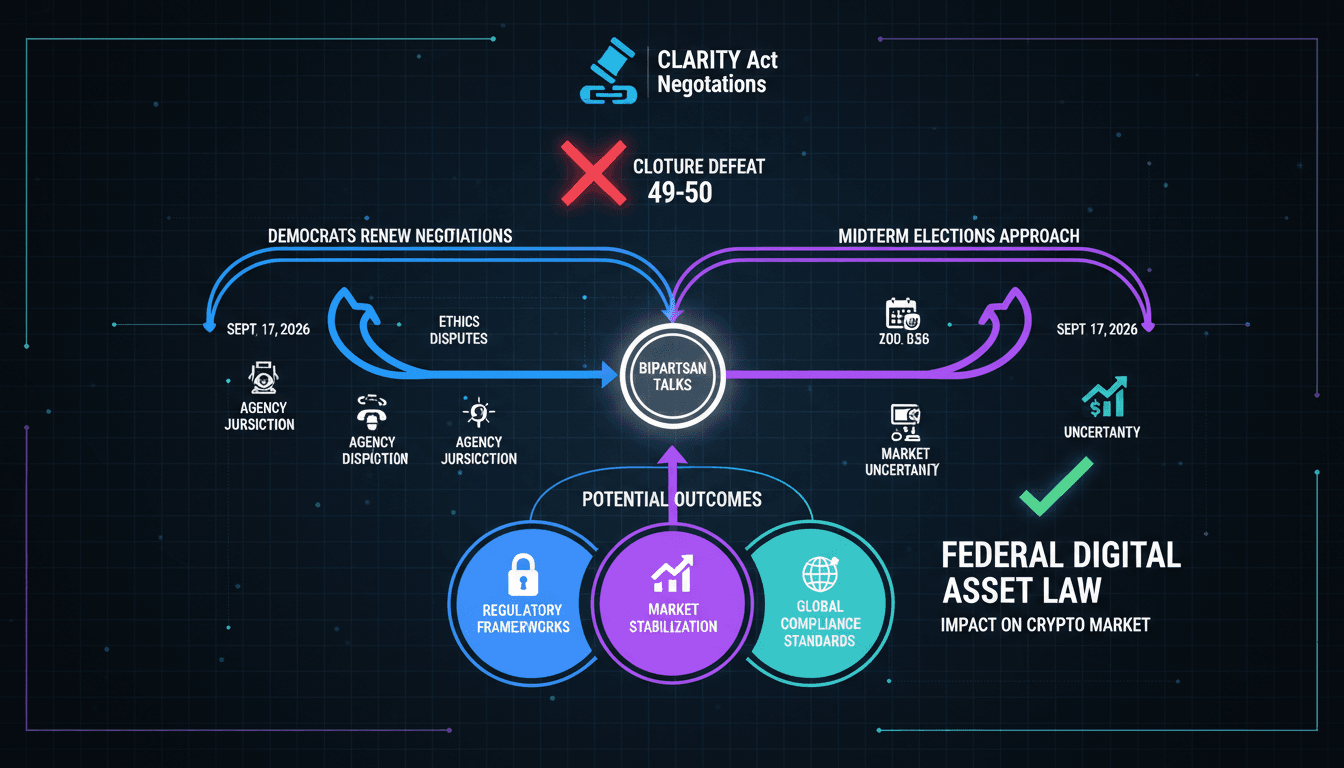
- On September 15, 2026, the Senate rejected a motion to proceed on the CLARITY Act by a 49-50 vote, failing to meet the 60-vote threshold.
- The next day, seven Senate Democrats announced they would continue bipartisan negotiations to revive the stalled legislation.
- Current status: Ongoing staff-level discussions are taking place, but no new cloture vote is scheduled.
The context you actually need
- The CLARITY Act (H.R. 3633) aims to clarify the regulatory roles of the SEC and CFTC in overseeing digital assets, a topic of contention since its introduction.
- Previous negotiations struggled due to partisan divides, particularly over ethics provisions and enforcement mechanisms, leading to the recent cloture defeat.
- Market reactions have been mixed, with Bitcoin prices rising independently of the legislative outcome, indicating investor sentiment may not be solely tied to regulatory clarity.
What's really happening
The reopening of negotiations on the CLARITY Act signifies a critical moment in U.S. crypto regulation. The initial rejection of the bill by a narrow margin reflects deep partisan divides and highlights the challenges of achieving consensus in a politically charged environment. The seven Senate Democrats involved in the renewed discussions are committed to finding common ground, particularly on contentious issues like ethics provisions for elected officials involved in digital assets.
The CLARITY Act aims to delineate the regulatory responsibilities between the SEC and CFTC, which has been a source of confusion and uncertainty for market participants. By clarifying these roles, the legislation seeks to provide a more stable framework for digital asset transactions, potentially fostering greater institutional investment and innovation in the sector. However, the lack of immediate follow-up votes and the compressed legislative calendar ahead of the 2026 midterms complicate the path forward.
Industry stakeholders, including executives from crypto firms, have expressed cautious optimism about the potential for a revived CLARITY Act. They recognize that while the bill may not alter state licensing requirements, it could significantly clarify federal token classifications. This clarity is essential for businesses operating in the crypto space, as it would help them navigate the regulatory landscape more effectively.
Despite the Democrats' commitment to continue negotiations, some senators, like Cynthia Lummis, have suggested that the legislation may effectively be over for the current Congress. This sentiment underscores the urgency for the Democrats to find a bipartisan solution before the midterms, as the political landscape could shift dramatically after the elections.
As discussions progress, market participants are likely to keep a close eye on the SEC and CFTC's ongoing rulemaking efforts, which will continue regardless of the legislative outcome. The interplay between these regulatory bodies and the evolving legislative landscape will be crucial in shaping the future of the crypto market in the U.S.
Who feels it first (and how)
- Crypto investors: They will experience immediate impacts on market stability and investment strategies based on regulatory clarity.
- Crypto businesses: Companies operating in the digital asset space will need to adapt to any new regulations that emerge from these negotiations.
- Regulatory agencies: The SEC and CFTC will have to adjust their enforcement strategies based on the final outcomes of the CLARITY Act discussions.
What to watch next
- Upcoming negotiations: Watch for any announcements regarding new cloture votes or significant bipartisan agreements that could signal progress.
- Market reactions: Monitor how crypto prices respond to news from the Senate, as investor sentiment may shift based on perceived regulatory clarity.
- SEC and CFTC rulemaking: Keep an eye on ongoing developments from these agencies, as their actions will continue to shape the regulatory environment regardless of the CLARITY Act's fate.
The Senate's rejection of the CLARITY Act by a narrow margin.
Continued staff-level discussions among Senate Democrats and potential bipartisan efforts to revive the legislation.
The timeline for any new cloture votes or the ultimate fate of the CLARITY Act before the midterms.
Frequently Asked Questions
- Why it matters?
- The outcome of these negotiations could establish a clearer regulatory framework for digital assets, influencing market stability and investor confidence.
- What happened (in 30 seconds)?
- On September 15, 2026, the Senate rejected a motion to proceed on the CLARITY Act by a 49-50 vote, failing to meet the 60-vote threshold. The next day, seven Senate Democrats announced they would continue bipartisan negotiations to revive the stalled legislation. Current status: Ongoing staff-level discussions are taking place, but no new cloture vote is scheduled.
- What's really happening?
- The reopening of negotiations on the CLARITY Act signifies a critical moment in U.S. crypto regulation. The initial rejection of the bill by a narrow margin reflects deep partisan divides and highlights the challenges of achieving consensus in a politically charged environment. The seven Senate Democrats involved in the renewed discussions are committed to finding common ground, particularly on contentious issues like ethics provisions for elected officials involved in digital assets. The CLARI
- Who feels it first (and how)?
- Crypto investors: They will experience immediate impacts on market stability and investment strategies based on regulatory clarity. Crypto businesses: Companies operating in the digital asset space will need to adapt to any new regulations that emerge from these negotiations. Regulatory agencies: The SEC and CFTC will have to adjust their enforcement strategies based on the final outcomes of the CLARITY Act discussions.
- What to watch next?
- Upcoming negotiations: Watch for any announcements regarding new cloture votes or significant bipartisan agreements that could signal progress. Market reactions: Monitor how crypto prices respond to news from the Senate, as investor sentiment may shift based on perceived regulatory clarity. SEC and CFTC rulemaking: Keep an eye on ongoing developments from these agencies, as their actions will continue to shape the regulatory environment regardless of the CLARITY Act's fate.
Real-time updates, analysis, and reports on the blockchain and cryptocurrency sectors.
"Crypto News delivers real-time updates, analysis, and reports on the blockchain and cryptocurrency sectors."
— A47 Editor
CLARITY Act talks resume as 7 Democrats seek revival
Seven Senate Democrats have resumed negotiations over the CLARITY Act after a recent 49-50 vote that rejected cloture, leaving the cryptocurrency market structure bill 11 votes short of the 60 needed to begin debate. This development follows a series...
Covers blockchain, cryptocurrency news, project analysis, and market insights.
"Cointelegraph is a leading crypto-focused media outlet known for timely news, analysis, and educational content related to blockchain and digital assets."
— A47 Editor
CLARITY Act could get another shot during lame-duck session, policy advocate says
Adrian Wall, managing director of the Digital Sovereignty Alliance, indicated that bipartisan support among senators may lead to a renewed effort to advance the CLARITY Act, a bill aimed at establishing a structured framework for the cryptocurrency m...
English-language digital publication covering business, politics, technology, and current affairs.
"The Arabian Post mixes original and syndicated-style coverage with a broad regional and global business-news orientation."
— A47 Editor
Senate blocks crypto market bill in procedural vote
The US Senate's recent procedural vote resulted in the failure to advance the Digital Asset Market Clarity Act, with a close tally of 49-50, effectively halting the cryptocurrency industry's push for a comprehensive federal regulatory framework. This...