
Iraq and France Sign Energy and Defense Agreements in Paris
Why it matters
The agreements signal a strategic shift in energy security and defense capabilities in the Middle East, impacting global oil markets.
What happened (in 30 seconds)
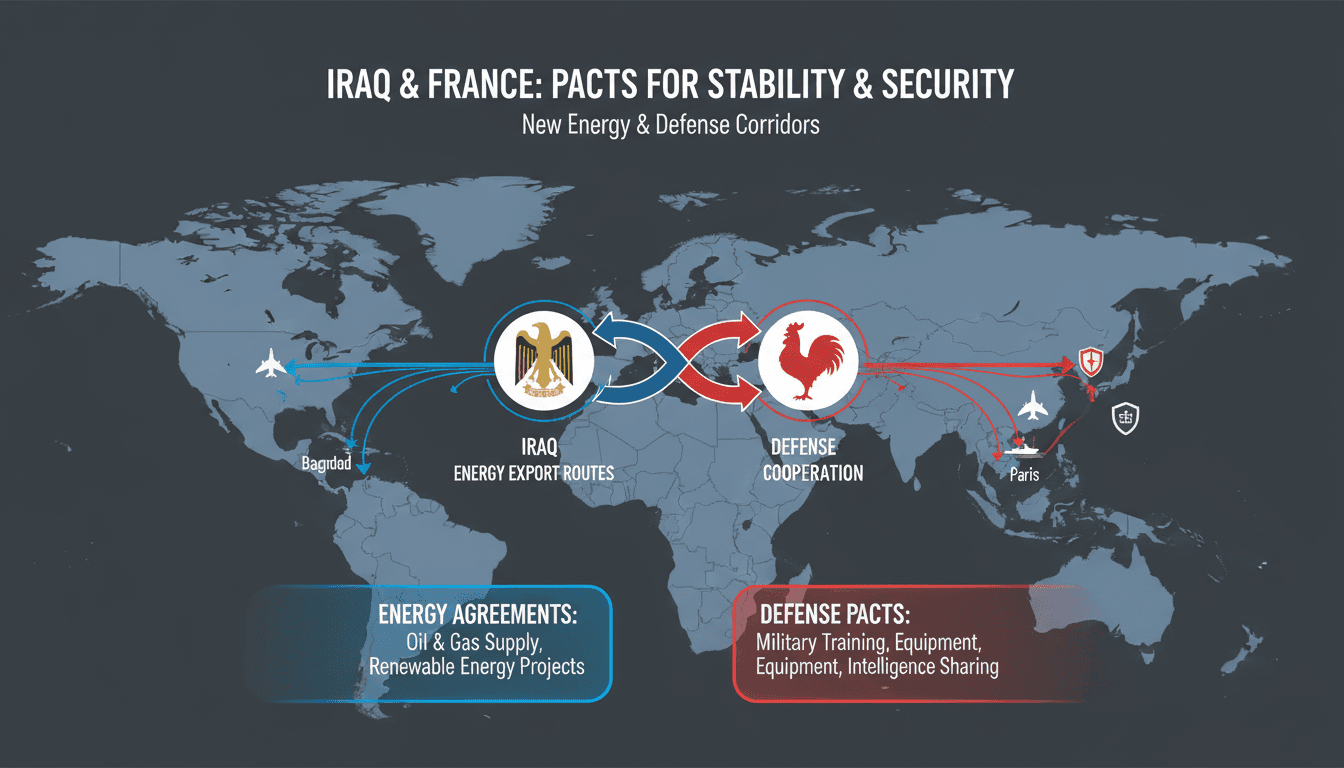
- Iraq and France signed multiple agreements on energy and defense during a meeting in Paris on September 14, 2026.
- Key pacts include air defense systems and gas supply protocols with TotalEnergies, aiming to enhance regional stability.
- The leaders emphasized diversification of energy export routes to mitigate risks from ongoing regional conflicts.
The context you actually need
- Regional tensions have escalated since February 2026, affecting navigation in critical waterways like the Strait of Hormuz.
- Iraq is seeking stronger ties with Europe post-ISIS coalition, focusing on defense and energy resilience.
- TotalEnergies is positioned to play a crucial role in Iraq's energy supply, reflecting broader European interests in Middle Eastern energy.
What's really happening
The agreements signed between Iraq and France on September 14, 2026, represent a significant pivot in the geopolitical landscape of the Middle East, particularly in the context of energy security and defense. With oil prices recently surpassing $100 per barrel due to navigation crises in strategic straits, the urgency for diversified energy routes has never been more pronounced. The Iraqi Prime Minister Ali Al-Zaidi's visit to Paris marks a critical step in strengthening Iraq's bilateral ties with European nations, particularly as the international coalition mission against ISIS winds down.
The six memoranda of understanding signed during this meeting cover a range of areas, including air defense systems, gas supply agreements with TotalEnergies, and frameworks for strategic cooperation. Notably, the letter of intent between Iraq's Ministry of Defense and Harmattan AI for autonomous air defense systems highlights a shift towards modernizing Iraq's defense capabilities. This move is not just about enhancing military strength; it also reflects a broader strategy to assert Iraqi sovereignty and control over its defense resources.
The joint statement issued by Macron and Al-Zaidi emphasizes the need for regional energy security through diversified export routes. This is particularly relevant given the ongoing instability in the Middle East, which has historically disrupted oil supplies and affected global markets. By fostering partnerships with European nations, Iraq aims to bolster its energy sector resilience and reduce dependency on traditional routes that are vulnerable to conflict.
Moreover, the agreements are expected to have long-term implications for the energy landscape in the Gulf region. As Iraq strengthens its energy ties with France and TotalEnergies, it could lead to increased competition for energy supplies, potentially affecting pricing and availability for consumers in the Gulf, including Dubai. The emphasis on civil aviation, youth innovation, and development cooperation also indicates a broader vision for economic collaboration that extends beyond immediate energy needs.
In summary, these agreements are not merely transactional; they represent a strategic alignment of interests that could reshape the energy and defense dynamics in the Middle East, with ripple effects felt globally.
Who feels it first (and how)
- Energy sector professionals: Changes in supply routes and pricing could directly impact costs and contracts.
- Defense contractors: Opportunities for new contracts and partnerships in Iraq's defense modernization efforts.
- Consumers in the Gulf: Potential fluctuations in energy prices and availability as Iraq diversifies its export routes.
What to watch next
- Implementation of agreements: Monitor how quickly and effectively these agreements are put into action, as this will indicate the strength of Iraq's new partnerships.
- Oil price fluctuations: Keep an eye on global oil prices, especially in relation to navigation stability in the Middle East, as this could affect energy costs in the Gulf.
- Regional security developments: Watch for any escalations in regional conflicts that could impact the effectiveness of these agreements and Iraq's energy exports.
Iraq and France have signed multiple agreements focusing on energy and defense.
These agreements will lead to increased collaboration in energy supply and defense capabilities.
The immediate impact on global oil prices and regional stability remains uncertain.
Frequently Asked Questions
- Why it matters?
- The agreements signal a strategic shift in energy security and defense capabilities in the Middle East, impacting global oil markets.
- What happened (in 30 seconds)?
- Iraq and France signed multiple agreements on energy and defense during a meeting in Paris on September 14, 2026. Key pacts include air defense systems and gas supply protocols with TotalEnergies, aiming to enhance regional stability. The leaders emphasized diversification of energy export routes to mitigate risks from ongoing regional conflicts.
- What's really happening?
- The agreements signed between Iraq and France on September 14, 2026, represent a significant pivot in the geopolitical landscape of the Middle East, particularly in the context of energy security and defense. With oil prices recently surpassing $100 per barrel due to navigation crises in strategic straits, the urgency for diversified energy routes has never been more pronounced. The Iraqi Prime Minister Ali Al-Zaidi's visit to Paris marks a critical step in strengthening Iraq's bilateral ties wi
- Who feels it first (and how)?
- Energy sector professionals: Changes in supply routes and pricing could directly impact costs and contracts. Defense contractors: Opportunities for new contracts and partnerships in Iraq's defense modernization efforts. Consumers in the Gulf: Potential fluctuations in energy prices and availability as Iraq diversifies its export routes.
- What to watch next?
- Implementation of agreements: Monitor how quickly and effectively these agreements are put into action, as this will indicate the strength of Iraq's new partnerships. Oil price fluctuations: Keep an eye on global oil prices, especially in relation to navigation stability in the Middle East, as this could affect energy costs in the Gulf. Regional security developments: Watch for any escalations in regional conflicts that could impact the effectiveness of these agreements and Iraq's energy exp
Jordanian news and regional updates.
"Roya News is a Jordanian outlet focused on breaking news and local affairs."
— A47 Editor
ماكرون والزيدي يوقعان اتفاقات في مجالي الطاقة والتسليح ويدعوان إلى تنويع مسارات التصدير
French President Emmanuel Macron and Iraqi Prime Minister Ali Al-Zaydi signed agreements in the fields of energy and armament, emphasizing the importance of diversifying export routes. This collaboration aims to strengthen bilateral ties between Fran...
Regional coverage and analysis focused on politics, diplomacy, and business across the Middle East.
"Al-Monitor is known for analytical reporting on Middle East politics and policy developments."
— A47 Editor
France, Iraq deepen energy, defence ties during Zaidi visit
France and Iraq have strengthened their energy and defense ties during a visit by Iraqi Prime Minister Ali al-Zaidi to Paris, where both leaders emphasized the need for diversifying oil and gas export routes in the Middle East amid regional instabili...
UAE-based English-language newspaper covering regional politics, economics, and global affairs.
"The National reflects Emirati policy perspectives while maintaining international editorial standards."
— A47 Editor
Iraqi Prime Minister seeks support in France to ease pressure on oil exports
Iraqi Prime Minister Ali al-Zaidi is seeking support in France to alleviate pressures on the country's oil exports, emphasizing the need for diversified routes amid regional instability. This initiative is part of a broader strategy to enhance Iraq's...