
Nicholas Brandram dies by suicide amid ongoing police investigation into Putney pusher case
Why it matters
This incident underscores systemic issues within law enforcement that can exacerbate mental health crises for suspects.
What happened (in 30 seconds)
- Nicholas Brandram, a suspect in the 2017 Putney pusher case, died by suicide on 15 September 2026.
- His family reported that the stress from the ongoing police investigation and public scrutiny severely impacted his mental health.
- The Metropolitan Police confirmed the case remains active and has referred the matter to the Independent Office for Police Conduct (IOPC).
The context you actually need
- The Putney pusher incident involved a woman being pushed into traffic in 2017, leading to a lengthy investigation with no charges until Brandram's arrest in 2026.
- Brandram's mental health deteriorated significantly during the investigation, leading to psychiatric hospitalization and ultimately his suicide.
- The IOPC's involvement indicates a potential shift in how police conduct investigations, especially regarding the mental health of suspects.
What's really happening
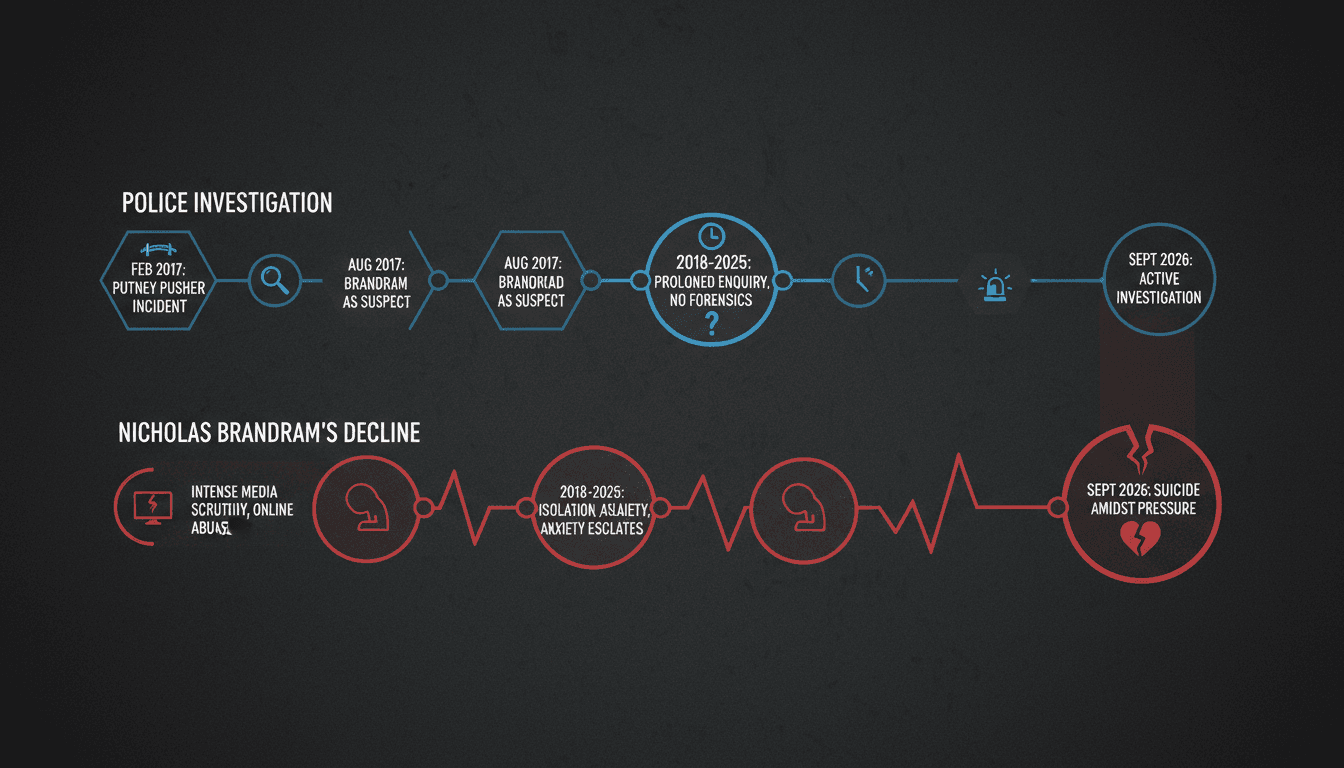
The tragic suicide of Nicholas Brandram has brought to light the often-overlooked mental health implications of prolonged police investigations. Brandram was arrested in June 2026, nearly nine years after the initial incident that made headlines. The Putney pusher case, which involved a jogger pushing a woman into the path of a bus, had already garnered significant media attention, leading to a public outcry for justice. However, the renewed focus on Brandram, who had no forensic evidence linking him to the crime, created a perfect storm of stress and anxiety.
Brandram's family provided substantial evidence to support his innocence, including alibi emails and physical discrepancies that did not match the CCTV footage. Despite this, the media narrative shifted, leading to online abuse and public vilification. This kind of scrutiny can have devastating effects on an individual's mental health, particularly when they feel trapped in a situation with no clear resolution. Brandram's sisters reported that he felt the investigation was "murdering him," indicating the profound psychological toll it took on him.
The Metropolitan Police's acknowledgment of the ongoing investigation and their referral to the IOPC suggests a recognition of the need for reform in how investigations are conducted, particularly regarding the treatment of suspects. The IOPC's role will be crucial in assessing whether the police acted appropriately and whether there were failures in duty of care that contributed to Brandram's mental decline.
This incident raises broader questions about the systemic pressures faced by individuals under investigation. The lack of support for mental health during such stressful periods can lead to tragic outcomes, as seen in Brandram's case. The police's responsibility extends beyond just solving crimes; they must also consider the mental well-being of those involved in their investigations. This case could serve as a catalyst for change, prompting law enforcement agencies to implement better mental health support systems for suspects and to reevaluate their investigative practices.
Who feels it first (and how)
- Suspects in ongoing investigations: Increased scrutiny can lead to severe mental health issues.
- Law enforcement agencies: Pressure to reform practices regarding mental health support.
- Mental health professionals: Potential rise in demand for services as awareness of these issues grows.
What to watch next
- IOPC findings: The outcome of the investigation into police conduct will be crucial for future reforms.
- Public discourse on mental health: Increased awareness may lead to changes in how police handle investigations involving mental health.
- Legislative changes: Potential for new policies aimed at protecting the mental health of suspects during investigations.
Brandram's suicide occurred during an active police investigation.
The IOPC will recommend changes to police procedures regarding mental health.
The long-term impact on public trust in law enforcement following this incident.
Frequently Asked Questions
- Why it matters?
- This incident underscores systemic issues within law enforcement that can exacerbate mental health crises for suspects.
- What happened (in 30 seconds)?
- Nicholas Brandram, a suspect in the 2017 Putney pusher case, died by suicide on 15 September 2026. His family reported that the stress from the ongoing police investigation and public scrutiny severely impacted his mental health. The Metropolitan Police confirmed the case remains active and has referred the matter to the Independent Office for Police Conduct (IOPC).
- What's really happening?
- The tragic suicide of Nicholas Brandram has brought to light the often-overlooked mental health implications of prolonged police investigations. Brandram was arrested in June 2026, nearly nine years after the initial incident that made headlines. The Putney pusher case, which involved a jogger pushing a woman into the path of a bus, had already garnered significant media attention, leading to a public outcry for justice. However, the renewed focus on Brandram, who had no forensic evidence linkin
- Who feels it first (and how)?
- Suspects in ongoing investigations: Increased scrutiny can lead to severe mental health issues. Law enforcement agencies: Pressure to reform practices regarding mental health support. Mental health professionals: Potential rise in demand for services as awareness of these issues grows.
- What to watch next?
- IOPC findings: The outcome of the investigation into police conduct will be crucial for future reforms. Public discourse on mental health: Increased awareness may lead to changes in how police handle investigations involving mental health. Legislative changes: Potential for new policies aimed at protecting the mental health of suspects during investigations.
International coverage from The Guardian's global desks.
"The Guardian is known for its progressive editorial stance and in-depth analysis."
— A47 Editor
Suspect in ‘Putney pusher’ case told family that investigation was ‘murdering him’
Nicholas Brandram, a 44-year-old suspect in the 'Putney pusher' case, was found dead at his home in Chiswick, London, shortly after expressing to his family that the ongoing police investigation was overwhelming him and causing severe distress. His s...
United Kingdom-focused news including local politics, business, and social issues.
"BBC News is widely regarded as a reputable international news organization, known for its impartial tone and public service mandate."
— A47 Editor
Family blame police for 'Putney pusher' suspect's death
Nicholas Brandram, a suspect in the infamous 'Putney pusher' case, was found dead at his home in Chiswick, west London. His family has publicly blamed the police for his death, asserting that there was no forensic evidence linking him to the incident...
Top international stories selected by The Guardian editors.
"The Guardian is known for its progressive editorial stance and in-depth analysis."
— A47 Editor
Suspect in ‘Putney pusher’ case found dead at his west London home
Nicholas Brandram, a 44-year-old HSBC director, was found dead at his home in Chiswick, west London, on Tuesday evening. He was a suspect in the infamous 'Putney pusher' case, where a woman was pushed into the path of a bus nine years ago. The circum...