
US State Department Approves $24.3 Billion F-35A Sale to Saudi Arabia
Why it matters
This sale underscores the U.S.'s commitment to bolstering Saudi Arabia's military capabilities amid rising regional tensions.
What happened (in 30 seconds)
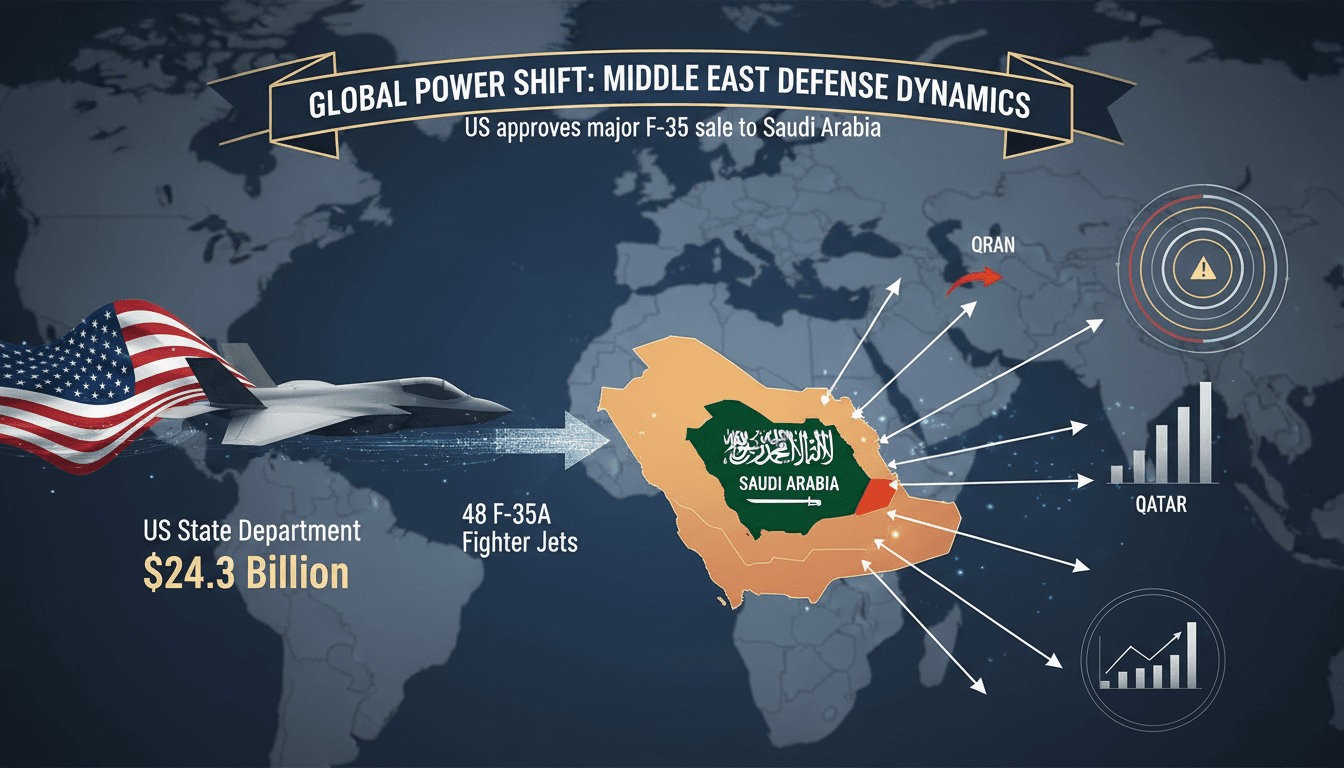
- On September 17, 2026, the U.S. State Department approved a potential sale of 48 F-35A fighter jets to Saudi Arabia, valued at up to $24.3 billion.
- The deal includes aircraft, engines, and support equipment, aiming to enhance Saudi defense capabilities and interoperability with U.S. forces.
- Congress now has a 30-day review period to assess the sale, during which objections can be raised.
The context you actually need
- Saudi Arabia has been pursuing advanced military technology for years, particularly to counter Iranian influence in the region.
- The F-35 sale represents a significant policy shift, as previous administrations limited stealth technology transfers to maintain Israel's military edge.
- Regional conflicts, including Houthi attacks, have intensified the urgency for Saudi Arabia to modernize its air force.
What's really happening
The approval of the F-35A sale to Saudi Arabia marks a pivotal moment in U.S. foreign military sales, reflecting a broader strategy to enhance the defense capabilities of key allies in the Middle East. The deal, valued at up to $24.3 billion, includes not just the aircraft but also engines, secure communications, electronic warfare support, training, and logistics. This comprehensive package aims to improve Saudi Arabia's defensive posture against regional threats, particularly from Iran, while also ensuring interoperability with U.S. and NATO forces.
Historically, the U.S. has been cautious about transferring advanced military technology to Gulf states, primarily to preserve Israel's qualitative military edge. However, the changing dynamics in the Middle East, characterized by increasing Iranian aggression and the proliferation of advanced weaponry among regional adversaries, have prompted a reassessment of these restrictions. The Trump administration's commitment to this sale during Crown Prince Mohammed bin Salman's visit in late 2025 signaled a shift in U.S. policy, prioritizing Saudi Arabia's defense needs.
The congressional review period initiated by the State Department's notification allows lawmakers to scrutinize the deal, particularly concerning technology security and its implications for Israel. Some lawmakers have already expressed concerns, indicating that the sale could provoke a regional arms race. Israeli officials have also voiced reservations, fearing that the introduction of F-35s into Saudi Arabia's arsenal could alter the military balance in the region.
For defense contractors like Lockheed Martin and Pratt & Whitney, this sale represents a significant business opportunity, potentially leading to increased revenues and further contracts in the region. However, the delivery timelines for the aircraft remain unspecified, and the actualization of the sale hinges on congressional approval.
As Saudi Arabia moves to modernize its air force with fifth-generation stealth fighters, the implications extend beyond military capabilities. The deal could reshape alliances and defense strategies in the Gulf, particularly as other nations, including the UAE, may feel pressured to enhance their own military capabilities in response.
Who feels it first (and how)
- Defense contractors: Companies like Lockheed Martin and Pratt & Whitney will see increased business opportunities and revenue.
- U.S. lawmakers: Congressional members will engage in debates over national security and foreign policy implications.
- Regional governments: Neighboring countries, particularly the UAE, may reassess their military strategies and procurement plans.
- Local businesses: Companies in the defense sector in both the U.S. and Saudi Arabia could experience shifts in contracts and partnerships.
What to watch next
- Congressional reactions: Monitor how lawmakers respond during the 30-day review period, as objections could delay or alter the deal.
- Regional military developments: Watch for shifts in military procurement strategies among Gulf states, particularly the UAE, in response to Saudi advancements.
- U.S.-Saudi relations: Observe how this sale impacts diplomatic ties and military cooperation between the U.S. and Saudi Arabia moving forward.
The U.S. State Department has approved the sale of 48 F-35A jets to Saudi Arabia.
Congressional scrutiny will lead to debates over the implications for Israel and regional security.
The exact timeline for delivery and implementation of the sale remains unspecified.
Frequently Asked Questions
- Why it matters?
- This sale underscores the U.S.'s commitment to bolstering Saudi Arabia's military capabilities amid rising regional tensions.
- What happened (in 30 seconds)?
- On September 17, 2026, the U.S. State Department approved a potential sale of 48 F-35A fighter jets to Saudi Arabia, valued at up to $24.3 billion. The deal includes aircraft, engines, and support equipment, aiming to enhance Saudi defense capabilities and interoperability with U.S. forces. Congress now has a 30-day review period to assess the sale, during which objections can be raised.
- What's really happening?
- The approval of the F-35A sale to Saudi Arabia marks a pivotal moment in U.S. foreign military sales, reflecting a broader strategy to enhance the defense capabilities of key allies in the Middle East. The deal, valued at up to $24.3 billion, includes not just the aircraft but also engines, secure communications, electronic warfare support, training, and logistics. This comprehensive package aims to improve Saudi Arabia's defensive posture against regional threats, particularly from Iran, while
- Who feels it first (and how)?
- Defense contractors: Companies like Lockheed Martin and Pratt & Whitney will see increased business opportunities and revenue. U.S. lawmakers: Congressional members will engage in debates over national security and foreign policy implications. Regional governments: Neighboring countries, particularly the UAE, may reassess their military strategies and procurement plans. Local businesses: Companies in the defense sector in both the U.S. and Saudi Arabia could experience shifts in contracts
- What to watch next?
- Congressional reactions: Monitor how lawmakers respond during the 30-day review period, as objections could delay or alter the deal. Regional military developments: Watch for shifts in military procurement strategies among Gulf states, particularly the UAE, in response to Saudi advancements. U.S.-Saudi relations: Observe how this sale impacts diplomatic ties and military cooperation between the U.S. and Saudi Arabia moving forward.
Arabic-language political and world news coverage for UAE readers.
"Emarat Al Youm world coverage usually presents international developments through a UAE and Arab audience lens."
— A47 Editor
الولايات المتحدة توافق على بيع مقاتلات إف-35 للسعودية الولايات المتحدة توافق على بيع مقاتلات إف-35 للسعودية
The United States has approved the sale of 48 F-35 fighter jets to Saudi Arabia, along with related equipment, valued at $24.3 billion. This decision reflects the ongoing military cooperation between the two nations and highlights the strategic partn...
Arabic-language coverage of international news and geopolitics.
"RT Arabic is a Russian state-funded outlet often criticized for promoting Kremlin-aligned narratives."
— A47 Editor
واشنطن توافق على صفقة محتملة لبيع مقاتلات "إف-35" للسعودية بـ24.3 مليار دولار
The U.S. Department of State has approved a potential deal to sell military equipment to Saudi Arabia, which includes the advanced F-35 Lightning II fighter jets and related equipment, amounting to $24.3 billion.
Arabic-language reporting focused on domestic developments in Saudi Arabia.
"Okaz is a mainstream Saudi newspaper that often reflects domestic priorities and official-facing coverage."
— A47 Editor
واشنطن توافق على صفقة «إف 35» للسعودية بـ24.3 مليار دولار
The U.S. Department of State has approved a deal to sell F-35 Lightning II fighter jets to Saudi Arabia, valued at approximately $24.3 billion. This approval is part of ongoing defense and security cooperation between Washington and Riyadh, highlight...