
Canadian Prime Minister Carney Asserts Sovereignty Amid U.S. Tariff Threats
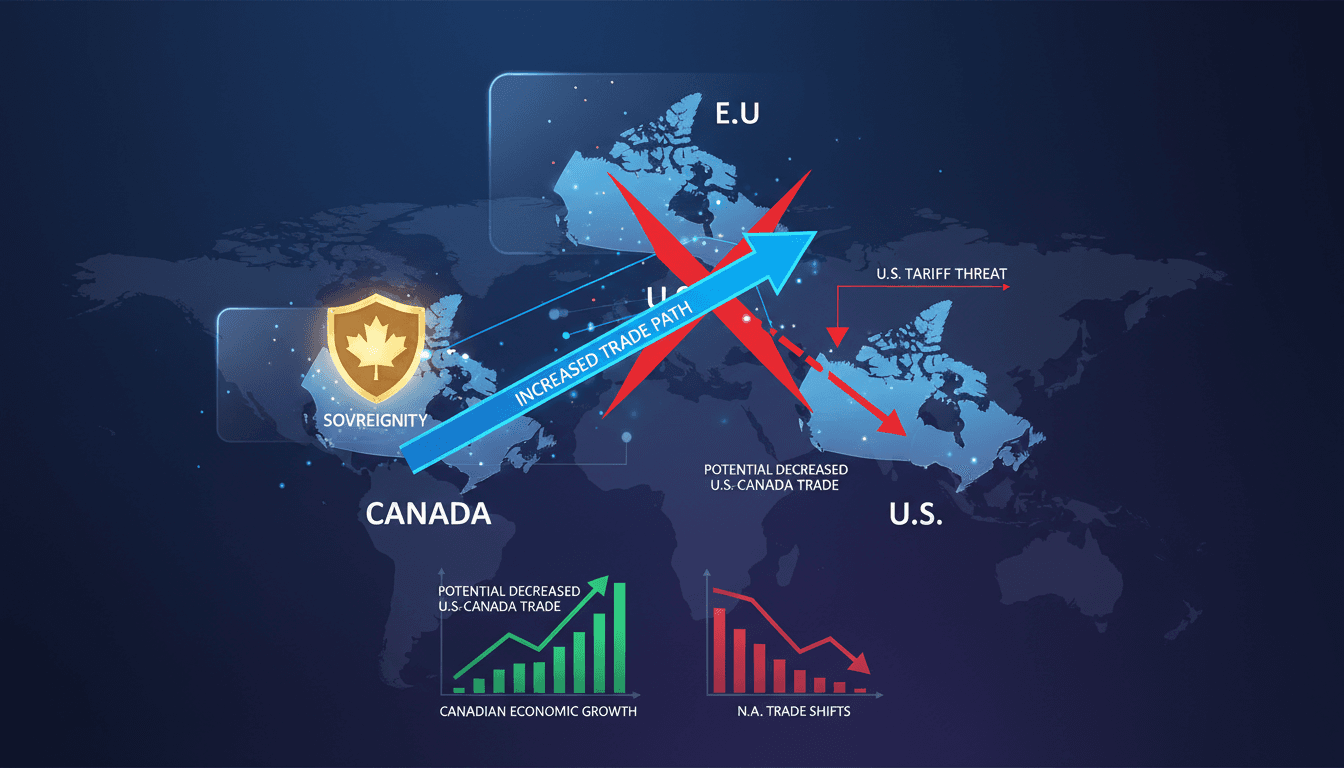
Why it matters
This diplomatic clash highlights the fragility of North American trade relations and the potential for new alliances that could impact global markets.
What happened (in 30 seconds)
- Mark Carney, Canadian Prime Minister, rejected U.S. President Donald Trump's threats regarding tariffs on the EU during a speech in Strasbourg, France.
- Ursula von der Leyen, European Commission President, proposed Canada as the EU's first associate member, prompting U.S. tariff warnings.
- Ongoing trade tensions between the U.S. and Canada have escalated since the imposition of tariffs, leading Canada to seek closer ties with the EU.
The context you actually need
- U.S.-Canada trade tensions have intensified since 2026, with both countries imposing tariffs on each other's goods, valued at approximately $20 billion.
- Canada's strategy to diversify its economic partnerships is a direct response to the U.S. trade policies, aiming to enhance its sovereignty and resilience.
- The EU-Canada summit scheduled for late October 2026 in Montreal will be crucial for discussing the implications of the proposed associate membership.
What's really happening
The recent diplomatic exchange between Canada and the U.S. underscores a significant shift in international relations, particularly in the context of trade. Following the imposition of tariffs by the U.S. on Canadian goods, which led to retaliatory measures from Canada, the bilateral trade negotiations collapsed in August 2026. This breakdown has prompted Canada to explore alternative partnerships, notably with the European Union, as a means of economic diversification.
On September 16, 2026, European Commission President Ursula von der Leyen proposed that Canada become the EU's first associate member. This proposal is not merely symbolic; it represents a strategic move to strengthen economic ties and enhance cooperation on various fronts, including trade, security, and cultural exchange. However, this initiative has drawn the ire of U.S. President Donald Trump, who responded with threats of severe tariffs on EU goods, framing Canada's pursuit of closer ties with the EU as a hostile act.
Prime Minister Carney's response in Strasbourg was a clear assertion of Canadian sovereignty. He emphasized that Canadians are united against external pressures that seek to dictate their choices regarding language, culture, and international partnerships. Carney's remarks indicate a broader sentiment within Canada to assert its independence in the face of U.S. threats, suggesting that the country is willing to pursue its interests even if it means facing economic repercussions from its southern neighbor.
The implications of this diplomatic standoff extend beyond Canada and the U.S. The potential for Canada to align more closely with the EU could lead to a reconfiguration of trade routes and partnerships, impacting global supply chains. For businesses and investors, this means that the landscape of international trade is becoming increasingly complex, with new opportunities and risks emerging as countries seek to navigate these tensions.
Moreover, the Canadian public's support for diversification efforts has reportedly increased, indicating a shift in national sentiment towards embracing new alliances. As Canada moves forward with its plans for closer ties with the EU, the outcome of the upcoming EU-Canada summit will be pivotal in determining the future of this partnership and its implications for U.S.-Canada relations.
Who feels it first (and how)
- Canadian exporters: They may benefit from new markets in the EU but face uncertainty from U.S. tariffs.
- U.S. businesses: Companies reliant on Canadian imports could see increased costs and supply chain disruptions.
- European firms: They might gain from enhanced trade relations with Canada, potentially offsetting U.S. market volatility.
- Investors: Those focused on commodities and energy markets may experience shifts in pricing and availability due to changing trade dynamics.
What to watch next
- EU-Canada summit outcomes: The discussions in late October will reveal the direction of Canada-EU relations and potential agreements.
- U.S. tariff responses: Monitor any new tariff announcements from the U.S. that could escalate trade tensions further.
- Public sentiment in Canada: Continued support for diversification efforts could influence future Canadian policies and international partnerships.
Canada is pursuing closer ties with the EU amid U.S. trade threats.
The EU-Canada summit will yield significant discussions on associate membership and trade agreements.
The long-term impact of U.S. tariffs on Canadian goods and the overall trade relationship remains uncertain.
Frequently Asked Questions
- Why it matters?
- This diplomatic clash highlights the fragility of North American trade relations and the potential for new alliances that could impact global markets.
- What happened (in 30 seconds)?
- Mark Carney, Canadian Prime Minister, rejected U.S. President Donald Trump's threats regarding tariffs on the EU during a speech in Strasbourg, France. Ursula von der Leyen, European Commission President, proposed Canada as the EU's first associate member, prompting U.S. tariff warnings. Ongoing trade tensions between the U.S. and Canada have escalated since the imposition of tariffs, leading Canada to seek closer ties with the EU.
- What's really happening?
- The recent diplomatic exchange between Canada and the U.S. underscores a significant shift in international relations, particularly in the context of trade. Following the imposition of tariffs by the U.S. on Canadian goods, which led to retaliatory measures from Canada, the bilateral trade negotiations collapsed in August 2026. This breakdown has prompted Canada to explore alternative partnerships, notably with the European Union, as a means of economic diversification. On September 16, 2026, E
- Who feels it first (and how)?
- Canadian exporters: They may benefit from new markets in the EU but face uncertainty from U.S. tariffs. U.S. businesses: Companies reliant on Canadian imports could see increased costs and supply chain disruptions. European firms: They might gain from enhanced trade relations with Canada, potentially offsetting U.S. market volatility. Investors: Those focused on commodities and energy markets may experience shifts in pricing and availability due to changing trade dynamics.
- What to watch next?
- EU-Canada summit outcomes: The discussions in late October will reveal the direction of Canada-EU relations and potential agreements. U.S. tariff responses: Monitor any new tariff announcements from the U.S. that could escalate trade tensions further. Public sentiment in Canada: Continued support for diversification efforts could influence future Canadian policies and international partnerships.
Arabic-language political and world news coverage for UAE readers.
"Emarat Al Youm world coverage usually presents international developments through a UAE and Arab audience lens."
— A47 Editor
كندا ترد على تهديدات ترامب: "لا أحد" يملي علينا مع من نوقّع اتفاقات كندا ترد على تهديدات ترامب: "لا أحد" يملي علينا مع من نوقّع اتفاقات
Canadian Prime Minister Mark Carney rejected threats from U.S. President Donald Trump regarding Ottawa's efforts to strengthen agreements. Carney emphasized that no one dictates to Canada whom it should sign agreements with, highlighting the nation's...
Sports reporting with a focus on Saudi and regional competitions.
"Okaz sports coverage is broad and audience-friendly, with strong attention to Saudi teams and leagues."
— A47 Editor
ترمب مهدداً «الأوروبي»: سأفرض رسوماً مرتفعة إذا منحت كندا عضوية منتسبة
U.S. President Donald Trump has threatened to impose high tariffs on the European Union or halt trade altogether if it proceeds with plans to grant Canada the status of the first 'associate member' of the EU. This statement follows European Commissio...
Arabic-language coverage of international news and geopolitics.
"RT Arabic is a Russian state-funded outlet often criticized for promoting Kremlin-aligned narratives."
— A47 Editor
ترامب يهدد بوقف التجارة مع أوروبا إذا حصلت كندا على صفة "عضو مساعد" في الاتحاد الأوروبي
U.S. President Donald Trump has threatened to impose very high tariffs or halt trade with Europe if Canada is granted the status of 'associate member' in the European Union. This statement highlights ongoing tensions between the U.S. and its trading ...