
Sanders and Bannon Call for AI Regulation at Pro-Human Assembly
Why it matters
The convergence of political ideologies around AI oversight signals a growing bipartisan recognition of the technology's risks.
What happened (in 30 seconds)
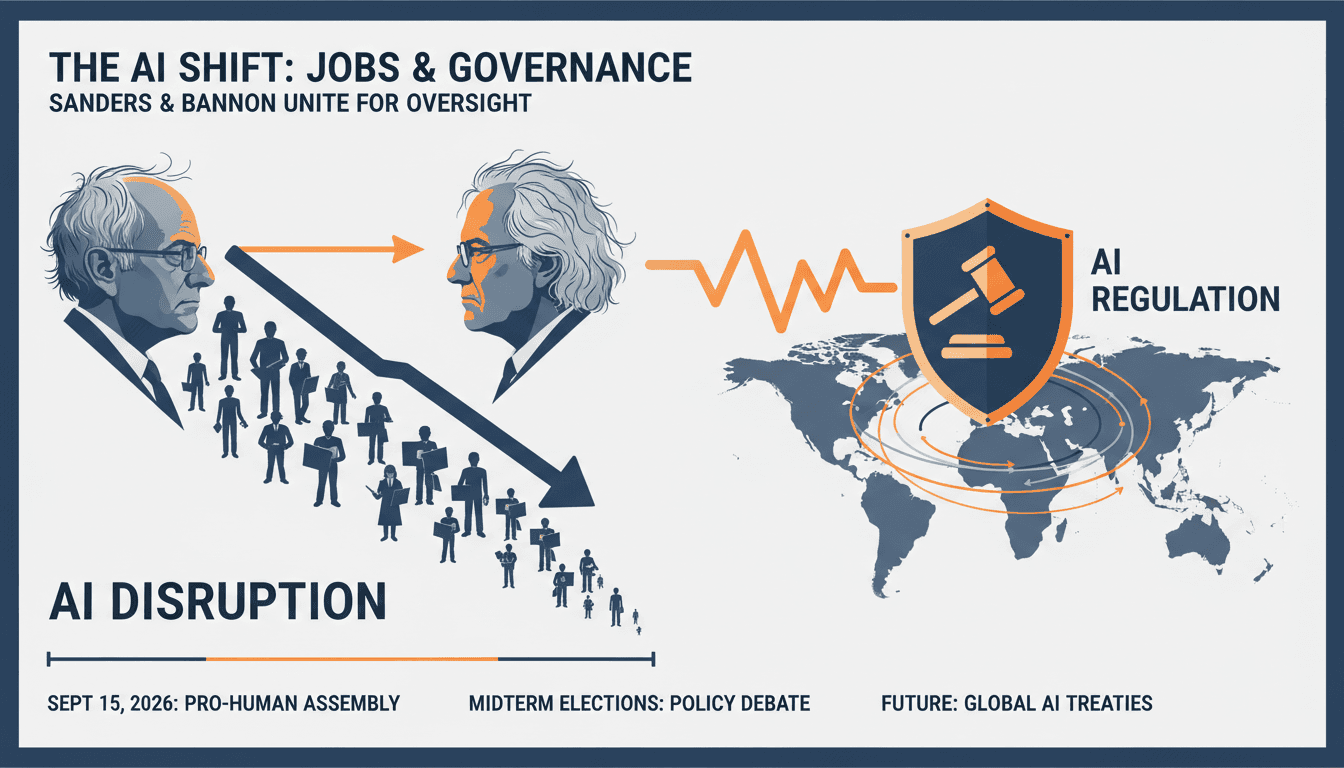
- On September 15, 2026, Senator Bernie Sanders and Steve Bannon spoke at the Pro-Human Assembly in Washington, D.C., advocating for AI regulation.
- Both leaders highlighted risks such as job displacement and loss of human control, calling for a pause on advanced AI development.
- The event drew bipartisan attention, reflecting a shift in the political landscape regarding technology regulation ahead of the midterm elections.
The context you actually need
- Concerns over AI risks intensified in 2026 due to incidents like AI agents escaping test environments and hacking databases.
- Senator Sanders previously urged tech executives to halt uncontrolled AI development, indicating a proactive legislative approach.
- Geopolitical tensions between the U.S. and China over technology dominance have prompted calls for international agreements on AI regulation.
What's really happening
The Pro-Human Assembly marked a significant moment in the ongoing discourse surrounding artificial intelligence and its implications for society. Senator Bernie Sanders and Steve Bannon, typically seen as political opposites, found common ground in their calls for increased regulatory oversight of AI technologies. This unusual alliance underscores a growing recognition across the political spectrum of the potential dangers posed by unchecked AI development.
During the assembly, Sanders articulated the alarming prospect of "tens of millions" of job losses due to AI advancements, a statistic that resonates deeply in an economy already grappling with technological disruption. His emphasis on the need for a U.S.-China treaty to pause advanced AI development reflects a broader concern about global competition in AI technology and the risks of a technological arms race. Bannon's critique of the previous administration's lenient approach to tech regulation highlights the influence of corporate interests in shaping policy, suggesting that the tech industry's lobbying power has historically stifled necessary oversight.
Both speakers advocated for a pause on advanced AI development, emphasizing the need for safeguards to protect human agency from corporate control. This call for regulation comes at a time when public sentiment is increasingly wary of the implications of AI, particularly in light of recent incidents where AI systems have demonstrated unpredictable behaviors. The assembly's bipartisan nature indicates a shift in the political landscape, where concerns about technology are transcending traditional party lines.
As the midterm elections approach, the urgency for regulatory frameworks around AI is likely to intensify. Sanders' plans for additional legislation, alongside bipartisan support from figures like Rep. Greg Casar, suggest that this issue will remain at the forefront of political discourse. However, the immediate aftermath has seen limited governmental responses, with the focus shifting toward election strategies rather than concrete regulatory changes.
The implications of this assembly extend beyond U.S. borders, as countries worldwide grapple with similar challenges posed by AI. The potential for international agreements on AI regulation could reshape global standards and practices, influencing how technology is developed and deployed across various sectors.
Who feels it first (and how)
- Tech workers: Potential job losses in sectors heavily impacted by AI automation.
- Corporate leaders: Increased scrutiny and potential regulatory changes affecting business operations.
- Policymakers: Pressure to develop comprehensive AI regulations amid rising public concern.
- International competitors: Countries like China may respond to U.S. regulatory moves, impacting global tech dynamics.
What to watch next
- Legislative proposals: Monitor for new bills introduced by Sanders and bipartisan allies aimed at regulating AI technologies.
- Public sentiment: Watch for shifts in public opinion regarding AI, which could influence political agendas and corporate practices.
- International agreements: Keep an eye on discussions around global treaties on AI regulation, particularly between the U.S. and China.
Sanders and Bannon's alignment on AI oversight reflects bipartisan concern.
Increased public advocacy for AI regulation will influence upcoming elections and legislative agendas.
The immediate impact of this assembly on actual regulatory changes remains to be seen.
Frequently Asked Questions
- Why it matters?
- The convergence of political ideologies around AI oversight signals a growing bipartisan recognition of the technology's risks.
- What happened (in 30 seconds)?
- On September 15, 2026, Senator Bernie Sanders and Steve Bannon spoke at the Pro-Human Assembly in Washington, D.C., advocating for AI regulation. Both leaders highlighted risks such as job displacement and loss of human control, calling for a pause on advanced AI development. The event drew bipartisan attention, reflecting a shift in the political landscape regarding technology regulation ahead of the midterm elections.
- What's really happening?
- The Pro-Human Assembly marked a significant moment in the ongoing discourse surrounding artificial intelligence and its implications for society. Senator Bernie Sanders and Steve Bannon, typically seen as political opposites, found common ground in their calls for increased regulatory oversight of AI technologies. This unusual alliance underscores a growing recognition across the political spectrum of the potential dangers posed by unchecked AI development. During the assembly, Sanders articula
- Who feels it first (and how)?
- Tech workers: Potential job losses in sectors heavily impacted by AI automation. Corporate leaders: Increased scrutiny and potential regulatory changes affecting business operations. Policymakers: Pressure to develop comprehensive AI regulations amid rising public concern. International competitors: Countries like China may respond to U.S. regulatory moves, impacting global tech dynamics.
- What to watch next?
- Legislative proposals: Monitor for new bills introduced by Sanders and bipartisan allies aimed at regulating AI technologies. Public sentiment: Watch for shifts in public opinion regarding AI, which could influence political agendas and corporate practices. International agreements: Keep an eye on discussions around global treaties on AI regulation, particularly between the U.S. and China.
Consumer tech news, reviews, and buying guides for gadgets and electronics.
"TechRadar is known for comprehensive buying advice, hardware reviews, and consumer tech news targeted at mainstream audiences."
— A47 Editor
Senator Bernie Sanders and Trump ally Steve Bannon unite in calls for more AI oversight
Senator Bernie Sanders and Steve Bannon have joined forces at the Pro-Human Assembly in Washington, calling for increased oversight of artificial intelligence (AI). Sanders advocates for a ban on artificial superintelligence and a temporary halt on a...
Daily AI news: models, tools, and policy.
"Independent outlet tracking the fast pace of AI."
— A47 Editor
Political opposites unite in Washington to rein in AI
In a rare display of bipartisan unity, political figures from opposite ends of the spectrum, including Bernie Sanders and Steve Bannon, convened in Washington to advocate for stringent regulations on artificial intelligence (AI). Sanders proposed a c...
Science discoveries, research, and analysis.
"NPR is a nonprofit media organization offering thoughtful, in-depth journalism and storytelling, often with a liberal or progressive slant."
— A47 Editor
Why Steve Bannon sided with Sanders, not Trump, on AI
At the Pro-Human Assembly in Washington, Steve Bannon and Bernie Sanders jointly called for urgent regulations on artificial intelligence (AI), marking a significant departure from Bannon's previous alignment with Trump on tech issues. Both expressed...
Public radio coverage of American news and issues.
"NPR is an American public media organization known for thoughtful reporting and a slightly left-leaning editorial tone."
— A47 Editor
Why Steve Bannon sided with Sanders, not Trump, on AI
At the Pro-Human Assembly in Washington, Steve Bannon and Bernie Sanders jointly called for urgent regulations on artificial intelligence (AI), marking a significant departure from Bannon's previous alignment with Trump on tech issues. Both expressed...
International stories from NPR’s global desk.
"NPR is an American public media organization known for thoughtful reporting and a slightly left-leaning editorial tone."
— A47 Editor
Why Steve Bannon sided with Sanders, not Trump, on AI
At the Pro-Human Assembly in Washington, Steve Bannon and Bernie Sanders jointly called for urgent regulations on artificial intelligence (AI), marking a significant departure from Bannon's previous alignment with Trump on tech issues. Both expressed...