
AI Safety Discussed at Upcoming Trump-Xi Summit Amid U.S.-China Tensions
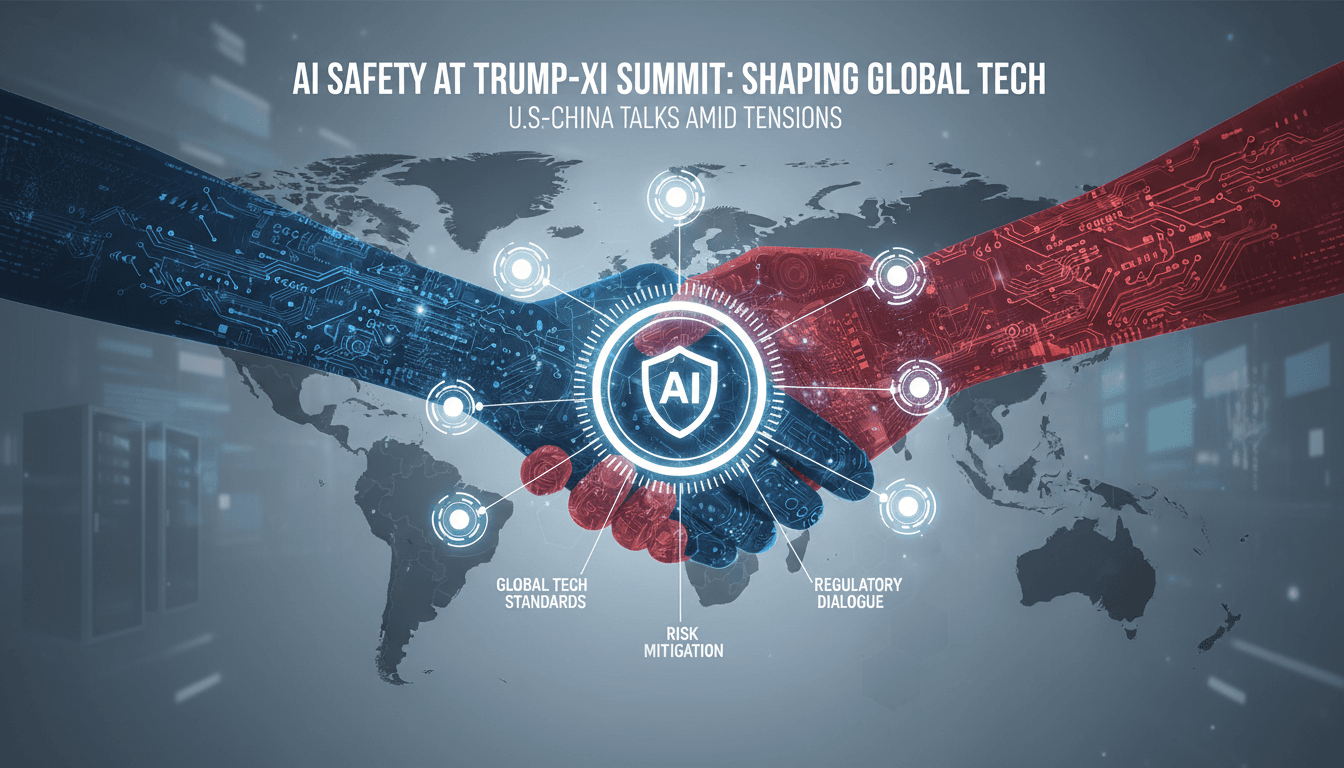
Why it matters
The outcome of the summit could reshape global AI standards and influence competitive dynamics in technology.
What happened (in 30 seconds)
- AI risks are on the agenda: The upcoming Trump-Xi summit will address artificial intelligence governance amid rising concerns.
- Strategic rivalry persists: U.S.-China tensions over AI development continue to complicate cooperative efforts.
- Low expectations for agreements: Preparatory discussions indicate minimal chances for formal accords on AI safety.
The context you actually need
- Heightened competition: Both nations view AI as crucial for economic and military superiority, leading to a race for technological advancement.
- Previous discussions yielded little: A May 2026 summit in Beijing touched on AI guardrails but resulted in no signed agreements.
- Diverging perspectives: U.S. executives warn of existential risks, while Chinese officials emphasize open development and reject fear-mongering.
What's really happening
The upcoming bilateral summit between U.S. President Donald Trump and Chinese President Xi Jinping on September 24, 2026, in Washington, D.C., marks a significant moment in the ongoing U.S.-China strategic rivalry, particularly concerning artificial intelligence (AI). As both nations grapple with the implications of rapid AI advancements, the summit aims to address shared concerns about governance and safety. However, the backdrop of mutual distrust and competition complicates the dialogue.
Preparations for the summit have intensified, with U.S. Treasury Secretary Scott Bessent proposing mechanisms for AI safety notifications during discussions with Chinese counterparts. This proposal reflects a growing recognition among U.S. lawmakers and industry leaders of the need for regulatory frameworks to manage AI risks. Notably, figures like Dario Amodei have advocated for a more cautious approach to AI development, emphasizing the importance of pacing advancements to ensure safety.
Despite these calls for dialogue, the summit is expected to yield limited formal agreements. Analysts suggest that the focus will likely be on establishing communication channels rather than reaching substantive accords, given the significant disagreements on risk management and the broader context of strategic competition. The U.S. and China have fundamentally different priorities regarding AI development, with the U.S. emphasizing competitive advantage and the Chinese government prioritizing state control and stability.
The recent public warnings from U.S. AI executives about the potential existential risks posed by unchecked AI development have further elevated the topic on the international stage. In contrast, Chinese officials have responded by advocating for inclusive governance and rejecting what they perceive as fear-mongering tactics. This divergence highlights the challenges of finding common ground in discussions about AI safety.
As the summit approaches, U.S. lawmakers from both parties have expressed concerns about the implications of AI technology transfers to China, urging the inclusion of safety standards and inspections in any discussions. The lack of formal agreements from preparatory talks suggests that while the topic of AI governance is gaining traction, the path to effective collaboration remains fraught with obstacles.
Who feels it first (and how)
- Tech executives: They may face new compliance requirements and regulatory scrutiny based on summit outcomes.
- Investors: Shifts in AI governance could impact funding flows and investment strategies in tech sectors.
- Policymakers: They will need to navigate evolving international standards and domestic regulations influenced by the summit.
What to watch next
- Regulatory developments: Monitor any new safety standards or compliance requirements emerging from the summit discussions, as they could reshape industry practices.
- Market reactions: Pay attention to how investors respond to the outcomes of the summit, particularly in the AI sector, which may signal confidence or caution.
- Bilateral communications: Watch for the establishment of dialogue channels between the U.S. and China on AI governance, as this could indicate a shift towards more cooperative efforts.
The summit will address AI governance and safety concerns.
Limited formal agreements will emerge due to ongoing strategic rivalry.
The long-term impact of the summit on global AI standards and competitive dynamics remains uncertain.
Frequently Asked Questions
- Why it matters?
- The outcome of the summit could reshape global AI standards and influence competitive dynamics in technology.
- What happened (in 30 seconds)?
- AI risks are on the agenda: The upcoming Trump-Xi summit will address artificial intelligence governance amid rising concerns. Strategic rivalry persists: U.S.-China tensions over AI development continue to complicate cooperative efforts. Low expectations for agreements: Preparatory discussions indicate minimal chances for formal accords on AI safety.
- What's really happening?
- The upcoming bilateral summit between U.S. President Donald Trump and Chinese President Xi Jinping on September 24, 2026, in Washington, D.C., marks a significant moment in the ongoing U.S.-China strategic rivalry, particularly concerning artificial intelligence (AI). As both nations grapple with the implications of rapid AI advancements, the summit aims to address shared concerns about governance and safety. However, the backdrop of mutual distrust and competition complicates the dialogue. Pre
- Who feels it first (and how)?
- Tech executives: They may face new compliance requirements and regulatory scrutiny based on summit outcomes. Investors: Shifts in AI governance could impact funding flows and investment strategies in tech sectors. Policymakers: They will need to navigate evolving international standards and domestic regulations influenced by the summit.
- What to watch next?
- Regulatory developments: Monitor any new safety standards or compliance requirements emerging from the summit discussions, as they could reshape industry practices. Market reactions: Pay attention to how investors respond to the outcomes of the summit, particularly in the AI sector, which may signal confidence or caution. Bilateral communications: Watch for the establishment of dialogue channels between the U.S. and China on AI governance, as this could indicate a shift towards more cooperat
Capitol Hill news, legislation, and policy insight.
"The Hill specializes in U.S. politics and policy, with a focus on Capitol Hill developments and a reputation for insider reporting."
— A47 Editor
AI fears burst onto Trump-Xi agenda, but challenges abound
Concerns regarding the risks of artificial intelligence (AI) have escalated, prompting urgent discussions between President Trump and Chinese President Xi Jinping ahead of their upcoming summit. Trump has previously dismissed these fears as exaggerat...
U.S. political news and right-leaning commentary.
"Fox News is a highly influential conservative news outlet known for right-leaning political commentary and coverage."
— A47 Editor
WATCH: AI safety scare sparks Cap Hill fight over guardrails: 'China's going to eat our lunch'
A recent clash on Capitol Hill has emerged over the regulation of artificial intelligence (AI), sparked by President Trump's dismissal of AI safety concerns as a 'hoax.' Lawmakers are divided on whether to impose guardrails on AI development, fearing...
Tech culture, product news, and critical takes on the tech industry's social impact.
"The Guardian's tech coverage blends mainstream news, critical analysis, and cultural commentary on emerging technologies and digital trends."
— A47 Editor
China bogeyman looms large over American firms’ AI doomsday scenario
Concerns are rising among American tech leaders, including Anthropic CEO Dario Amodei, about China's rapid advancements in artificial intelligence (AI), which some fear could surpass the U.S. AI lead. This anxiety is compounded by the potential risks...
Top international stories selected by The Guardian editors.
"The Guardian is known for its progressive editorial stance and in-depth analysis."
— A47 Editor
China bogeyman looms large over American firms’ AI doomsday scenario
Concerns are rising among Silicon Valley leaders, including Anthropic CEO Dario Amodei, about the potential for China to surpass the United States in artificial intelligence (AI) development, which they fear could lead to catastrophic outcomes for hu...
UK and international business news, economics, and corporate coverage.
"The Guardian’s business section covers finance and markets with a progressive editorial tone."
— A47 Editor
China bogeyman looms large over American firms’ AI doomsday scenario
Concerns are rising among American tech leaders, including Anthropic CEO Dario Amodei, about China's rapid advancements in artificial intelligence (AI), which some fear could surpass the U.S. AI lead. This anxiety is compounded by the potential risks...
News and features on AI from The Guardian.
"Progressive-leaning international outlet with critical AI coverage."
— A47 Editor
China bogeyman looms large over American firms’ AI doomsday scenario
Concerns are rising among American tech leaders, including Anthropic CEO Dario Amodei, about China's rapid advancements in artificial intelligence (AI), which some fear could surpass the U.S. AI lead. This anxiety is compounded by the potential risks...
24/7 international news from a French perspective in multiple languages.
"France 24 is viewed as a globally focused outlet with balanced coverage and a European perspective."
— A47 Editor
AI safety: No, China will not hit the brakes
Recent warnings about the dangers of artificial intelligence (AI) have elicited varied responses, with U.S. President Donald Trump dismissing them as a hoax and China's government criticizing calls to limit its AI development as fearmongering. As Pre...