
White House Press Pool Boycotts Coverage Over Trump Administration's Media Access Bans
Why it matters
This dispute underscores ongoing tensions between government and media, impacting how information is disseminated to the public.
What happened (in 30 seconds)
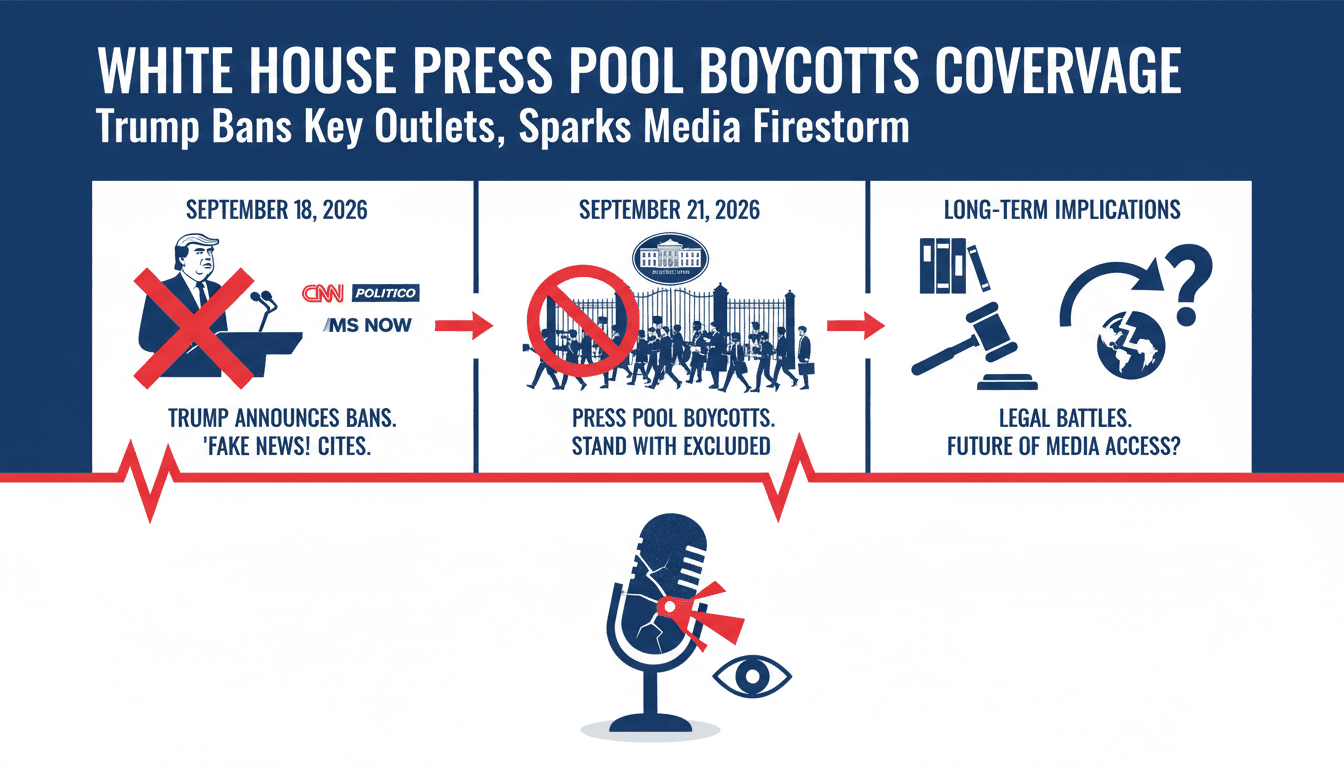
- On September 18, 2026, President Trump announced a ban on CNN, Politico, and MS NOW from White House access.
- Major U.S. television networks, including ABC, CBS, NBC, and Fox News, suspended pooled coverage duties in solidarity.
- Affected outlets are pursuing legal action, claiming violations of First Amendment rights.
The context you actually need
- The White House press pool has been a collaborative mechanism for decades, allowing news organizations to share coverage of presidential activities.
- Tensions escalated during Trump's second term, with previous exclusions of outlets and attempts to control press access.
- The immediate trigger for the boycott was Trump's claim of "fake news," which he used to justify the exclusion of specific outlets.
What's really happening
The recent boycott by the White House press pool is a significant escalation in the ongoing conflict between the Trump administration and certain media organizations. This situation is rooted in a complex history of press access and government control. The press pool, which has operated for decades, serves as a cost-sharing mechanism among news outlets to cover presidential activities in restricted settings. However, the Trump administration's approach has increasingly sought to manage and limit this access, particularly during his second term.
The immediate catalyst for the boycott was President Trump's announcement on September 18, 2026, which banned CNN, Politico, and MS NOW from White House grounds. This decision was framed by Trump as a response to what he termed "fake news," a label he has consistently applied to media that he perceives as critical or inaccurate. Following the announcement, reporters from the affected organizations found their access badges disabled, effectively cutting them off from covering presidential events.
In response, the five major U.S. television networks—ABC, CBS, NBC, Fox News, and CNN—suspended their pooled coverage duties on September 21, 2026. This suspension means that these networks will no longer share video and audio coverage of White House events, leading to limited availability of such content for the broader media landscape. Additionally, still photographers from prominent outlets like The New York Times and The Washington Post joined the boycott, withholding images in solidarity with the excluded organizations.
The implications of this boycott extend beyond immediate media coverage. It raises critical questions about press freedom and the role of government in regulating access to information. The affected outlets have announced plans to sue the administration, asserting that the bans violate First Amendment rights. This legal challenge could set a precedent for how future administrations interact with the press and the extent to which they can control access to information.
Moreover, the White House has launched its own streaming channel, Trump TV, which provides administration-controlled clips. This move further complicates the media landscape, as it allows the administration to curate its narrative while limiting independent coverage. The ongoing litigation and alternative coverage arrangements will likely shape the future of press access and the relationship between the government and media organizations.
Who feels it first (and how)
- Journalists: Those from the banned outlets face immediate restrictions on their ability to report on presidential activities.
- Media organizations: Major networks are adjusting their coverage strategies, impacting how news is disseminated.
- The public: Citizens relying on these outlets for political news may experience a gap in coverage and information.
What to watch next
- Legal outcomes: The lawsuits filed by the affected outlets could redefine press access rights and government accountability.
- Media strategies: Watch how major networks adapt their coverage in response to the boycott and the administration's actions.
- Public response: Monitor how audiences react to changes in coverage and whether this affects trust in media sources.
The boycott has led to limited coverage of presidential events and ongoing legal challenges.
The conflict will continue to evolve, with potential implications for press freedom and government transparency.
The long-term effects on public trust in media and the administration's narrative control remain to be seen.
Frequently Asked Questions
- Why it matters?
- This dispute underscores ongoing tensions between government and media, impacting how information is disseminated to the public.
- What happened (in 30 seconds)?
- On September 18, 2026, President Trump announced a ban on CNN, Politico, and MS NOW from White House access. Major U.S. television networks, including ABC, CBS, NBC, and Fox News, suspended pooled coverage duties in solidarity. Affected outlets are pursuing legal action, claiming violations of First Amendment rights.
- What's really happening?
- The recent boycott by the White House press pool is a significant escalation in the ongoing conflict between the Trump administration and certain media organizations. This situation is rooted in a complex history of press access and government control. The press pool, which has operated for decades, serves as a cost-sharing mechanism among news outlets to cover presidential activities in restricted settings. However, the Trump administration's approach has increasingly sought to manage and limit
- Who feels it first (and how)?
- Journalists: Those from the banned outlets face immediate restrictions on their ability to report on presidential activities. Media organizations: Major networks are adjusting their coverage strategies, impacting how news is disseminated. The public: Citizens relying on these outlets for political news may experience a gap in coverage and information.
- What to watch next?
- Legal outcomes: The lawsuits filed by the affected outlets could redefine press access rights and government accountability. Media strategies: Watch how major networks adapt their coverage in response to the boycott and the administration's actions. Public response: Monitor how audiences react to changes in coverage and whether this affects trust in media sources.
International coverage of politics, culture, and current affairs.
"BBC News is widely regarded as a reputable international news organization, known for its impartial tone and public service mandate."
— A47 Editor
What is the White House pool and why is it in a row with Trump?
President Donald Trump has announced a ban on three media outlets—CNN, MS NOW, and Politico—from accessing the White House, accusing them of spreading 'fake news.' This decision has led to significant tensions between the Trump administration and the...
News from the United States including domestic politics, society, and culture.
"The Guardian is known for its progressive editorial stance and in-depth analysis, often advocating for social justice, environmental issues, and liberal values."
— A47 Editor
US TV networks suspend White House pool coverage over Trump media ban
Major U.S. television networks, including ABC, CBS, Fox News, and NBC, have suspended coverage of the White House following President Donald Trump's ban on certain media outlets, notably CNN, from the premises. This decision came after Trump accused ...
U.S. business news, corporate developments, and economy.
"The Wall Street Journal is respected for deep financial and economic reporting with a center-right editorial perspective."
— A47 Editor
CNN Removed From White House TV Press Pool After Trump Ban
Former President Donald Trump has banned CNN, MS NOW, and Politico from accessing the White House, leading to CNN's removal from the TV press pool that was scheduled to cover the president. This decision, made in response to what Trump labeled as 'fa...