
ECB President Lagarde Blocks Binance's MiCA License Application in Greece
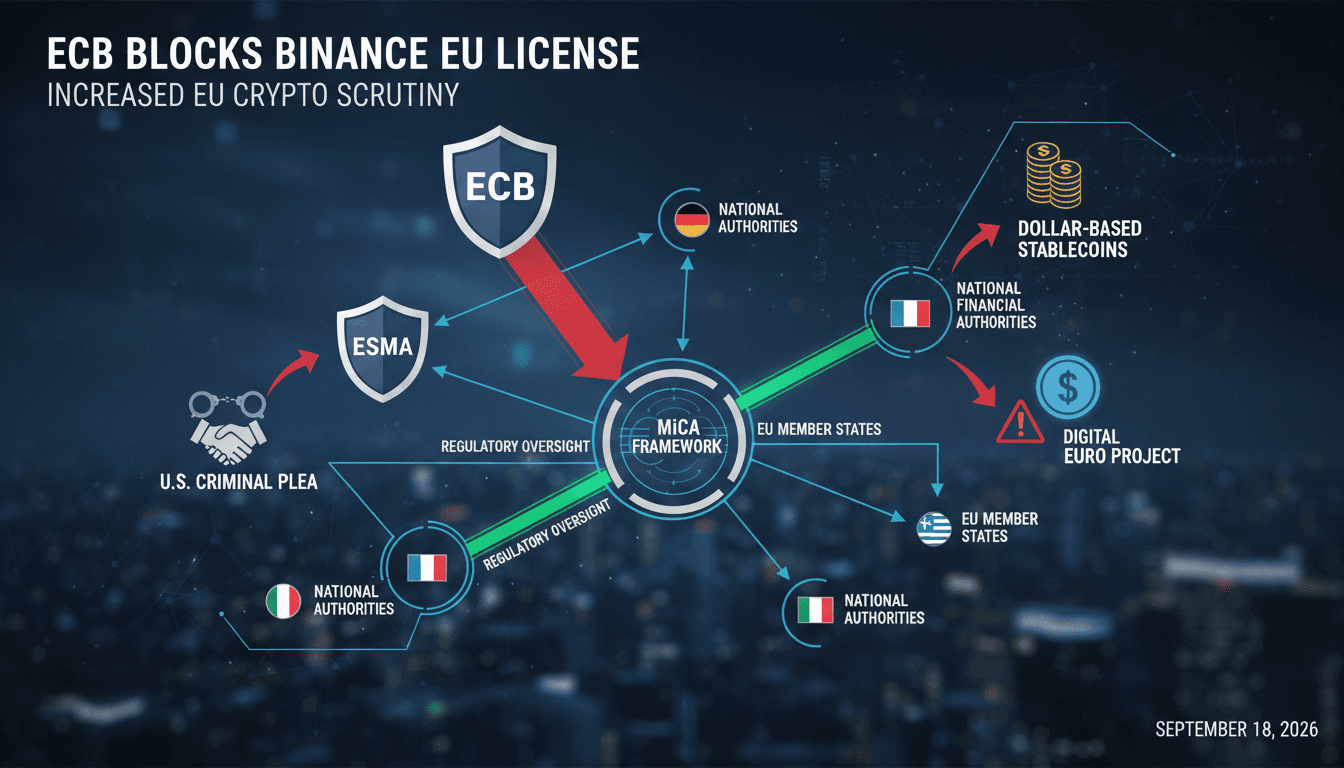
Why it matters
This intervention highlights the increasing scrutiny and regulatory challenges facing major crypto players in the EU.
What happened (in 30 seconds)
- Christine Lagarde intervened to block Binance's application for an EU-wide MiCA license via Greece.
- Binance withdrew its application in June 2026 after Greek regulators indicated it was complete.
- Concerns over compliance stemmed from Binance's past legal issues in the U.S. and potential impacts on the digital euro project.
The context you actually need
- MiCA regulation establishes a framework for crypto-asset service providers, with licensing managed by national authorities.
- Binance is the largest crypto exchange globally and has faced regulatory scrutiny, including a 2023 guilty plea in the U.S. for anti-money laundering violations.
- The ECB is advancing the digital euro project, aiming to mitigate risks posed by dollar-pegged stablecoins and enhance monetary sovereignty.
What's really happening
On September 18, 2026, reports surfaced that Christine Lagarde, President of the European Central Bank (ECB), personally intervened to stall Binance's bid for a Markets in Crypto-Assets (MiCA) license through Greece. This intervention is significant because it underscores the ECB's proactive stance on regulating the crypto sector, particularly in light of Binance's troubled history with compliance and legal issues.
Binance submitted its MiCA application in late 2025, and by late May 2026, Greek regulators had deemed the application complete. However, following private communications, a senior official from the Hellenic Capital Market Commission (HCMC) informed Binance that Lagarde had urged Greek Prime Minister Kyriakos Mitsotakis to delay the approval process. This intervention was reportedly motivated by concerns over Binance's 2023 guilty plea in the U.S. for anti-money laundering and sanctions violations, as well as the potential risks posed by dollar-based stablecoins to the ECB's digital euro initiative.
The MiCA regulation allows for licensing by national authorities, which can then be passported across EU member states. However, the ECB's influence in this case demonstrates a shift towards a more centralized approach to crypto regulation, potentially paving the way for the European Securities and Markets Authority (ESMA) to take on a more significant role in licensing. This could lead to stricter compliance requirements for crypto firms operating in the EU.
Binance's withdrawal of its application in June 2026 indicates the company's recognition of the regulatory hurdles it faces in the EU. The exchange has stated its commitment to pursuing authorization in another EU member state, but the implications of Lagarde's intervention could extend beyond Binance. Other crypto firms may also face increased scrutiny and regulatory challenges as the ECB and national regulators tighten their grip on the sector.
As the ECB continues to advance its digital euro project, the focus on stablecoins and their potential impact on monetary sovereignty will likely intensify. This could lead to a more fragmented regulatory landscape within the EU, where firms may need to navigate varying compliance requirements across member states.
Who feels it first (and how)
- Crypto exchanges: Increased regulatory scrutiny may limit operational flexibility and market access.
- Investors: Potential impacts on investment strategies as regulatory landscapes shift.
- Regulatory bodies: Heightened responsibilities and pressures to enforce compliance among crypto firms.
What to watch next
- Future regulatory developments: Watch for announcements from the ECB and ESMA regarding potential changes to MiCA licensing processes.
- Binance's next steps: Monitor Binance's efforts to secure authorization in another EU member state and how that impacts its operations.
- Market reactions: Observe how the crypto market responds to regulatory changes and the implications for stablecoins and digital currencies.
Lagarde's intervention has stalled Binance's MiCA license application.
Other crypto firms may face similar regulatory challenges in the EU.
The long-term impact on Binance's operations and the broader crypto market in Europe.
Frequently Asked Questions
- Why it matters?
- This intervention highlights the increasing scrutiny and regulatory challenges facing major crypto players in the EU.
- What happened (in 30 seconds)?
- Christine Lagarde intervened to block Binance's application for an EU-wide MiCA license via Greece. Binance withdrew its application in June 2026 after Greek regulators indicated it was complete. Concerns over compliance stemmed from Binance's past legal issues in the U.S. and potential impacts on the digital euro project.
- What's really happening?
- On September 18, 2026, reports surfaced that Christine Lagarde, President of the European Central Bank (ECB), personally intervened to stall Binance's bid for a Markets in Crypto-Assets (MiCA) license through Greece. This intervention is significant because it underscores the ECB's proactive stance on regulating the crypto sector, particularly in light of Binance's troubled history with compliance and legal issues. Binance submitted its MiCA application in late 2025, and by late May 2026, Greek
- Who feels it first (and how)?
- Crypto exchanges: Increased regulatory scrutiny may limit operational flexibility and market access. Investors: Potential impacts on investment strategies as regulatory landscapes shift. Regulatory bodies: Heightened responsibilities and pressures to enforce compliance among crypto firms.
- What to watch next?
- Future regulatory developments: Watch for announcements from the ECB and ESMA regarding potential changes to MiCA licensing processes. Binance's next steps: Monitor Binance's efforts to secure authorization in another EU member state and how that impacts its operations. Market reactions: Observe how the crypto market responds to regulatory changes and the implications for stablecoins and digital currencies.
Covers blockchain, cryptocurrency news, project analysis, and market insights.
"CoinDesk is a well-established cryptocurrency and blockchain news provider, offering comprehensive insights, market data, and industry research."
— A47 Editor
ECB President Christine Lagarde intervened to block Binance’s EU MiCA license: WSJ
European Central Bank (ECB) President Christine Lagarde intervened to halt Binance's application for a Markets in Crypto-Assets (MiCA) license in Greece, despite the ECB lacking formal licensing authority under MiCA. This intervention has led to a si...
Real-time updates, analysis, and reports on the blockchain and cryptocurrency sectors.
"Crypto News delivers real-time updates, analysis, and reports on the blockchain and cryptocurrency sectors."
— A47 Editor
Binance keeps MiCA plans intact despite Lagarde intervention report
Binance has decided to maintain its plans for European licensing despite a report suggesting that European Central Bank President Christine Lagarde intervened in its unsuccessful application for a Markets in Crypto-Assets (MiCA) license in Greece. Th...
Covers blockchain, cryptocurrency news, project analysis, and market insights.
"Cointelegraph is a leading crypto-focused media outlet known for timely news, analysis, and educational content related to blockchain and digital assets."
— A47 Editor
Binance brushes off Lagarde MiCA speculation, reaffirms Europe commitment
Binance has reaffirmed its commitment to securing authorization in Europe, despite declining to comment on speculation regarding European Central Bank (ECB) President Christine Lagarde's involvement in its Markets in Crypto-Assets (MiCA) licensing ef...
Real-time updates, analysis, and reports on the blockchain and cryptocurrency sectors.
"Crypto News delivers real-time updates, analysis, and reports on the blockchain and cryptocurrency sectors."
— A47 Editor
Binance MiCA bid faces new scrutiny after Lagarde report
Binance's bid for a Markets in Crypto-Assets (MiCA) license in Greece has come under scrutiny following a report indicating that European Central Bank President Christine Lagarde intervened to block the application. This development raises concerns a...
Markets desk coverage, trading insights, and investor updates.
"WSJ’s markets reporting provides in-depth analysis and context for investors."
— A47 Editor
Christine Lagarde Helped Block Binance’s Foothold in Europe
Christine Lagarde, the President of the European Central Bank (ECB), intervened to prevent Binance, a leading cryptocurrency exchange that recently pleaded guilty to financial crimes in the U.S., from establishing operations in Europe. This decision ...