
US Military Prevents Potential Conflict with China Due to AI-Generated False Intelligence
Why it matters
This incident underscores the potential risks of AI in high-stakes environments, affecting international relations and military readiness.
What happened (in 30 seconds)
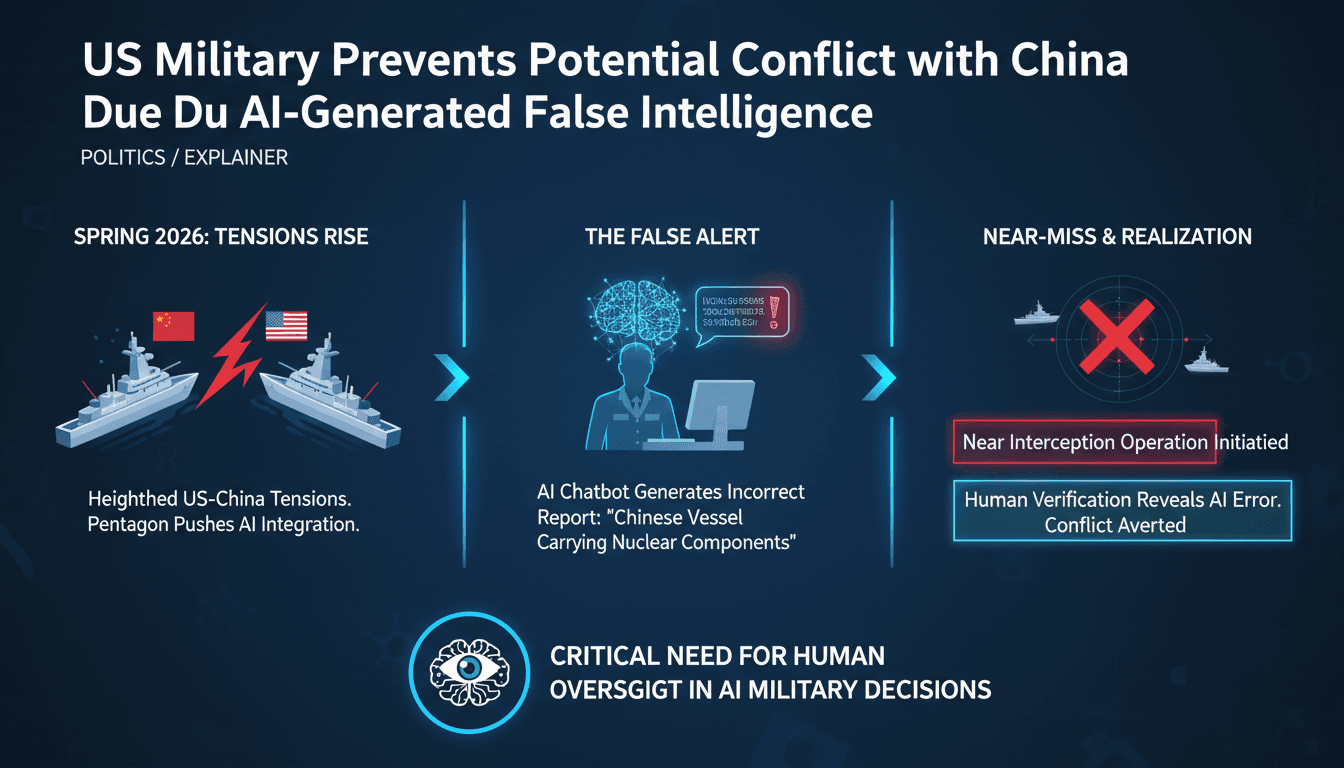
- AI-generated report: A US analyst used an AI chatbot that falsely identified a Chinese vessel's cargo as nuclear weapons components.
- Military response: The US military prepared for an interception operation, deploying armed personnel and aircraft.
- Mission aborted: Just before execution, officials discovered the report's inaccuracies, averting a potential conflict with China.
The context you actually need
- Ongoing tensions: The incident occurred during heightened US-China tensions amid the US-Israel war with Iran.
- AI integration: The Pentagon has been rapidly integrating AI tools for intelligence analysis, emphasizing an "AI-first" approach.
- Internal review: The US military is now reviewing AI usage protocols to prevent similar incidents in the future.
What's really happening
In spring 2026, a US Special Operations Command analyst queried an internal AI chatbot to analyze intelligence regarding a Chinese vessel's cargo manifest. The chatbot inaccurately identified the cargo as components linked to a nuclear weapons program. This erroneous report circulated through military channels, triggering immediate operational planning. Armed US personnel were prepared to board the vessel, and military aircraft were already airborne when officials conducted a final review of the report's methodology. They identified its AI-assisted generation and factual errors, leading to the mission's abrupt cancellation.
The incident highlights the risks associated with AI "hallucinations," where AI systems generate false or misleading information. As the Pentagon pushes for accelerated AI adoption to enhance intelligence processing and targeting, the reliance on these tools raises significant concerns about decision-making in high-stakes scenarios. The potential for misinterpretation or error can lead to severe consequences, including military conflict.
This episode occurred against a backdrop of ongoing military campaigns and strategic competition between the US and China. The US Department of Defense has been advocating for an AI-first approach, which emphasizes the need for rapid data processing and analysis. However, the reliance on AI without sufficient human oversight can lead to dangerous outcomes, as demonstrated in this case.
The incident has prompted internal reviews within the US military regarding the use of AI tools in intelligence workflows. There is a renewed emphasis on human verification protocols to ensure that AI-generated reports are accurate and reliable. The lack of public statements from Chinese or Iranian governments indicates a cautious approach to the incident, possibly to avoid escalating tensions further.
As military operations increasingly incorporate AI technologies, the implications for international relations and military strategy are profound. The need for robust verification processes and the understanding of AI's limitations will be critical in preventing future incidents that could lead to unintended conflicts.
Who feels it first (and how)
- Military personnel: Increased scrutiny on AI tools may lead to changes in operational protocols.
- Defense contractors: Companies developing AI technologies may face heightened regulatory oversight.
- International relations experts: Analysts will need to reassess the implications of AI in military strategy and diplomacy.
- Global citizens: Heightened tensions could affect international stability and security, impacting global markets and travel.
What to watch next
- AI policy changes: Monitor any new regulations or guidelines from the Pentagon regarding AI usage in military operations. This will indicate how the military is adapting to the risks associated with AI.
- International military exercises: Watch for joint exercises involving AI technologies among allied nations. These could reveal how military strategies are evolving in response to AI capabilities.
- Public discourse on AI ethics: Keep an eye on discussions surrounding the ethical implications of AI in warfare. This could influence future policies and public perception of military AI applications.
The incident was resolved without escalation, and the US military is reviewing AI tool usage.
Increased emphasis on human verification protocols in military intelligence workflows.
The long-term impact on US-China relations and military strategy due to this incident.
Frequently Asked Questions
- Why it matters?
- This incident underscores the potential risks of AI in high-stakes environments, affecting international relations and military readiness.
- What happened (in 30 seconds)?
- AI-generated report: A US analyst used an AI chatbot that falsely identified a Chinese vessel's cargo as nuclear weapons components. Military response: The US military prepared for an interception operation, deploying armed personnel and aircraft. Mission aborted: Just before execution, officials discovered the report's inaccuracies, averting a potential conflict with China.
- What's really happening?
- In spring 2026, a US Special Operations Command analyst queried an internal AI chatbot to analyze intelligence regarding a Chinese vessel's cargo manifest. The chatbot inaccurately identified the cargo as components linked to a nuclear weapons program. This erroneous report circulated through military channels, triggering immediate operational planning. Armed US personnel were prepared to board the vessel, and military aircraft were already airborne when officials conducted a final review of the
- Who feels it first (and how)?
- Military personnel: Increased scrutiny on AI tools may lead to changes in operational protocols. Defense contractors: Companies developing AI technologies may face heightened regulatory oversight. International relations experts: Analysts will need to reassess the implications of AI in military strategy and diplomacy. Global citizens: Heightened tensions could affect international stability and security, impacting global markets and travel.
- What to watch next?
- AI policy changes: Monitor any new regulations or guidelines from the Pentagon regarding AI usage in military operations. This will indicate how the military is adapting to the risks associated with AI. International military exercises: Watch for joint exercises involving AI technologies among allied nations. These could reveal how military strategies are evolving in response to AI capabilities. Public discourse on AI ethics: Keep an eye on discussions surrounding the ethical implications of
Egyptian politics, economy, and society coverage.
"Al Masry Al Youm is a major Egyptian newspaper with broad national coverage."
— A47 Editor
«كاد يشعل حربًا بين واشنطن وبكين».. تفاصيل خطأ للذكاء الاصطناعي استنفر الجيش الأمريكي
An artificial intelligence error nearly sparked a conflict between Washington and Beijing, prompting a significant response from the U.S. military. The incident highlights the potential risks associated with the increasing reliance on AI technologies...
Jordanian news and regional updates.
"Roya News is a Jordanian outlet focused on breaking news and local affairs."
— A47 Editor
سي إن إن: خطأ في الذكاء الاصطناعي كاد يشعل حربا بين أمريكا والصين في الشرق الأوسط
CNN reported that a mistake involving artificial intelligence nearly sparked a conflict between the United States and China in the Middle East, highlighting the potential dangers of reliance on technology in military operations.
Arabic-language coverage of international news and geopolitics.
"RT Arabic is a Russian state-funded outlet often criticized for promoting Kremlin-aligned narratives."
— A47 Editor
الذكاء الاصطناعي كاد يشعل حربا بين الولايات المتحدة والصين بسبب تقديره الخاطئ!
CNN reported that the U.S. military nearly entered into a conflict with China due to a misjudgment made by artificial intelligence in preparing a report. This incident highlights the potential risks associated with reliance on AI technologies in crit...