
U.S. House Passes Legislation Mandating AI Data Centers to Fund Power Grid Upgrades
What happened
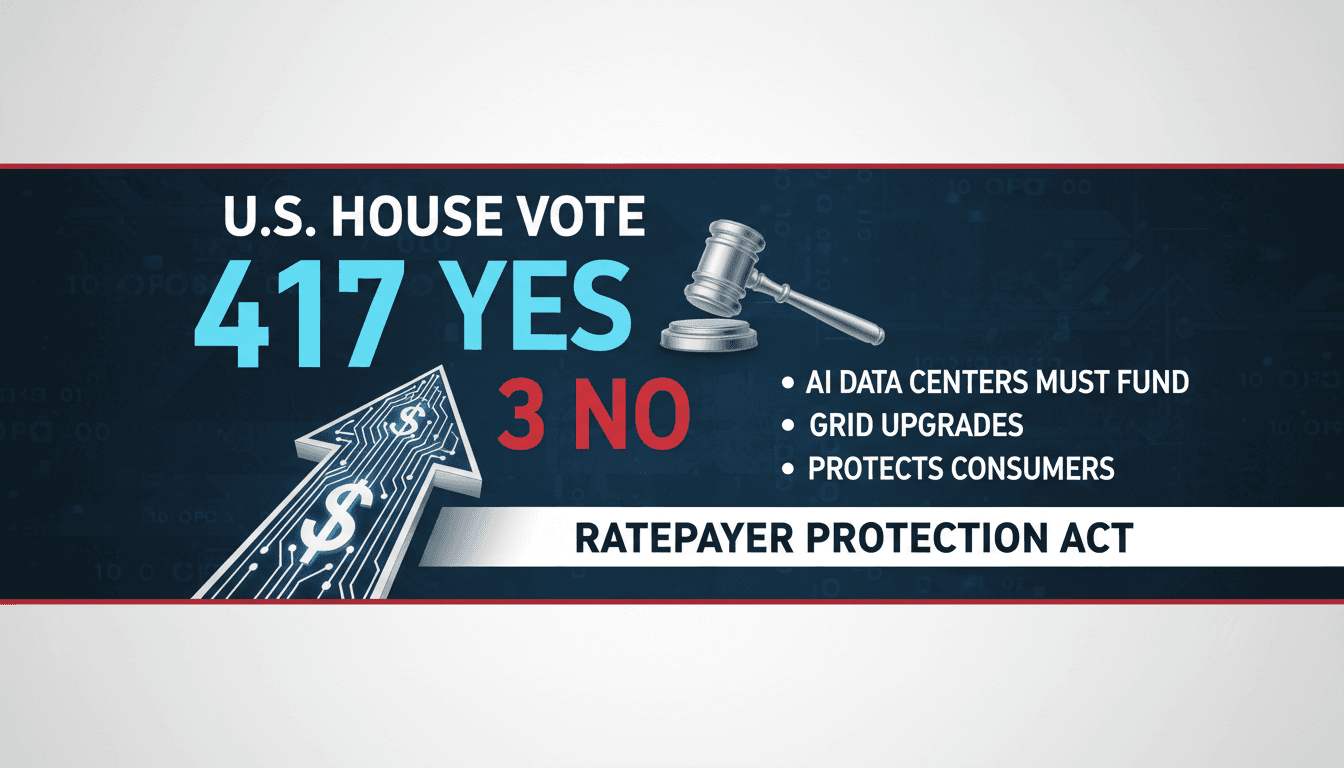
The U.S. House of Representatives passed the Ratepayer Protection Act on September 16, 2026, with a vote of 417-3.
The Context
- Bipartisan support: The bill, sponsored by Reps. Gabe Evans and Kathy Castor, reflects a rare consensus in Congress to protect consumers from rising energy costs linked to AI data centers.
- Infrastructure costs: It mandates that data centers with peak demands over 100 megawatts cover their own infrastructure costs, preventing these expenses from being shifted to residential and small-business ratepayers.
- Future implications: The legislation now moves to the Senate, where it could face scrutiny before the midterm elections, impacting how states manage energy demands from tech giants.
The Number
— This overwhelming vote indicates strong bipartisan support, suggesting that energy policy will increasingly prioritize consumer protection as AI technologies expand.
Takeaway
Expect heightened discussions around energy infrastructure and consumer protections as the Senate considers this bill.
Consumer tech news, reviews, and buying guides for gadgets and electronics.
"TechRadar is known for comprehensive buying advice, hardware reviews, and consumer tech news targeted at mainstream audiences."
— A47 Editor
Bill to make AI data centers pay for power grid upgrades reaches critical milestone
A significant milestone has been reached regarding the Ratepayer Protection Act, which aims to mandate that data center operators consuming over 100MW cover the costs of power grid upgrades. This legislation is designed to address the increasing ener...
Global business headlines with AI angles.
"General business outlet that frequently covers AI."
— A47 Editor
House To Vote On Data Center Energy Use Bill. Critics Say It Won't Protect Residents Anyway.
The House is set to vote on the Ratepayer Protection Act, which has garnered bipartisan support. Critics argue that the bill will not adequately protect residents from the energy use impacts of data centers, raising concerns about its effectiveness.
Curated tech headlines including AI stories.
"Influential aggregator surfacing the day’s top tech/AI links."
— A47 Editor
The US House advances the Ratepayer Protection Act, aimed at preventing data center-related utility costs from being passed on to consumers, by a vote of 417-3 (Justin Papp/CNBC)
The US House of Representatives has advanced the Ratepayer Protection Act with a significant bipartisan vote of 417-3, aiming to prevent utility costs associated with data centers from being passed on to consumers. This legislative move is seen as a ...