
Egypt Enacts Regulations Limiting Social Media Access for Minors
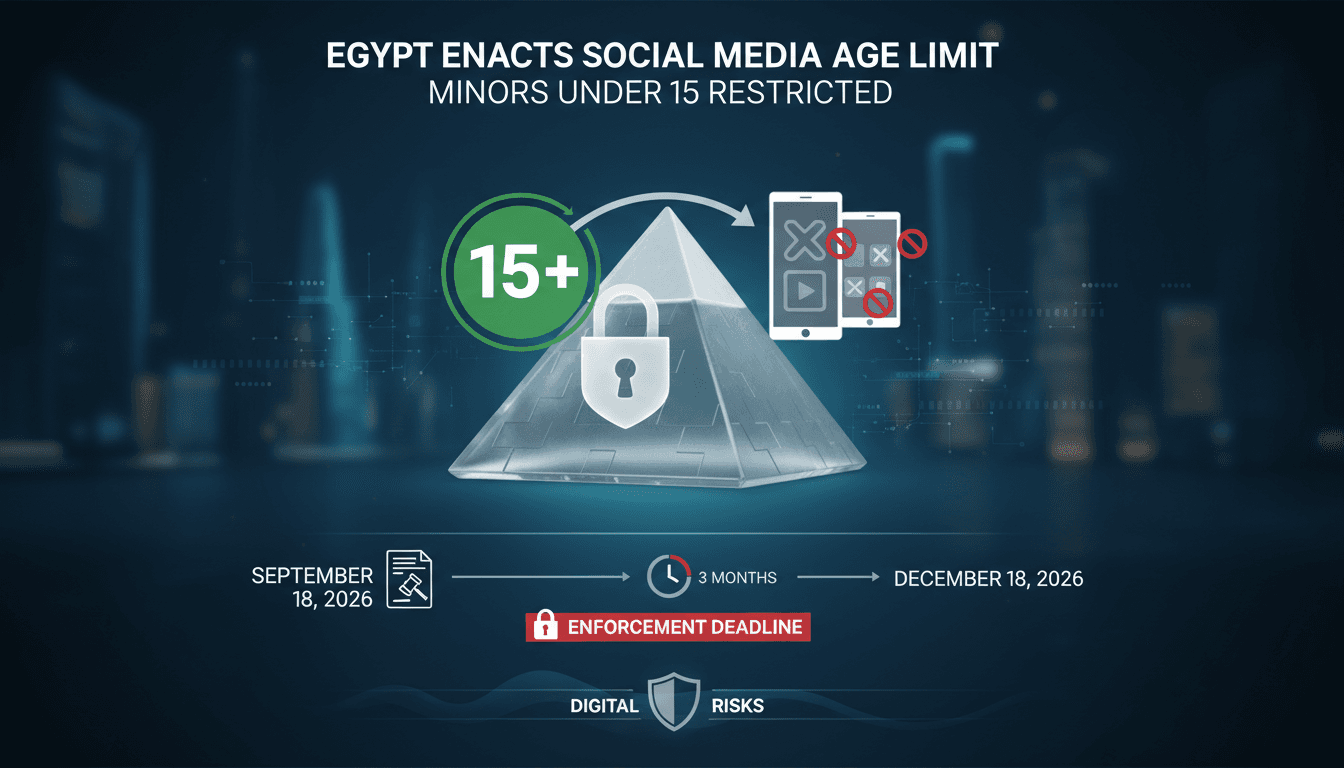
Why it matters
This regulatory decision reflects a growing global trend to protect minors from online risks, impacting how families navigate digital spaces.
What happened (in 30 seconds)
- On September 18, 2026, Egypt's Supreme Council for Media Regulation and National Telecom Regulatory Authority issued a joint decision restricting social media account creation for children under 15.
- Children under 13 are prohibited from creating personal accounts, while those aged 13 to under 15 must use a mandatory Safe Mode.
- Platforms have three months to comply with these regulations, including implementing age verification and reviewing existing accounts.
The context you actually need
- Growing concern over children's safety online has led to similar regulations in other countries, such as Australia and France.
- Approximately 50% of Egyptian children under 18 use social media, highlighting the urgency of protective measures.
- Previous initiatives, like the 'Child SIM' service, aimed to provide parental controls and content restrictions, indicating a broader strategy for child digital protection.
What's really happening
On September 18, 2026, Egypt's Supreme Council for Media Regulation and the National Telecom Regulatory Authority (NTRA) responded to President Abdel Fattah el-Sisi's directive to safeguard children from the potential harms of social media. The joint decision categorizes users into two groups: those under 13, who are outright banned from creating accounts, and those aged 13 to under 15, who can only create accounts under strict conditions. This includes mandatory Safe Mode, which limits interactions with strangers, location sharing, and live streaming, while also enabling parental oversight.
The decision is part of a broader initiative to address rising concerns about cyberbullying, exposure to harmful content, and excessive screen time among minors. A 2024 report indicated that nearly half of Egyptian children under 18 are active on social media, underscoring the need for regulatory intervention. The new rules require social media platforms to implement age verification processes, review existing accounts, and minimize data collection practices. Platforms must submit compliance plans within 30 days and achieve full compliance within three months.
However, experts have raised concerns about the practical challenges of enforcing age verification and the potential for children to circumvent these restrictions. The decision has been framed by officials as protective rather than prohibitive, emphasizing a shared responsibility among the state, families, and social media platforms. Child rights advocates have suggested that education and awareness are crucial to complement these regulations, as outright bans may lead to unintended consequences, such as children finding ways to bypass restrictions.
This regulatory shift aligns with international trends, as countries worldwide grapple with the implications of children's online presence. The Egyptian government's approach mirrors similar measures in the United Arab Emirates, which enacted comparable laws in June 2026, creating a parallel regulatory landscape for families with cross-border ties.
Who feels it first (and how)
- Parents: They will need to navigate new restrictions and ensure compliance with the regulations.
- Social media platforms: Companies will face operational challenges in implementing age verification and compliance measures.
- Children aged 13-15: Their online experiences will be significantly altered, with limited access to social media features.
- Child rights advocates: They will monitor the effectiveness and implications of these regulations on children's rights and safety.
What to watch next
- Compliance plans from platforms: Monitor how quickly and effectively social media companies adapt to the new regulations, as this will set the tone for enforcement.
- Public response: Watch for feedback from parents and child rights advocates regarding the effectiveness and impact of these measures on children's online safety.
- Legislative developments: Keep an eye on ongoing parliamentary discussions that may lead to further regulations or adjustments to existing laws.
The regulations are officially in place and require compliance from social media platforms.
There will be challenges in enforcing age verification and potential circumvention by children.
The long-term impact on children's online behavior and social media usage patterns remains to be seen.
Frequently Asked Questions
- Why it matters?
- This regulatory decision reflects a growing global trend to protect minors from online risks, impacting how families navigate digital spaces.
- What happened (in 30 seconds)?
- On September 18, 2026, Egypt's Supreme Council for Media Regulation and National Telecom Regulatory Authority issued a joint decision restricting social media account creation for children under 15. Children under 13 are prohibited from creating personal accounts, while those aged 13 to under 15 must use a mandatory Safe Mode. Platforms have three months to comply with these regulations, including implementing age verification and reviewing existing accounts.
- What's really happening?
- On September 18, 2026, Egypt's Supreme Council for Media Regulation and the National Telecom Regulatory Authority (NTRA) responded to President Abdel Fattah el-Sisi's directive to safeguard children from the potential harms of social media. The joint decision categorizes users into two groups: those under 13, who are outright banned from creating accounts, and those aged 13 to under 15, who can only create accounts under strict conditions. This includes mandatory Safe Mode, which limits interact
- Who feels it first (and how)?
- Parents: They will need to navigate new restrictions and ensure compliance with the regulations. Social media platforms: Companies will face operational challenges in implementing age verification and compliance measures. Children aged 13-15: Their online experiences will be significantly altered, with limited access to social media features. Child rights advocates: They will monitor the effectiveness and implications of these regulations on children's rights and safety.
- What to watch next?
- Compliance plans from platforms: Monitor how quickly and effectively social media companies adapt to the new regulations, as this will set the tone for enforcement. Public response: Watch for feedback from parents and child rights advocates regarding the effectiveness and impact of these measures on children's online safety. Legislative developments: Keep an eye on ongoing parliamentary discussions that may lead to further regulations or adjustments to existing laws.
Arabic-language reporting on global and regional news.
"BBC Arabic is part of the BBC, generally regarded for editorial standards and broad international coverage."
— A47 Editor
قرار مصري بتقييد استخدام الأطفال لمواقع التواصل الاجتماعي
The Egyptian government, through the Supreme Council for Media Regulation and the National Telecommunications Regulatory Authority, has issued a new decision mandating social media platforms to implement measures to protect children under the age of ...
Arabic-language coverage of international news and geopolitics.
"RT Arabic is a Russian state-funded outlet often criticized for promoting Kremlin-aligned narratives."
— A47 Editor
مصر تحظر حسابات التواصل الاجتماعي للأطفال
Egyptian authorities announced on Thursday a ban on independent social media accounts for children under the age of 13, along with additional restrictions for users up to 15 years old. This decision reflects growing concerns about the safety and priv...
Arabic-language political and world news coverage for UAE readers.
"Emarat Al Youm world coverage usually presents international developments through a UAE and Arab audience lens."
— A47 Editor
الاتحاد الأوروبي يحظر وسائل التواصل للأطفال دون 13 عاماً ويقيّده حتى سن 15 الاتحاد الأوروبي يحظر وسائل التواصل للأطفال دون 13 عاماً ويقيّده حتى سن 15
The European Union has announced a ban on social media usage for children under the age of 13, allowing limited access under supervision for those aged 13 to 15. This decision aims to enhance the safety and well-being of minors in the digital space.