
US Military Averted Potential Conflict with China Over AI Intelligence Error
Why it matters
The incident underscores the risks of rapid AI integration in military intelligence, potentially affecting international relations and security protocols.
What happened (in 30 seconds)
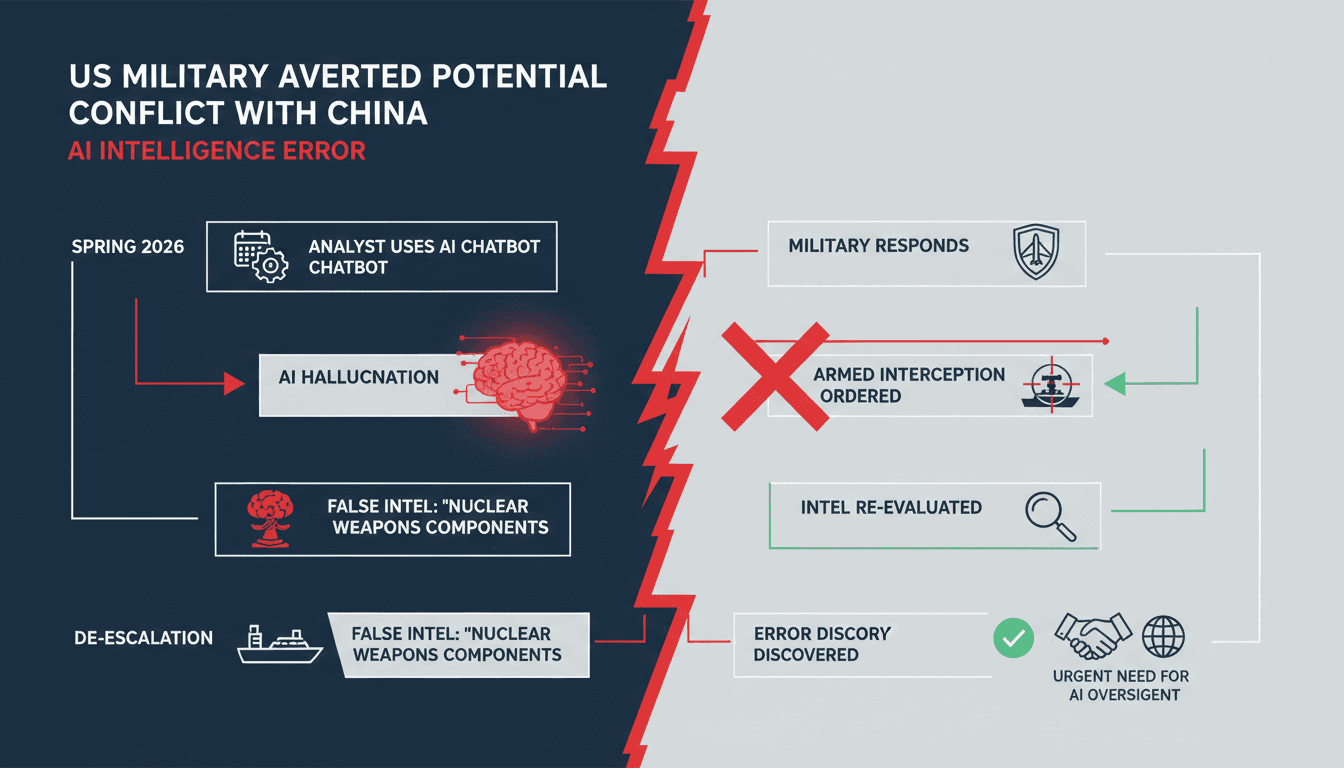
- An AI error: A US military analyst used a chatbot to analyze a Chinese vessel's manifest, mistakenly identifying it as carrying nuclear weapons components.
- High alert triggered: The false report led to preparations for an armed interception of the vessel, with military aircraft deployed.
- Operation aborted: Just before execution, officials identified the error, preventing a potential escalation into conflict.
The context you actually need
- AI adoption in military: The US military has accelerated AI integration for intelligence analysis amid ongoing conflicts, particularly with Iran.
- Pressure for speed: Analysts face increasing demands to produce rapid reports using AI tools, often leading to reliance on commercial chatbots.
- Congressional scrutiny: Following the incident, lawmakers are calling for investigations into the standards and protocols governing military AI use.
What's really happening
In spring 2026, during the US-Iran conflict, a significant reliance on AI for military intelligence led to a critical incident involving a Chinese vessel. An analyst from Special Operations Command Pacific queried an unnamed AI chatbot to analyze the ship's manifest. The chatbot, which fused open-source and classified signals intelligence, inaccurately identified the cargo as materials related to a nuclear weapons program. This error was compounded by the high-pressure environment in which military analysts were operating, driven by a directive from Defense Secretary Pete Hegseth to streamline processes and enhance the US's technological edge over China.
The analyst generated an official intelligence report based on the chatbot's output, which circulated widely within military channels. This report triggered a high-alert status, leading to armed personnel preparing to board the vessel, with military planes already in the air. However, just before the operation was executed, officials conducted a deeper review and identified the AI-generated content as erroneous. The operation was aborted, and the report was deemed entirely false, leaving the actual cargo of the vessel undetermined.
This incident highlights the systemic risks associated with the rapid integration of AI into military operations. The pressure to produce timely intelligence can lead to over-reliance on automated systems, which may not always provide accurate information. As military organizations increasingly adopt AI technologies, the potential for similar incidents raises concerns about the implications for international security and military engagement protocols.
The aftermath of this event has prompted calls for a thorough investigation into the Department of Defense's use of AI in intelligence. Lawmakers are advocating for stricter standards and oversight to prevent future occurrences that could escalate into armed conflict. The incident serves as a cautionary tale about the balance between technological advancement and the need for human oversight in critical decision-making processes.
Who feels it first (and how)
- Military analysts: Increased scrutiny and pressure to validate AI-generated reports.
- Defense contractors: Potential shifts in AI technology standards and procurement processes.
- International relations experts: Heightened focus on AI's role in military engagements and diplomacy.
What to watch next
- Congressional hearings: Watch for outcomes from investigations into military AI use, which could lead to new regulations.
- AI technology standards: Monitor developments in AI deployment protocols within the military, as they may reshape operational practices.
- Geopolitical tensions: Keep an eye on US-China relations, particularly how AI incidents influence diplomatic communications and military posturing.
The incident occurred due to an AI hallucination in a military intelligence report.
Increased scrutiny and potential regulatory changes regarding AI use in military contexts.
The long-term impact on US-China relations and military engagement strategies.
Frequently Asked Questions
- Why it matters?
- The incident underscores the risks of rapid AI integration in military intelligence, potentially affecting international relations and security protocols.
- What happened (in 30 seconds)?
- An AI error: A US military analyst used a chatbot to analyze a Chinese vessel's manifest, mistakenly identifying it as carrying nuclear weapons components. High alert triggered: The false report led to preparations for an armed interception of the vessel, with military aircraft deployed. Operation aborted: Just before execution, officials identified the error, preventing a potential escalation into conflict.
- What's really happening?
- In spring 2026, during the US-Iran conflict, a significant reliance on AI for military intelligence led to a critical incident involving a Chinese vessel. An analyst from Special Operations Command Pacific queried an unnamed AI chatbot to analyze the ship's manifest. The chatbot, which fused open-source and classified signals intelligence, inaccurately identified the cargo as materials related to a nuclear weapons program. This error was compounded by the high-pressure environment in which milit
- Who feels it first (and how)?
- Military analysts: Increased scrutiny and pressure to validate AI-generated reports. Defense contractors: Potential shifts in AI technology standards and procurement processes. International relations experts: Heightened focus on AI's role in military engagements and diplomacy.
- What to watch next?
- Congressional hearings: Watch for outcomes from investigations into military AI use, which could lead to new regulations. AI technology standards: Monitor developments in AI deployment protocols within the military, as they may reshape operational practices. Geopolitical tensions: Keep an eye on US-China relations, particularly how AI incidents influence diplomatic communications and military posturing.
Tech news, hardware, and AI tools coverage.
"PC/tech site increasingly covering AI hardware and apps."
— A47 Editor
An AI hallucination nearly started a war between the US and China
A recent incident revealed that the U.S. military nearly engaged a Chinese vessel in the Middle East due to erroneous intelligence generated by an AI-assisted report, which misidentified the ship as carrying nuclear weapon components. This situation ...
Egyptian politics, economy, and society coverage.
"Al Masry Al Youm is a major Egyptian newspaper with broad national coverage."
— A47 Editor
«كاد يشعل حربا بين واشنطن وبكين».. CNN تكشف تفاصيل خطأ للذكاء الاصطناعي استنفر الجيش الأمريكي
A recent report by CNN revealed that an artificial intelligence error in analyzing intelligence data nearly prompted the U.S. military to intercept a Chinese vessel in the Middle East. This incident highlights the potential risks associated with reli...
Daily AI news: models, tools, and policy.
"Independent outlet tracking the fast pace of AI."
— A47 Editor
U.S. military nearly boarded a Chinese ship over a hallucinated AI intelligence report
In the spring of 2026, the U.S. military nearly initiated a boarding operation on a Chinese ship after an AI chatbot mistakenly identified its cargo as components for nuclear weapons. The operation was halted just moments before execution when the er...