
MS NOW and Other Networks Banned from White House Following Trump's Media Ban
Why it matters
This ban highlights ongoing tensions between government and media, impacting public trust and information flow.
What happened (in 30 seconds)
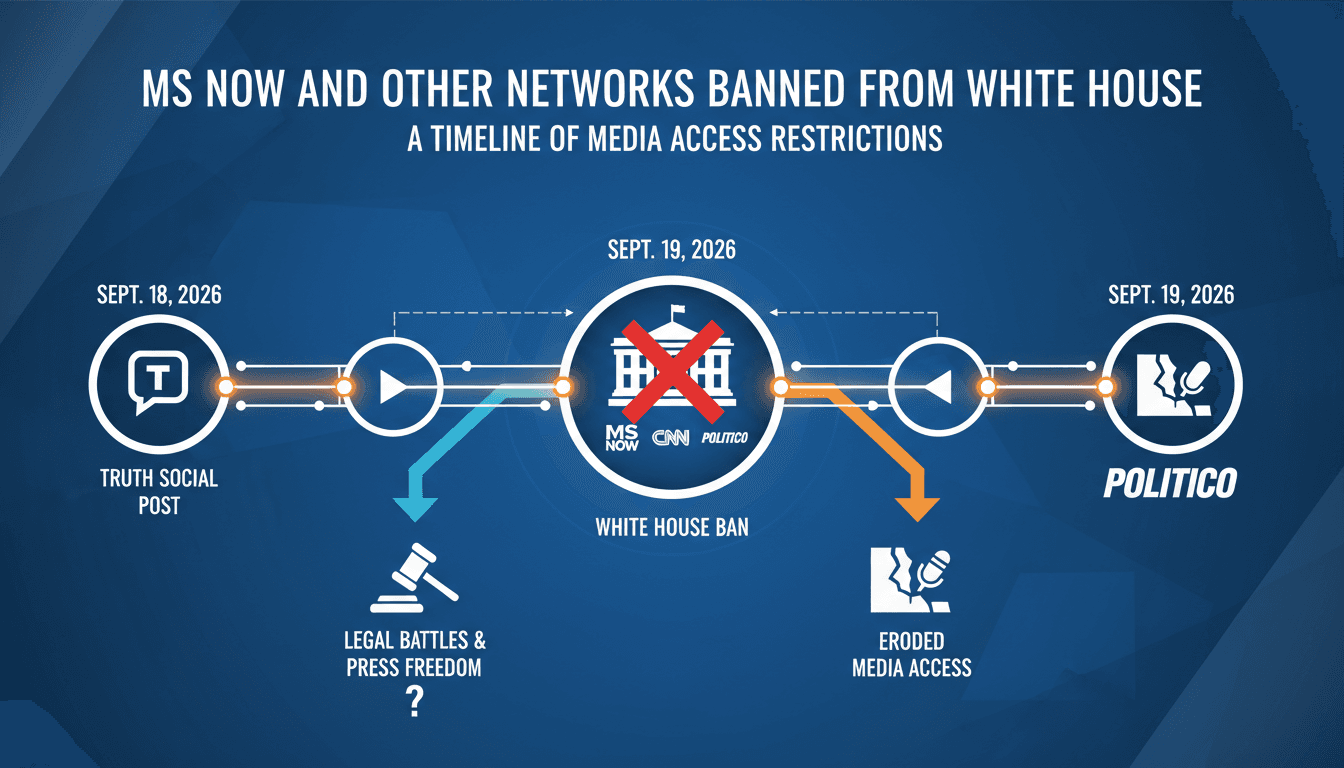
- On September 19, 2026, MS NOW journalists were denied entry to the White House following a media ban imposed by President Trump.
- The ban targeted three major outlets: MS NOW, CNN, and Politico, citing "fake news" coverage as the reason.
- MS NOW vowed to defend its First Amendment rights, asserting that the White House belongs to the American people.
The context you actually need
- President Trump has a history of conflict with mainstream media, often labeling their coverage as biased or inaccurate.
- Previous actions included barring journalists from the Associated Press over terminology disputes, indicating a pattern of restricting media access.
- The September 18 announcement was a culmination of ongoing negative reporting on his administration, reflecting a broader strategy to control the narrative.
What's really happening
The recent media access ban is not an isolated incident but part of a broader strategy employed by President Trump to manage his relationship with the press. By targeting specific outlets, Trump aims to undermine their credibility and influence public perception. This tactic serves multiple purposes: it consolidates his base by appealing to supporters who share his disdain for what they perceive as biased reporting, and it creates a narrative of victimhood that resonates with his followers.
The implications of this ban extend beyond the immediate denial of access. It raises critical questions about the role of the press in a democratic society and the potential chilling effects on journalistic freedom. When a sitting president restricts access to certain media outlets, it sets a precedent that could embolden future administrations to adopt similar tactics, thereby eroding the foundational principle of a free press.
Moreover, the response from the affected networks—MS NOW, CNN, and Politico—indicates a willingness to challenge this ban legally. Their commitment to defending First Amendment rights suggests that this issue may escalate into a significant legal battle, potentially leading to a landmark case regarding press freedoms. The outcome of such a case could redefine the boundaries of media access to government institutions, impacting how journalists operate in the future.
The broader societal implications are also noteworthy. As media access becomes increasingly restricted, public trust in news sources may decline, leading to a fragmented information landscape where citizens are less informed about critical issues. This could exacerbate polarization, as individuals gravitate toward media that aligns with their beliefs, further entrenching divisions within society.
In summary, the media access ban is a strategic maneuver by Trump that reflects deeper tensions between government and the press. It poses significant risks to journalistic integrity and public discourse, with potential long-term consequences for democracy itself.
Who feels it first (and how)
- Journalists: Facing increased barriers to access and reporting.
- Media organizations: Potentially losing credibility and audience trust.
- Political analysts: Struggling to provide unbiased insights amid restricted information.
- General public: Experiencing a limited view of government actions and policies.
What to watch next
- Legal challenges: Monitor the progress of lawsuits filed by MS NOW, CNN, and Politico, as these could set important precedents for press freedoms.
- Public response: Watch for shifts in public opinion regarding media trust and government transparency, which may influence future elections.
- Media landscape changes: Observe how other media outlets respond to access restrictions and whether they adopt similar legal strategies.
The ban affects three major media outlets and has sparked legal responses.
The situation will escalate into legal battles that could redefine press access rights.
The long-term impact on public trust in media and government transparency remains uncertain.
Frequently Asked Questions
- Why it matters?
- This ban highlights ongoing tensions between government and media, impacting public trust and information flow.
- What happened (in 30 seconds)?
- On September 19, 2026, MS NOW journalists were denied entry to the White House following a media ban imposed by President Trump. The ban targeted three major outlets: MS NOW, CNN, and Politico, citing "fake news" coverage as the reason. MS NOW vowed to defend its First Amendment rights, asserting that the White House belongs to the American people.
- What's really happening?
- The recent media access ban is not an isolated incident but part of a broader strategy employed by President Trump to manage his relationship with the press. By targeting specific outlets, Trump aims to undermine their credibility and influence public perception. This tactic serves multiple purposes: it consolidates his base by appealing to supporters who share his disdain for what they perceive as biased reporting, and it creates a narrative of victimhood that resonates with his followers. The
- Who feels it first (and how)?
- Journalists: Facing increased barriers to access and reporting. Media organizations: Potentially losing credibility and audience trust. Political analysts: Struggling to provide unbiased insights amid restricted information. General public: Experiencing a limited view of government actions and policies.
- What to watch next?
- Legal challenges: Monitor the progress of lawsuits filed by MS NOW, CNN, and Politico, as these could set important precedents for press freedoms. Public response: Watch for shifts in public opinion regarding media trust and government transparency, which may influence future elections. Media landscape changes: Observe how other media outlets respond to access restrictions and whether they adopt similar legal strategies.
Arabic-language coverage of international news and geopolitics.
"RT Arabic is a Russian state-funded outlet often criticized for promoting Kremlin-aligned narratives."
— A47 Editor
قناة MS NOW بعد منعها من دخول البيت الأبيض: مقر إقامة ترامب ملك للشعب الأمريكي
MS NOW television announced that the U.S. presidential residence is owned by the American people, following a decision by President Donald Trump to bar its journalists from entering the White House. This action has sparked significant controversy reg...
Arabic-language coverage of political affairs and current events.
"Okaz political coverage typically follows mainstream Saudi framing on national and regional affairs."
— A47 Editor
ترمب يمنع 3 مؤسسات إعلامية من دخول البيت الأبيض
President Donald Trump has announced an immediate ban on CNN, MS NOW, and Politico from accessing the White House, citing their continuous publication of what he describes as 'fake news' about his administration. This decision marks a significant esc...
Arabic-language political and world news coverage for UAE readers.
"Emarat Al Youm world coverage usually presents international developments through a UAE and Arab audience lens."
— A47 Editor
ترامب يعلن منع 3 وسائل إعلام أميركية من دخول البيت الأبيض ترامب يعلن منع 3 وسائل إعلام أميركية من دخول البيت الأبيض
President Donald Trump announced on Friday that he will prohibit three American media outlets, CNN, MSNB, and Politico, from entering the White House. This decision reflects ongoing tensions between the Trump administration and certain media organiza...