
Trump Administration Proposes $10 Billion Fund to Rebuild Middle East Energy Infrastructure
Why it matters
The PACT Fund aims to stabilize energy infrastructure in the Middle East, directly impacting global oil prices and energy security.
What happened (in 30 seconds)
- On September 21, 2026, President Trump proposed a $10 billion fund to rebuild Middle Eastern energy infrastructure.
- The U.S. will contribute $5 billion, seeking matching funds from eight regional partners, including Saudi Arabia and the UAE.
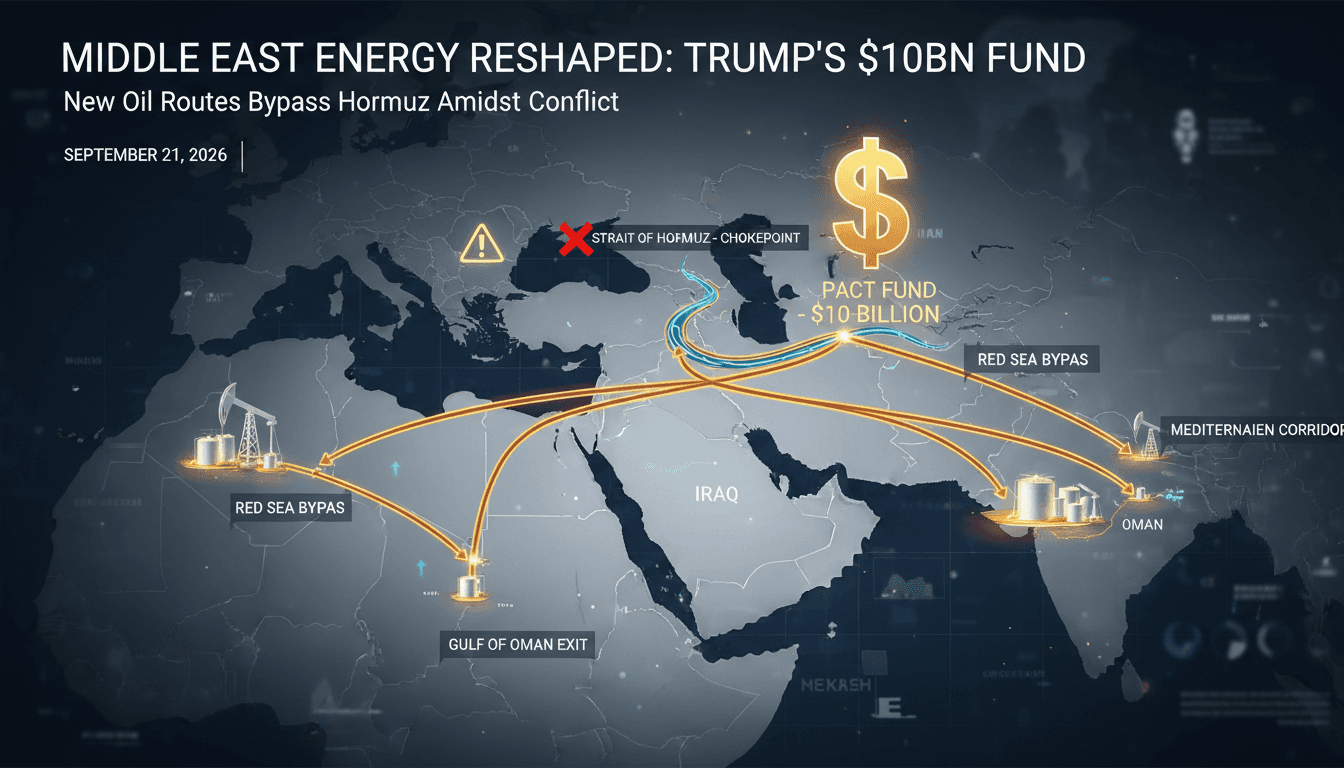
- The initiative aims to reduce reliance on the vulnerable Strait of Hormuz, where significant oil transit disruptions have occurred.
The context you actually need
- The region's energy infrastructure has suffered extensive damage due to Iranian attacks during the ongoing conflict, leading to elevated global oil prices.
- The Strait of Hormuz is a critical chokepoint, with about 20% of global oil and gas previously transiting through it, making it a focal point for energy security.
- Gulf states are wary of committing funds without a peace agreement with Iran, fearing renewed attacks on new facilities.
What's really happening
The proposed Partnership for Allied Trust and Construction (PACT) Fund represents a strategic pivot in U.S. foreign policy, aiming to bolster energy security in the Middle East while reducing vulnerability to geopolitical tensions. The fund's $10 billion total, with a $5 billion U.S. contribution, is designed to attract investments from eight key Middle Eastern partners, including Saudi Arabia, the UAE, and Qatar. This collaborative approach seeks to reconstruct vital energy infrastructure—pipelines, refineries, and export terminals—damaged during the seven-month conflict with Iran.
The U.S. International Development Finance Corporation will manage the fund, which is set to undergo technical negotiations in October 2026. However, skepticism looms among Gulf officials, who express concerns that without a peace agreement with Iran, new facilities could become targets for further attacks. This uncertainty could hinder the fund's effectiveness and the willingness of regional partners to commit financially.
The backdrop of this initiative is critical: the Strait of Hormuz has been a significant transit route for oil, and its disruption has driven Brent crude prices near $100 per barrel. The elevated prices have ripple effects on global markets, impacting everything from fuel costs to inflation rates. By investing in alternative transit routes and infrastructure, the PACT Fund aims to mitigate these vulnerabilities, potentially stabilizing oil prices and enhancing energy security for both the U.S. and its allies.
Private firms like Blackstone and BlackRock were mentioned in discussions but reportedly caught off guard by the proposal, highlighting a disconnect between government initiatives and private sector readiness. The fund's success hinges on the cooperation of regional partners and the geopolitical landscape, particularly relations with Iran. As discussions progress, the outcome will shape not only the energy landscape in the Middle East but also global oil markets.
Who feels it first (and how)
- Energy companies: They may see new investment opportunities and projects in the region.
- Consumers: Fluctuations in oil prices could directly affect fuel costs and inflation.
- Middle Eastern governments: Their economic stability may hinge on the success of this fund and regional cooperation.
- Investors: Those in the energy sector will need to monitor developments closely for potential impacts on market dynamics.
What to watch next
- Negotiations with regional partners: The willingness of Gulf states to commit funds will be crucial for the PACT Fund's success.
- Iran's response: Any developments in U.S.-Iran relations could significantly impact the security of new infrastructure.
- Global oil price trends: Watch for fluctuations in Brent crude prices as the fund's implications unfold.
The U.S. has proposed a $10 billion fund to rebuild Middle Eastern energy infrastructure.
Regional partners will express reservations about committing funds without a peace agreement with Iran.
The long-term effectiveness of the fund in stabilizing oil prices and energy security remains to be seen.
Frequently Asked Questions
- Why it matters?
- The PACT Fund aims to stabilize energy infrastructure in the Middle East, directly impacting global oil prices and energy security.
- What happened (in 30 seconds)?
- On September 21, 2026, President Trump proposed a $10 billion fund to rebuild Middle Eastern energy infrastructure. The U.S. will contribute $5 billion, seeking matching funds from eight regional partners, including Saudi Arabia and the UAE. The initiative aims to reduce reliance on the vulnerable Strait of Hormuz, where significant oil transit disruptions have occurred.
- What's really happening?
- The proposed Partnership for Allied Trust and Construction (PACT) Fund represents a strategic pivot in U.S. foreign policy, aiming to bolster energy security in the Middle East while reducing vulnerability to geopolitical tensions. The fund's $10 billion total, with a $5 billion U.S. contribution, is designed to attract investments from eight key Middle Eastern partners, including Saudi Arabia, the UAE, and Qatar. This collaborative approach seeks to reconstruct vital energy infrastructure—pipel
- Who feels it first (and how)?
- Energy companies: They may see new investment opportunities and projects in the region. Consumers: Fluctuations in oil prices could directly affect fuel costs and inflation. Middle Eastern governments: Their economic stability may hinge on the success of this fund and regional cooperation. Investors: Those in the energy sector will need to monitor developments closely for potential impacts on market dynamics.
- What to watch next?
- Negotiations with regional partners: The willingness of Gulf states to commit funds will be crucial for the PACT Fund's success. Iran's response: Any developments in U.S.-Iran relations could significantly impact the security of new infrastructure. Global oil price trends: Watch for fluctuations in Brent crude prices as the fund's implications unfold.
U.S. business news, corporate developments, and economy.
"The Wall Street Journal is respected for deep financial and economic reporting with a center-right editorial perspective."
— A47 Editor
Trump Proposes $10 Billion Fund for Middle East Energy Infrastructure Project
Former President Donald Trump has proposed a $10 billion fund aimed at enhancing energy infrastructure in the Middle East, as reported by The Wall Street Journal. This initiative is part of a broader strategy to address energy supply challenges in th...
English-language news from Qatar covering domestic and regional affairs.
"Gulf Times reflects Qatari perspectives on regional developments."
— A47 Editor
Damaged Gulf sites: US eyes $10bn fund
The Trump administration has proposed a $10 billion fund aimed at assisting Middle Eastern countries in rebuilding energy infrastructure that has been damaged due to the ongoing conflict with Iran, while also seeking to reduce reliance on the strateg...
Macro commentary, policy analysis, growth/inflation themes, and global outlooks.
"Contextual macro coverage that complements day-to-day market headlines."
— A47 Editor
Trump proposes $5 billion fund for Mideast energy infrastructure - WSJ
Former President Donald Trump has proposed a $5 billion fund aimed at enhancing energy infrastructure in the Middle East, as reported by the Wall Street Journal. This initiative is part of Trump's broader strategy to address energy supply challenges ...