
Gulf Arab States Initiate Diplomatic Engagement with Iran Amid Ongoing Conflict
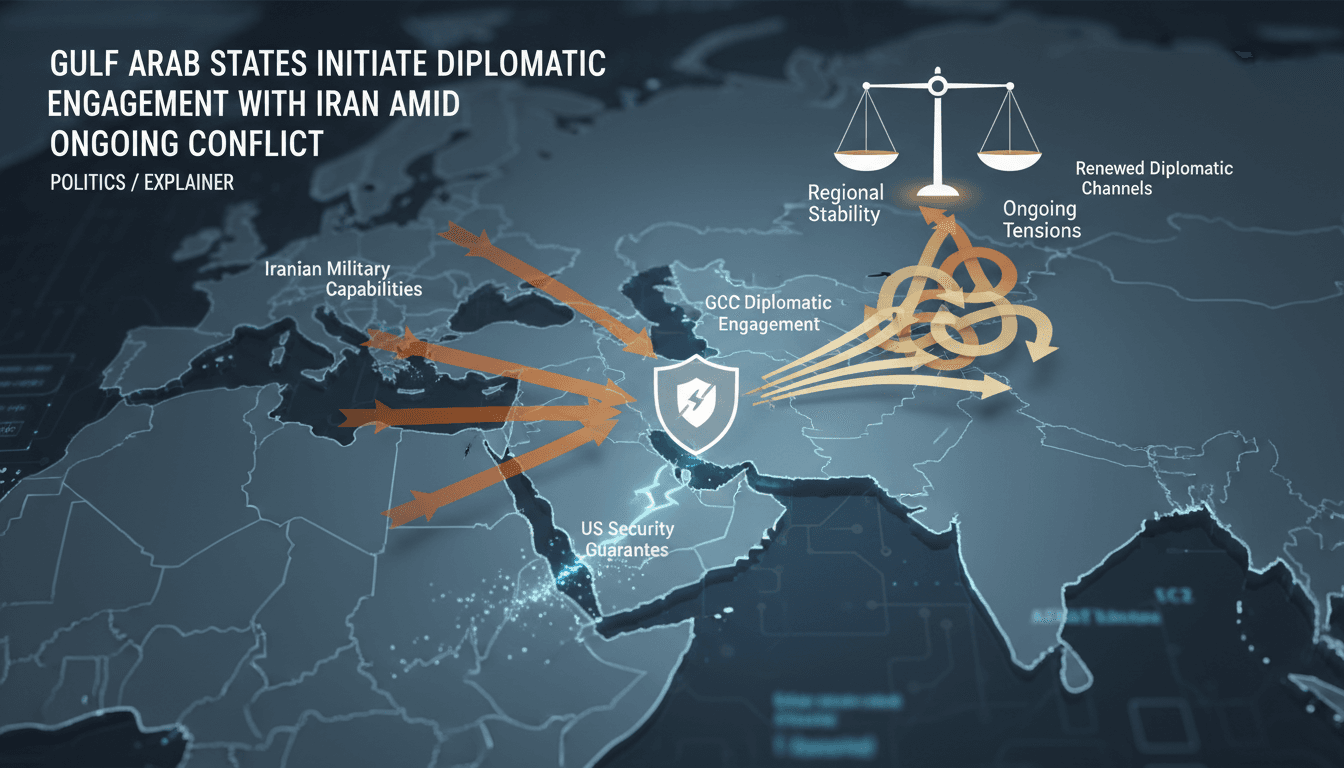
Why it matters
This reset could redefine regional stability and economic ties, influencing global energy markets and security frameworks.
What happened (in 30 seconds)
- Gulf Cooperation Council (GCC) members are pursuing renewed diplomatic engagement with Iran amid ongoing US-Iran conflict.
- Iran's military capabilities have posed direct threats to Gulf states, prompting calls for non-aggression arrangements.
- Discussions are ongoing, with some proposed meetings postponed due to diplomatic impasses.
The context you actually need
- The US-Iran conflict escalated in 2026, involving strikes and retaliatory attacks that disrupted regional security and shipping.
- Gulf states have varied responses: the UAE has aligned closely with the US and Israel, while others like Qatar and Oman focus on mediation.
- Iran remains a significant threat, with hundreds of ballistic missiles and over 1,600 drones detected targeting Gulf territories.
What's really happening
The Gulf Arab states are navigating a complex landscape shaped by the prolonged US-Iran conflict, which has heightened regional tensions and security concerns. The conflict, which escalated in early 2026, has seen the US and its allies conducting strikes on Iranian targets, while Iran has retaliated with missile and drone attacks on Gulf states. This cycle of aggression has underscored the vulnerabilities of Gulf nations, despite the presence of US military bases intended to provide security.
In response to these threats, GCC members have begun to signal a desire for a diplomatic reset with Iran. This shift is driven by the recognition that military solutions alone are insufficient to address the ongoing risks posed by Iranian capabilities. The UAE has taken a more hawkish stance, strengthening ties with the US and Israel, while other nations like Qatar and Oman have emphasized the importance of mediation and dialogue. This divergence reflects differing national security strategies within the GCC, complicating a unified approach to Iran.
By mid-2026, calls for direct talks with Iran gained momentum, focusing on critical issues such as missile threats, drone capabilities, and maritime security in the strategically vital Strait of Hormuz. Proposed meetings in Oman aimed to address these concerns, although some discussions have been postponed due to diplomatic impasses. Analysts suggest that the GCC's approach is shifting toward pragmatic management of relations with Iran, rather than seeking a comprehensive resolution to the conflict.
The implications of this reset are significant. For Gulf states, engaging diplomatically with Iran could mitigate immediate security threats and stabilize the region. However, it also involves a delicate balancing act, as they must navigate their relationships with the US and Israel while addressing their own security needs. The potential for increased Iranian influence in the region raises concerns among some GCC members, particularly the UAE, which has already taken steps to deepen its defense ties with the US.
As the situation evolves, the Gulf states are likely to continue pursuing a mix of engagement and deterrence strategies, reflecting the complexities of their geopolitical landscape. The outcome of these diplomatic efforts will have far-reaching consequences for regional stability, energy markets, and international relations.
Who feels it first (and how)
- Energy sector professionals: Fluctuations in oil prices due to security concerns in the Strait of Hormuz could impact profitability and investment.
- Aviation and shipping industries: Increased security measures and potential disruptions from Iranian threats may affect operations and logistics.
- Local businesses in the Gulf: Economic uncertainty stemming from geopolitical tensions could influence consumer confidence and spending.
What to watch next
- Diplomatic meetings: Watch for announcements regarding upcoming talks between GCC states and Iran, as these could signal shifts in regional security dynamics.
- Military developments: Monitor any changes in Iranian military capabilities or Gulf defense strategies, which could impact regional stability.
- Oil market reactions: Keep an eye on oil price fluctuations in response to developments in the US-Iran conflict and Gulf diplomatic efforts.
The GCC is pursuing diplomatic engagement with Iran amid ongoing conflict.
Continued discussions will focus on mitigating security threats and addressing maritime security in the Strait of Hormuz.
The extent to which these diplomatic efforts will lead to a lasting resolution or merely a temporary reprieve from hostilities.
Frequently Asked Questions
- Why it matters?
- This reset could redefine regional stability and economic ties, influencing global energy markets and security frameworks.
- What happened (in 30 seconds)?
- Gulf Cooperation Council (GCC) members are pursuing renewed diplomatic engagement with Iran amid ongoing US-Iran conflict. Iran's military capabilities have posed direct threats to Gulf states, prompting calls for non-aggression arrangements. Discussions are ongoing, with some proposed meetings postponed due to diplomatic impasses.
- What's really happening?
- The Gulf Arab states are navigating a complex landscape shaped by the prolonged US-Iran conflict, which has heightened regional tensions and security concerns. The conflict, which escalated in early 2026, has seen the US and its allies conducting strikes on Iranian targets, while Iran has retaliated with missile and drone attacks on Gulf states. This cycle of aggression has underscored the vulnerabilities of Gulf nations, despite the presence of US military bases intended to provide security. I
- Who feels it first (and how)?
- Energy sector professionals: Fluctuations in oil prices due to security concerns in the Strait of Hormuz could impact profitability and investment. Aviation and shipping industries: Increased security measures and potential disruptions from Iranian threats may affect operations and logistics. Local businesses in the Gulf: Economic uncertainty stemming from geopolitical tensions could influence consumer confidence and spending.
- What to watch next?
- Diplomatic meetings: Watch for announcements regarding upcoming talks between GCC states and Iran, as these could signal shifts in regional security dynamics. Military developments: Monitor any changes in Iranian military capabilities or Gulf defense strategies, which could impact regional stability. Oil market reactions: Keep an eye on oil price fluctuations in response to developments in the US-Iran conflict and Gulf diplomatic efforts.
Editor-curated FT homepage stories spanning markets, business, world, and opinion.
"The Financial Times is a globally respected business publication with a centrist/center-left tone and strong markets focus."
— A47 Editor
Gulf states urge reset with Iran as conflict drags on
Gulf states, particularly the United Arab Emirates and Qatar, are advocating for a renewed approach to relations with Iran amid ongoing regional conflicts. The UAE has called for a 'new mindset,' while Qatar emphasizes the need for a regional securit...
UAE-based English-language newspaper covering regional politics, economics, and global affairs.
"The National reflects Emirati policy perspectives while maintaining international editorial standards."
— A47 Editor
Qatar proposes Gulf-Iran 'economic interdependence' as path to long-term stability
Qatar has proposed the concept of 'economic interdependence' between Gulf states and Iran as a strategy to achieve long-term stability in the region. This initiative reflects Qatar's ongoing efforts to foster dialogue and cooperation amidst rising te...
English-language digital publication covering business, politics, technology, and current affairs.
"The Arabian Post mixes original and syndicated-style coverage with a broad regional and global business-news orientation."
— A47 Editor
Qatar urges Gulf coordination on US-Iran settlement
Qatar has called for enhanced coordination among Gulf states regarding the ongoing settlement discussions between the United States and Iran. Sheikh Mohammed bin Abdulrahman Al-Thani emphasized the importance of a unified Gulf approach to address the...
Comprehensive coverage of Middle Eastern and global issues.
"Al Jazeera is a prominent voice from the Global South, especially the Middle East, with an emphasis on underreported stories."
— A47 Editor
Qatar PM urges Gulf security framework with Iran
Qatar's Prime Minister has emphasized the necessity of establishing a security framework in the Gulf region that ensures mutual non-aggression, particularly with Iran, highlighting the need for cooperative security measures.
Global news coverage with extensive reporting on Middle Eastern conflicts and geopolitics.
"Al Jazeera is a Qatar-based broadcaster known for wide regional coverage and alternative perspectives."
— A47 Editor
Qatar PM urges Gulf security framework with Iran
Qatar's Prime Minister has emphasized the necessity of establishing a security framework in the Gulf region that ensures mutual non-aggression, particularly with Iran, highlighting the need for cooperative security measures.
Comprehensive coverage of Middle Eastern and global issues.
"Al Jazeera is a prominent voice from the Global South, especially the Middle East, with an emphasis on underreported stories."
— A47 Editor
Qatar says it is working to revive Iran-US talks
Qatar's Foreign Ministry spokesperson announced that the country is actively working to revive talks between Iran and the United States, with mediators facilitating discussions. This initiative comes amid ongoing tensions and the need for diplomatic ...
Global news coverage with extensive reporting on Middle Eastern conflicts and geopolitics.
"Al Jazeera is a Qatar-based broadcaster known for wide regional coverage and alternative perspectives."
— A47 Editor
Qatar says it is working to revive Iran-US talks
Qatar's Foreign Ministry spokesperson announced that the country is actively working to revive talks between Iran and the United States, with mediators facilitating discussions. This initiative comes amid ongoing tensions and the need for diplomatic ...