
Guterres Urges Global Cooperation in Farewell Address to UN General Assembly
Why it matters
The address highlights the urgent need for multilateral cooperation to tackle existential threats that could reshape economies and industries worldwide.
What happened (in 30 seconds)
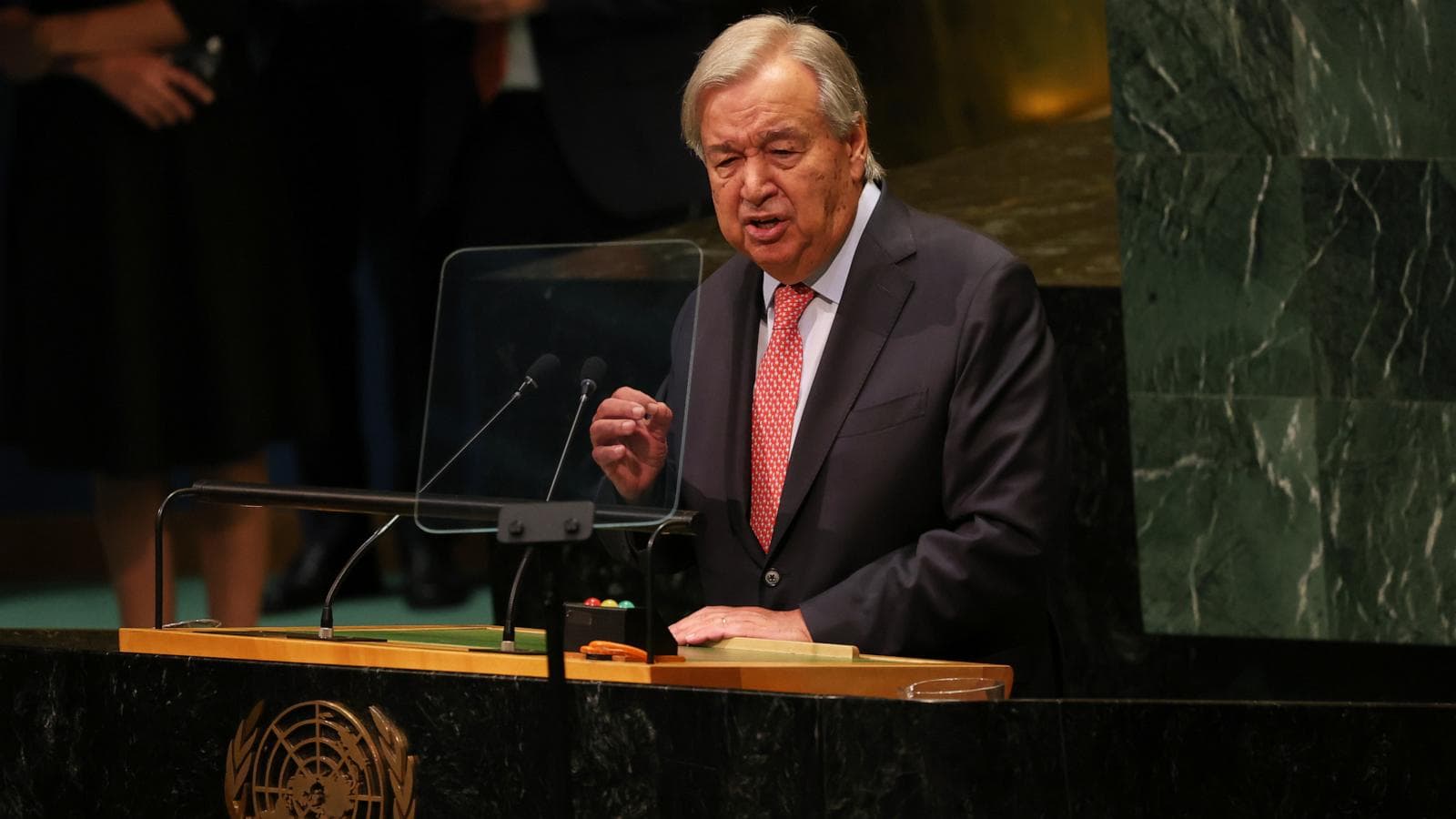
- Guterres delivered a farewell address at the UN General Assembly, emphasizing the need for cooperation over fragmentation.
- He identified key global challenges including climate change, artificial intelligence, and inequality as tests of power.
- The speech concluded with a call for reform of the UN to better reflect contemporary global realities, receiving a standing ovation.
The context you actually need
- Geopolitical tensions are rising, with ongoing conflicts in Ukraine, the Middle East, and other regions, complicating international relations.
- Climate change impacts are accelerating, with a near certain breach of the 1.5°C safety threshold threatening global stability.
- The rapid development of AI raises concerns about governance and accountability, particularly in relation to wealth concentration and inequality.
What's really happening
Guterres' farewell address encapsulates a pivotal moment in global governance, where the interplay of power dynamics is increasingly characterized by fragmentation and rivalry. The Secretary-General articulated a stark choice: continue down a path of division or embrace cooperation to confront shared existential threats. This framing is critical as it underscores the urgency of collective action in a world where no single nation can tackle issues like climate change or technological governance alone.
The address identified four primary tests of power: war and peace, climate chaos, artificial intelligence, and wealth concentration. Each of these areas is interlinked, creating a complex web of challenges that require coordinated responses. For instance, the climate crisis is not just an environmental issue; it exacerbates inequalities and can lead to geopolitical instability. Similarly, the rapid advancement of AI poses risks that could deepen existing divides unless managed through international cooperation and accountability frameworks.
Guterres' warning against a "great fracture" into rival blocs is particularly salient in today's multipolar world, where nations are increasingly aligning themselves along ideological lines. This fragmentation threatens to undermine the principles of the UN Charter, which calls for collective action and multilateralism. The Secretary-General's call for reform of the UN reflects a recognition that existing institutions must evolve to address 21st-century realities, including the rise of non-state actors and the influence of technology on governance.
The emotional resonance of Guterres' speech, culminating in a standing ovation, signals a collective acknowledgment among world leaders of the need for change. However, translating this sentiment into actionable policies will be the real test. The address serves as a rallying cry for nations to prioritize dialogue and cooperation over unilateral actions, particularly in conflict resolution and climate action.
Who feels it first (and how)
- Government leaders: They must navigate the complexities of international relations and domestic pressures to foster cooperation.
- Businesses in climate-sensitive sectors: Industries like agriculture, real estate, and tourism may face immediate impacts from climate policies and regulations.
- Tech companies: As AI governance becomes a priority, firms will need to adapt to new accountability standards and regulations.
- Communities in vulnerable regions: Areas facing climate risks, such as Dubai, will experience direct consequences from global cooperation efforts or lack thereof.
What to watch next
- International climate agreements: Watch for new commitments or reforms in climate policy that could reshape industry standards and practices.
- AI governance frameworks: Keep an eye on emerging regulations that may impact how technology companies operate and innovate.
- UN reform discussions: Monitor the outcomes of ongoing discussions about reforming the UN to better address contemporary global challenges.
Guterres emphasized the need for cooperation to address global challenges.
Increased focus on climate policies and AI governance will emerge from international discussions.
The specific reforms to the UN and their implementation timelines remain uncertain.
Frequently Asked Questions
- Why it matters?
- The address highlights the urgent need for multilateral cooperation to tackle existential threats that could reshape economies and industries worldwide.
- What happened (in 30 seconds)?
- Guterres delivered a farewell address at the UN General Assembly, emphasizing the need for cooperation over fragmentation. He identified key global challenges including climate change, artificial intelligence, and inequality as tests of power. The speech concluded with a call for reform of the UN to better reflect contemporary global realities, receiving a standing ovation.
- What's really happening?
- Guterres' farewell address encapsulates a pivotal moment in global governance, where the interplay of power dynamics is increasingly characterized by fragmentation and rivalry. The Secretary-General articulated a stark choice: continue down a path of division or embrace cooperation to confront shared existential threats. This framing is critical as it underscores the urgency of collective action in a world where no single nation can tackle issues like climate change or technological governance a
- Who feels it first (and how)?
- Government leaders: They must navigate the complexities of international relations and domestic pressures to foster cooperation. Businesses in climate-sensitive sectors: Industries like agriculture, real estate, and tourism may face immediate impacts from climate policies and regulations. Tech companies: As AI governance becomes a priority, firms will need to adapt to new accountability standards and regulations. Communities in vulnerable regions: Areas facing climate risks, such as Dubai,
- What to watch next?
- International climate agreements: Watch for new commitments or reforms in climate policy that could reshape industry standards and practices. AI governance frameworks: Keep an eye on emerging regulations that may impact how technology companies operate and innovate. UN reform discussions: Monitor the outcomes of ongoing discussions about reforming the UN to better address contemporary global challenges.
Major U.S. developments and regional news.
"ABC News delivers broad national coverage with a mainstream editorial stance, focusing on accessibility and balanced reporting."
— A47 Editor
UN chief says power has polarized the world and urges leaders to cooperate
U.N. Secretary-General Antonio Guterres has called on global leaders to collaborate in addressing critical challenges such as the climate crisis, the rapid advancement of artificial intelligence, and growing inequalities. He emphasized that the curre...
Global business headlines with AI angles.
"General business outlet that frequently covers AI."
— A47 Editor
Antonio Guterres Delivered His Final UNGA Address. He Called For AI Regulation.
Antonio Guterres delivered his final address at the United Nations General Assembly (UNGA), emphasizing the urgent need for global cooperation in regulating artificial intelligence (AI). He called for countries leading the technological revolution to...
24/7 international news from a French perspective in multiple languages.
"France 24 is viewed as a globally focused outlet with balanced coverage and a European perspective."
— A47 Editor
REPLAY: UN chief Guterres makes final address to the General Assembly
United Nations Secretary-General Antonio Guterres delivered his final address to the General Assembly, emphasizing the urgent need for global leaders to regulate artificial intelligence, end ongoing conflicts, and prioritize climate change. He also c...
News and features on AI from The Guardian.
"Progressive-leaning international outlet with critical AI coverage."
— A47 Editor
Superpowers cannot solve world’s problems, UN chief says in final general assembly address
In his final address to the UN General Assembly, António Guterres highlighted the inability of superpowers to address global challenges, emphasizing the unprecedented convergence of threats that humanity faces. He lamented the ongoing wars, human rig...
Tech culture, product news, and critical takes on the tech industry's social impact.
"The Guardian's tech coverage blends mainstream news, critical analysis, and cultural commentary on emerging technologies and digital trends."
— A47 Editor
Superpowers cannot solve world’s problems, UN chief says in final general assembly address
In his final address to the UN General Assembly, António Guterres highlighted the inability of superpowers to address global challenges, emphasizing the unprecedented convergence of threats that humanity faces. He lamented the ongoing wars, human rig...
Top international stories selected by The Guardian editors.
"The Guardian is known for its progressive editorial stance and in-depth analysis."
— A47 Editor
Superpowers cannot solve world’s problems, UN chief says in final general assembly address
In his final address to the UN General Assembly, António Guterres highlighted the inability of superpowers to address global challenges, emphasizing the unprecedented convergence of threats that humanity faces. He lamented the ongoing wars, human rig...