
Germany's Automotive Workers Protest Against Job Cuts Amid Industry Crisis
The Vibe
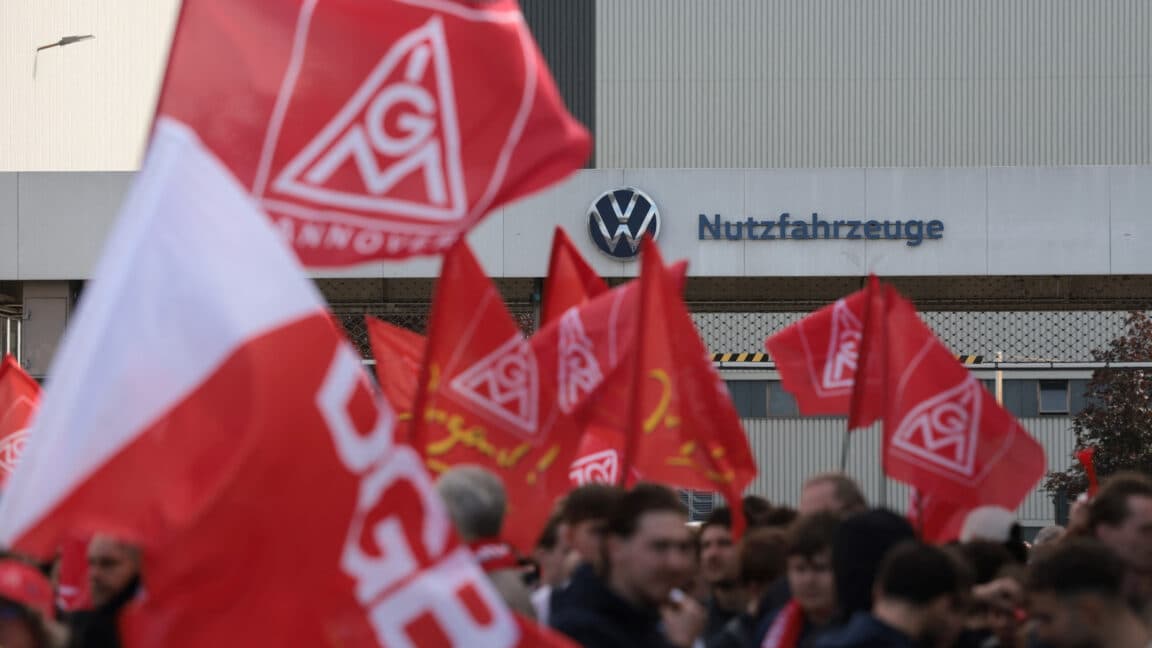
A wave of protests has swept across Germany, with automotive workers rallying against impending job cuts and factory closures, reflecting deep-seated anxieties about the future of work.
What it signals
This unrest highlights a pivotal shift in labor relations and corporate responsibility. As traditional industries grapple with technological transitions and global competition, workers are increasingly demanding accountability from both corporations and governments. The protests underscore a growing awareness that job security is intertwined with national economic health and corporate ethics.
Why it's happening now
1. The automotive industry is facing a seismic shift due to declining European sales, which plummeted from nearly 18 million in 2019 to around 13 million in 2025. 2. Rising competition from Chinese manufacturers, coupled with U.S. import tariffs of 25%, has intensified pressure on German automakers, prompting fears of job losses. 3. The transition to electric vehicles (EVs) is not only reshaping production lines but also threatening existing jobs, as companies like Volkswagen announce plans to cut up to 100,000 positions globally by 2030.
Who it's for (and who it leaves out)
The core beneficiaries of this movement are the workers in the automotive sector, who are advocating for their livelihoods and job security. However, this wave of activism may leave out smaller suppliers and ancillary industries that lack the same visibility and bargaining power.
What to watch next
1. Monitor negotiations between unions and automotive companies, particularly any policy changes that may arise from these protests. 2. Keep an eye on government responses, especially regarding energy costs and import protections, as these will significantly impact the industry's future competitiveness.
The protests involved approximately 180,000 participants across more than 280 sites in Germany.
Ongoing negotiations may lead to some concessions from automotive companies, but significant job losses are still anticipated.
The long-term impact on Germany's automotive industry and its global standing remains uncertain.
In-depth reporting on tech, policy, and science including AI.
"Respected analysis for technically savvy readers, including AI topics."
— A47 Editor
Protests for Germany’s car industry as job losses loom
Protests are emerging in Germany's car industry as job losses loom due to intensified competition from Chinese automakers and the impact of US tariffs. This situation is exacerbated by a significant decline in sales, particularly for major players li...
In-depth coverage of hardware, software, science, and policy.
"Ars Technica provides expert technology news, hardware reviews, and analysis for a technically savvy audience."
— A47 Editor
Protests for Germany’s car industry as job losses loom
Protests are emerging in Germany's car industry as job losses loom due to intensified competition from Chinese automakers and the impact of US tariffs. This situation is exacerbated by a significant decline in sales, particularly for major players li...
Economic trends, financial markets, corporate news, and policy from a Russian perspective.
"RT is widely criticized for promoting pro-Kremlin narratives and is considered by many to be a state propaganda outlet."
— A47 Editor
German auto workers protest historic job cuts
Tens of thousands of German auto workers have taken to the streets in protest against significant job cuts announced by major car manufacturers including Volkswagen, Mercedes, and BMW. These protests reflect widespread concern over the future of empl...
U.S. business news, corporate developments, and economy.
"The Wall Street Journal is respected for deep financial and economic reporting with a center-right editorial perspective."
— A47 Editor
Auto Industry Workers Protest in Germany Against Job Cuts, Industrial Policy
Auto industry workers in Germany are protesting against significant job cuts and the industrial policies impacting the sector, as the automotive industry faces fierce competition from Chinese rivals and rising manufacturing costs. This unrest highlig...