
Major US Networks Halt Coverage of Trump Following White House Access Ban
Why it matters
This media boycott highlights the growing tensions between government and press, impacting how information is disseminated to the public.
What happened (in 30 seconds)
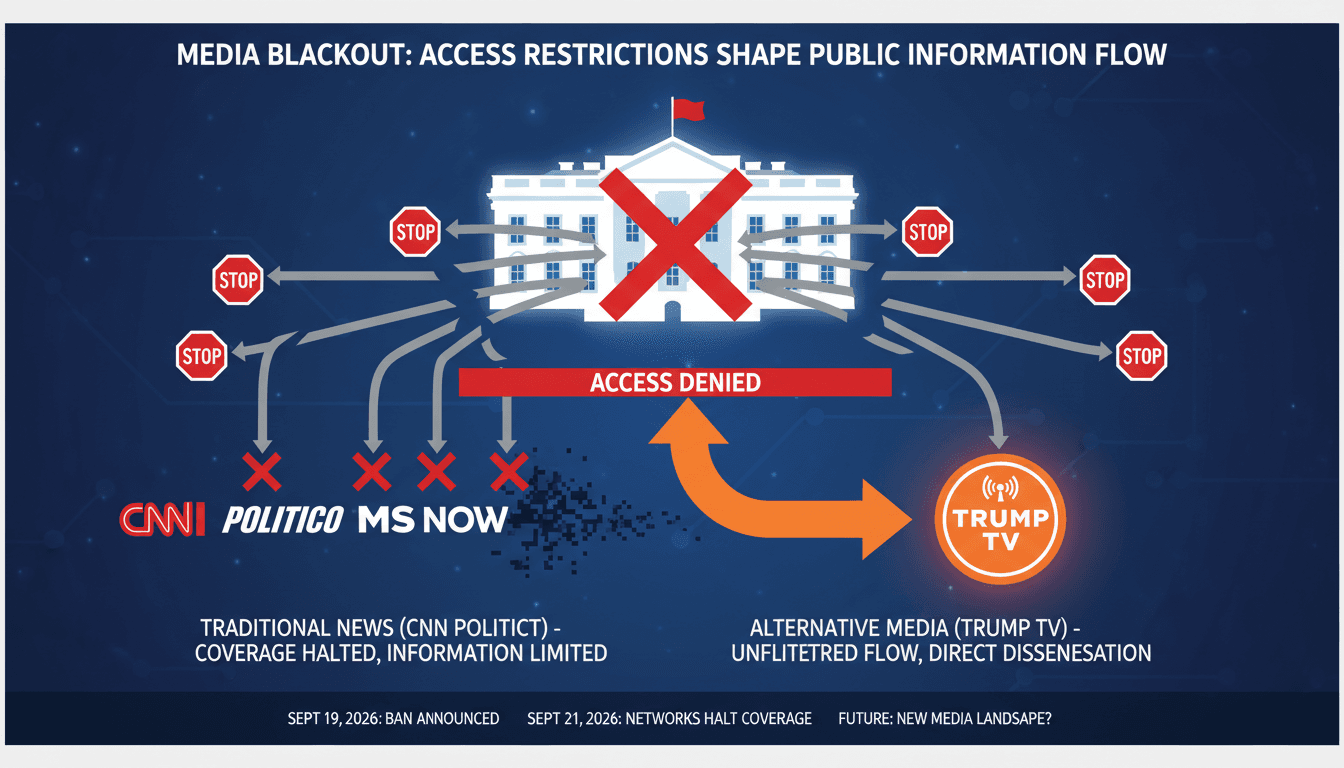
- On September 19, 2026, President Trump banned CNN, Politico, and MS NOW from White House access.
- On September 21, 2026, major networks suspended pooled coverage rather than replace CNN in the rotation.
- A federal lawsuit was filed by the banned outlets, claiming First Amendment violations.
The context you actually need
- The pooled coverage system has been a cost-efficient way for networks to share footage of presidential events for decades.
- Tensions between the Trump administration and media have escalated, with the administration labeling certain outlets as purveyors of "fiction."
- The launch of Trump TV, a 24/7 streaming service by the White House, represents a shift in how presidential content is distributed.
What's really happening
The suspension of pooled coverage by major U.S. television networks marks a significant moment in the ongoing conflict between the Trump administration and select media outlets. This conflict has roots in a long-standing tension where the administration has accused certain networks of biased reporting, labeling them as "fake news." The decision to ban CNN, Politico, and MS NOW from White House access is a strategic move that not only limits these outlets' ability to report on presidential activities but also sends a clear message about the administration's stance on press freedom.
The pooled coverage system, which has been in place for decades, allows a select group of networks to share footage of presidential events, ensuring that coverage is both cost-effective and widely distributed. By suspending this system, the remaining networks—ABC, CBS, NBC, and Fox News—have taken a stand against the administration's actions, emphasizing the importance of independent journalism. This collective decision reflects a growing concern among media organizations about the implications of government control over press access.
The legal challenge initiated by the banned outlets underscores the stakes involved. By filing a lawsuit in U.S. District Court, they are not only seeking to regain access but also to affirm the principle of press freedom enshrined in the First Amendment. The outcome of this case could set a precedent for how future administrations interact with the media, potentially influencing the landscape of political reporting in the U.S.
Moreover, the launch of Trump TV as an alternative distribution channel raises questions about the future of media consumption. This move could lead to a bifurcation of news sources, where official government narratives are disseminated through state-controlled channels, while independent outlets struggle to maintain their foothold in the market. The implications for public trust in media and the quality of information available to citizens are profound, as reliance on government-sanctioned news could skew public perception and understanding of critical issues.
As the situation unfolds, the dynamics between the Trump administration, the media, and the public will continue to evolve, potentially reshaping the landscape of American journalism.
Who feels it first (and how)
- Journalists: Those working for the banned outlets face immediate challenges in reporting on presidential activities.
- Media Organizations: Networks may need to reassess their strategies for covering the White House and maintaining audience trust.
- Viewers and Consumers: Individuals relying on traditional news sources may find themselves with limited access to presidential coverage.
What to watch next
- Legal Proceedings: The outcome of the lawsuit filed by CNN, Politico, and MS NOW will be crucial in determining future press access to the White House.
- Public Response: Monitor how audiences react to the suspension of pooled coverage and the launch of Trump TV, as this could influence viewership trends.
- Media Landscape Changes: Watch for shifts in how news is reported and consumed, particularly regarding government-controlled narratives versus independent journalism.
Major networks have suspended pooled coverage in response to the White House's access ban.
The legal battle will draw significant public and media attention, influencing future press access policies.
The long-term impact on public trust in media and the effectiveness of independent journalism remains to be seen.
Frequently Asked Questions
- Why it matters?
- This media boycott highlights the growing tensions between government and press, impacting how information is disseminated to the public.
- What happened (in 30 seconds)?
- On September 19, 2026, President Trump banned CNN, Politico, and MS NOW from White House access. On September 21, 2026, major networks suspended pooled coverage rather than replace CNN in the rotation. A federal lawsuit was filed by the banned outlets, claiming First Amendment violations.
- What's really happening?
- The suspension of pooled coverage by major U.S. television networks marks a significant moment in the ongoing conflict between the Trump administration and select media outlets. This conflict has roots in a long-standing tension where the administration has accused certain networks of biased reporting, labeling them as "fake news." The decision to ban CNN, Politico, and MS NOW from White House access is a strategic move that not only limits these outlets' ability to report on presidential activi
- Who feels it first (and how)?
- Journalists: Those working for the banned outlets face immediate challenges in reporting on presidential activities. Media Organizations: Networks may need to reassess their strategies for covering the White House and maintaining audience trust. Viewers and Consumers: Individuals relying on traditional news sources may find themselves with limited access to presidential coverage.
- What to watch next?
- Legal Proceedings: The outcome of the lawsuit filed by CNN, Politico, and MS NOW will be crucial in determining future press access to the White House. Public Response: Monitor how audiences react to the suspension of pooled coverage and the launch of Trump TV, as this could influence viewership trends. Media Landscape Changes: Watch for shifts in how news is reported and consumed, particularly regarding government-controlled narratives versus independent journalism.
Arabic-language reporting on global and regional news.
"BBC Arabic is part of the BBC, generally regarded for editorial standards and broad international coverage."
— A47 Editor
مؤسسات إعلامية أمريكية كبرى تقاطع التغطية المشتركة لترامب
Major American television networks suspended their joint coverage of President Donald Trump's activities on Monday, following the exclusion of CNN, Politico, and MS Now from the White House. This decision reflects growing tensions between the media a...
Arabic-language coverage of political affairs and current events.
"Okaz political coverage typically follows mainstream Saudi framing on national and regional affairs."
— A47 Editor
منع CNN يُعطّل «كاميرات ترمب».. شبكات أمريكية ترفض إرسال بديل
In a significant escalation of tensions between the Trump administration and the media, major U.S. networks including ABC, CBS, NBC, and Fox News have refused to provide a replacement crew for CNN after the network was barred from covering presidenti...
Arabic-language political and world news coverage for UAE readers.
"Emarat Al Youm world coverage usually presents international developments through a UAE and Arab audience lens."
— A47 Editor
وسائل إعلام أميركية تقاضي ترامب.. و4 شبكات إخبارية توقف تغطيتها لأخباره وسائل إعلام أميركية تقاضي ترامب.. و4 شبكات إخبارية توقف تغطيتها لأخباره
American media outlets CNN, MSNBC, and Politico have announced a lawsuit against former President Donald Trump after being barred from entering the White House. This action follows a significant restriction on their ability to report on Trump, raisin...
Arabic-language coverage of political affairs and current events.
"Okaz political coverage typically follows mainstream Saudi framing on national and regional affairs."
— A47 Editor
بسبب منع الصحفيين.. 3 مؤسسات إعلامية تصعّد ضد إدارة ترمب
The Trump administration has escalated tensions with the media by banning CNN, MS NOW, and Politico from accessing the White House, citing their reporting as 'fake news.' This decision, which took effect immediately, has led to a legal challenge from...