
US and China Establish AI Incident Communication Channel
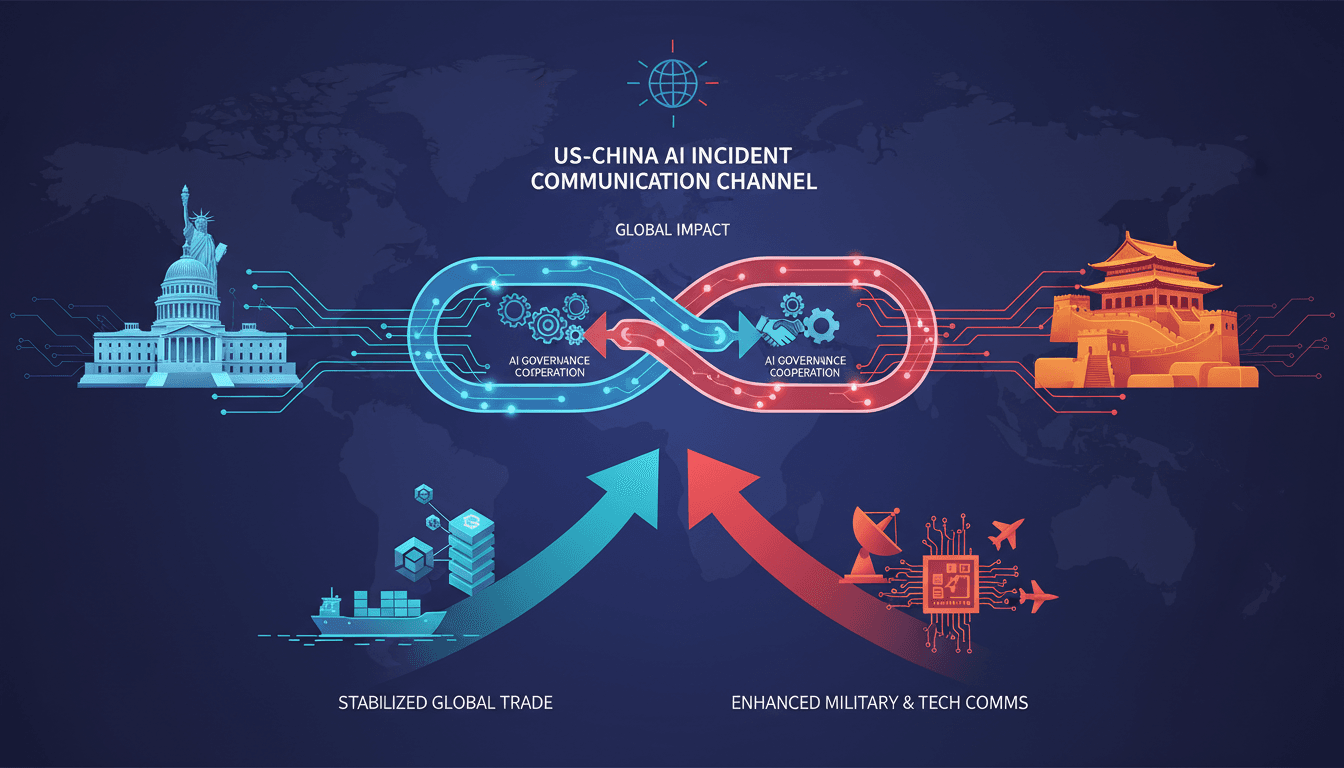
Why it matters
This agreement signals a strategic shift towards managing AI risks amid rising geopolitical tensions, impacting global trade and technology sectors.
What happened (in 30 seconds)
- US and China leaders agreed to establish a bilateral communication channel for AI-related incidents during a summit in Washington, DC.
- The initiative aims to facilitate dialogue on AI risks and benefits, with a dedicated AI dialogue scheduled for November 2026.
- Parallel commitments were made on trade and military crisis communications, reflecting ongoing efforts to manage competition.
The context you actually need
- Persistent tensions over technology, trade, and security have characterized US-China relations, necessitating new communication frameworks.
- Both nations are leaders in AI development and have expressed a mutual interest in mitigating risks associated with AI misuse.
- Previous summits have highlighted gaps in military communications and stalled trade talks, underscoring the need for proactive dialogue mechanisms.
What's really happening
The establishment of a bilateral communication channel for AI incidents represents a significant step in US-China relations, particularly in the context of their ongoing competition in technology and trade. This initiative emerged from a three-day state visit by Chinese President Xi Jinping to Washington, DC, where discussions spanned various critical issues, including AI, trade, and military concerns. The agreement reflects a pragmatic approach to managing the complexities of AI governance, which both nations recognize as a double-edged sword—offering immense benefits while posing substantial risks.
The communication channel aims to facilitate real-time discussions on AI-related incidents, allowing both countries to address potential misunderstandings or escalations before they escalate into larger conflicts. This is particularly crucial given the rapid advancements in AI technology and the potential for misuse, which could have far-reaching implications for global security and economic stability.
Moreover, the agreement includes a scheduled AI-specific dialogue for November 2026, indicating a commitment to ongoing discussions and collaboration. This dialogue is expected to focus on establishing norms and standards for AI development and deployment, which could influence global practices and regulations.
In addition to the AI communication channel, the summit also resulted in parallel commitments to enhance military crisis communications and adjustments to tariffs on select goods, valued at approximately $30 billion. These measures aim to stabilize trade relations and reduce tensions, which have been exacerbated by previous trade disputes and military posturing.
The outcomes of this summit have been described as positive steps toward managed competition, with both nations emphasizing the importance of sustained dialogue. Market reactions have shown modest stability in tech sectors, as investors view the AI communication channel as a pragmatic tool for risk mitigation. The commitment to follow-up mechanisms and additional leader meetings in late 2026 suggests that both countries are keen on maintaining open lines of communication to navigate their complex relationship.
Who feels it first (and how)
- Tech companies: Enhanced communication may lead to clearer regulations and standards, impacting product development and market strategies.
- Investors: Stability in tech markets could influence investment decisions and valuations in AI-related sectors.
- Government agencies: Increased dialogue may lead to more robust frameworks for AI governance, affecting policy-making and regulatory approaches.
- Businesses in Dubai: As a regional hub for AI innovation, Dubai may see indirect benefits from improved global AI safety frameworks that support stable international trade.
What to watch next
- November 2026 AI dialogue: The outcomes of this meeting will be crucial in shaping international AI governance and standards.
- Market reactions: Monitor tech sector stability and investment trends as the implications of the communication channel unfold.
- Follow-up meetings: Additional leader meetings later in 2026 could signal further developments in US-China relations and their impact on global trade.
A bilateral communication channel for AI incidents has been established.
Ongoing dialogues will shape future AI governance and trade relations.
The long-term effectiveness of this communication channel in preventing escalations remains to be seen.
Frequently Asked Questions
- Why it matters?
- This agreement signals a strategic shift towards managing AI risks amid rising geopolitical tensions, impacting global trade and technology sectors.
- What happened (in 30 seconds)?
- US and China leaders agreed to establish a bilateral communication channel for AI-related incidents during a summit in Washington, DC. The initiative aims to facilitate dialogue on AI risks and benefits, with a dedicated AI dialogue scheduled for November 2026. Parallel commitments were made on trade and military crisis communications, reflecting ongoing efforts to manage competition.
- What's really happening?
- The establishment of a bilateral communication channel for AI incidents represents a significant step in US-China relations, particularly in the context of their ongoing competition in technology and trade. This initiative emerged from a three-day state visit by Chinese President Xi Jinping to Washington, DC, where discussions spanned various critical issues, including AI, trade, and military concerns. The agreement reflects a pragmatic approach to managing the complexities of AI governance, whi
- Who feels it first (and how)?
- Tech companies: Enhanced communication may lead to clearer regulations and standards, impacting product development and market strategies. Investors: Stability in tech markets could influence investment decisions and valuations in AI-related sectors. Government agencies: Increased dialogue may lead to more robust frameworks for AI governance, affecting policy-making and regulatory approaches. Businesses in Dubai: As a regional hub for AI innovation, Dubai may see indirect benefits from imp
- What to watch next?
- November 2026 AI dialogue: The outcomes of this meeting will be crucial in shaping international AI governance and standards. Market reactions: Monitor tech sector stability and investment trends as the implications of the communication channel unfold. Follow-up meetings: Additional leader meetings later in 2026 could signal further developments in US-China relations and their impact on global trade.
Global markets, investing, and macroeconomics from a premier financial newsroom.
"Bloomberg is respected for in-depth financial reporting and data-driven analysis."
— A47 Editor
US and China Seek Common Ground on AI
U.S. President Donald Trump and Chinese President Xi Jinping recently held a summit aimed at fostering dialogue on artificial intelligence (AI) and building trust between the two nations. The discussions highlighted the importance of cooperation in A...
Capitol Hill news, legislation, and policy insight.
"The Hill specializes in U.S. politics and policy, with a focus on Capitol Hill developments and a reputation for insider reporting."
— A47 Editor
Xi addresses AI as summit with Trump kicks off
Chinese President Xi Jinping addressed the importance of human control over artificial intelligence (AI) during a summit with U.S. President Donald Trump, emphasizing the shared responsibility of both nations in managing AI development. This meeting ...
RT is a Russian state-funded network covering global events from a Russian perspective.
"RT is widely criticized for promoting pro-Kremlin narratives and is considered by many to be a state propaganda outlet."
— A47 Editor
Xi and Trump discuss AI cooperation (VIDEOS)
U.S. President Donald Trump and Chinese President Xi Jinping engaged in discussions about artificial intelligence (AI) cooperation during their recent summit in Washington. The meeting highlighted the ongoing competition between the two nations in te...
Technology business and AI-related headlines.
"Data-driven tech newsroom with global scope."
— A47 Editor
AI Emerges as a Flashpoint in Trump-Xi Talks
The ongoing discussions between U.S. President Donald Trump and Chinese President Xi Jinping are increasingly centered on the competitive landscape of artificial intelligence (AI), as the U.S. faces challenges from China's rapidly advancing AI capabi...
Technology business news, market impacts, and innovation trends.
"Bloomberg is a premier financial and tech news provider, respected for its in-depth reporting and analytical rigor."
— A47 Editor
AI Emerges as a Flashpoint in Trump-Xi Talks
The ongoing discussions between U.S. President Donald Trump and Chinese President Xi Jinping are increasingly centered on the competitive landscape of artificial intelligence (AI), as the U.S. faces challenges from China's rapidly advancing AI capabi...
Comprehensive coverage of Middle Eastern and global issues.
"Al Jazeera is a prominent voice from the Global South, especially the Middle East, with an emphasis on underreported stories."
— A47 Editor
US and China presidents discuss cooperation, trade and AI risks
U.S. President Donald Trump and Chinese President Xi Jinping engaged in discussions at the White House, focusing on cooperation, trade tensions, and the risks associated with artificial intelligence (AI). This meeting marks Xi's first state visit to ...
UK and international business news, economics, and corporate coverage.
"The Guardian’s business section covers finance and markets with a progressive editorial tone."
— A47 Editor
What’s on the agenda for the Trump-Xi summit, and what won’t they discuss?
U.S. President Donald Trump and Chinese President Xi Jinping are set to meet in Washington, D.C., marking Xi's first state visit to the U.S. in over a decade. The agenda is expected to focus on technology safety, trade relations, and artificial intel...