
U.S. diesel export restrictions debated as prices soar amid geopolitical tensions
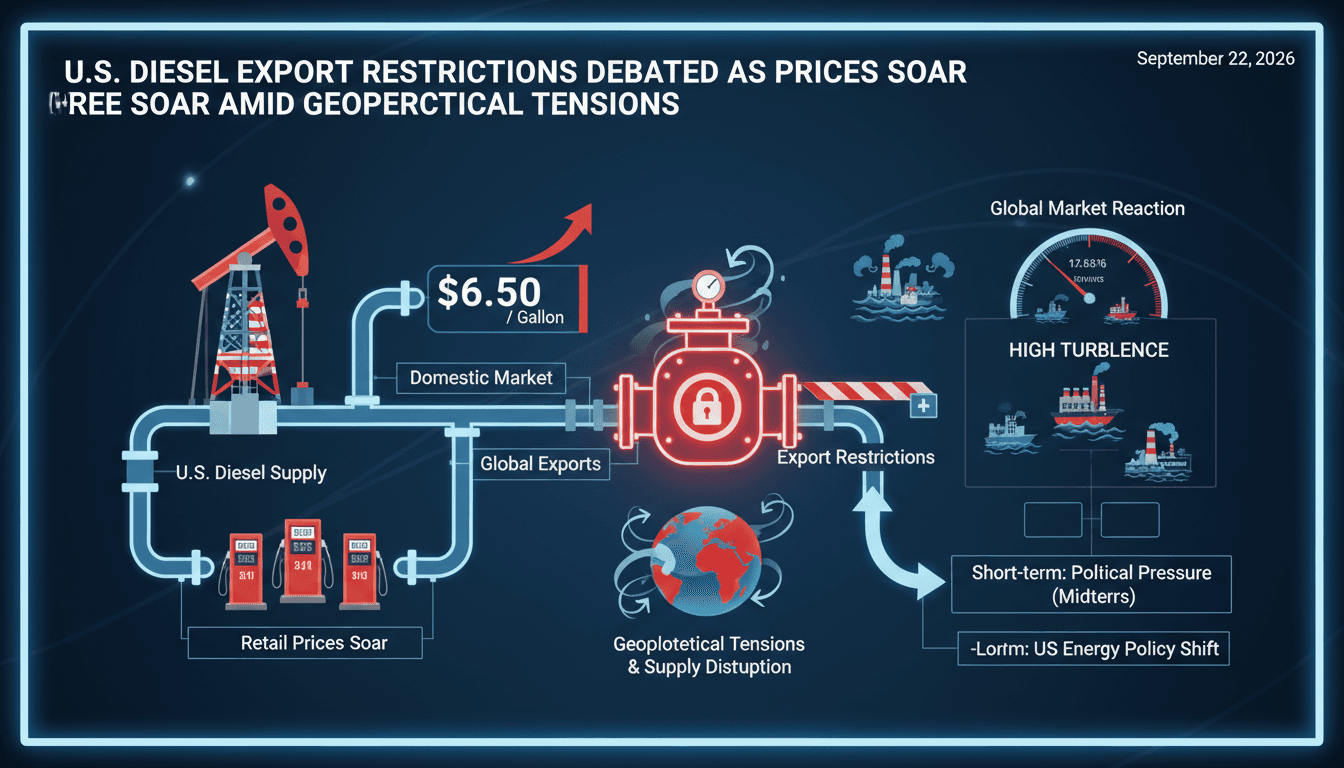
Why it matters
The debate over diesel export restrictions reflects broader tensions in energy security and market stability.
What happened (in 30 seconds)
- Record prices: U.S. diesel prices hit $6.53 per gallon, prompting calls for export restrictions.
- Political pressure: President Trump and Republican lawmakers pushed for measures to retain domestic supply ahead of midterm elections.
- Market response: The White House denied plans for a blanket ban, favoring voluntary measures, leading to a decline in diesel futures.
The context you actually need
- Supply disruptions: Ongoing conflicts in the Middle East and Ukraine have tightened global diesel availability, impacting U.S. exports.
- Domestic surplus: The U.S. produces 5.3 million barrels of diesel per day, exceeding domestic consumption of 3.6 million barrels, creating a structural surplus historically exported.
- Political backdrop: The push for restrictions echoes past debates over crude oil export bans lifted in 2015, highlighting the cyclical nature of energy policy.
What's really happening
As diesel prices soared to record levels, the U.S. government faced mounting pressure to address the financial strain on consumers and industries reliant on diesel fuel. The spike in prices, attributed to geopolitical tensions and supply chain disruptions, has led to a renewed discussion about the feasibility of restricting diesel exports. President Trump’s endorsement of export restrictions on September 22, 2026, was a strategic move aimed at appeasing constituents ahead of the midterm elections, particularly farmers and truckers who are heavily impacted by fuel costs.
However, the White House quickly clarified that a blanket ban on diesel exports was not in the works. Energy Secretary Chris Wright emphasized that such a measure could backfire, potentially forcing refiners to reduce output, which would lead to higher prices for gasoline and jet fuel. Instead, the administration is exploring voluntary measures to increase domestic supply without resorting to drastic export restrictions.
The American Petroleum Institute and other industry groups have voiced strong opposition to export bans, warning that they could lead to reduced refining output and exacerbate global supply shocks. The market reacted swiftly, with diesel futures dropping by 4% following the White House's denial of a blanket ban, indicating that traders are closely monitoring the situation for signs of policy changes.
The structural dynamics of the U.S. diesel market are complex. With domestic production outpacing consumption, the U.S. has historically been a significant exporter of diesel, supplying approximately 1.5 to 1.7 million barrels per day to global markets. Any restrictions could disrupt established supply chains and impact international partners, particularly in Europe and Latin America, who rely on U.S. diesel exports.
As the midterm elections approach, the political implications of rising diesel prices could influence broader energy policy discussions. The balance between immediate relief for consumers and the long-term health of the refining sector will be a critical consideration for policymakers.
Who feels it first (and how)
- Farmers: Increased fuel costs directly impact operational expenses and profitability.
- Truckers: Higher diesel prices affect transportation costs, leading to potential price hikes for goods.
- Consumers: Retail prices for goods may rise as transportation costs increase.
- Refining sector: Potential cutbacks in refining operations could lead to job losses and reduced output.
- International partners: Countries reliant on U.S. diesel may face supply shortages and increased prices.
What to watch next
- Market trends: Monitor diesel futures and retail prices for signs of volatility or stabilization.
- Policy developments: Watch for any announcements regarding voluntary measures or potential export restrictions.
- Geopolitical events: Keep an eye on developments in the Middle East and Ukraine, as they could further impact global diesel supply.
Diesel prices are at record highs, impacting consumers and industries.
Continued political pressure will shape discussions around export restrictions.
The long-term effects of any restrictions on the refining sector and global supply chains remain uncertain.
Frequently Asked Questions
- Why it matters?
- The debate over diesel export restrictions reflects broader tensions in energy security and market stability.
- What happened (in 30 seconds)?
- Record prices: U.S. diesel prices hit $6.53 per gallon, prompting calls for export restrictions. Political pressure: President Trump and Republican lawmakers pushed for measures to retain domestic supply ahead of midterm elections. Market response: The White House denied plans for a blanket ban, favoring voluntary measures, leading to a decline in diesel futures.
- What's really happening?
- As diesel prices soared to record levels, the U.S. government faced mounting pressure to address the financial strain on consumers and industries reliant on diesel fuel. The spike in prices, attributed to geopolitical tensions and supply chain disruptions, has led to a renewed discussion about the feasibility of restricting diesel exports. President Trump’s endorsement of export restrictions on September 22, 2026, was a strategic move aimed at appeasing constituents ahead of the midterm election
- Who feels it first (and how)?
- Farmers: Increased fuel costs directly impact operational expenses and profitability. Truckers: Higher diesel prices affect transportation costs, leading to potential price hikes for goods. Consumers: Retail prices for goods may rise as transportation costs increase. Refining sector: Potential cutbacks in refining operations could lead to job losses and reduced output. International partners: Countries reliant on U.S. diesel may face supply shortages and increased prices.
- What to watch next?
- Market trends: Monitor diesel futures and retail prices for signs of volatility or stabilization. Policy developments: Watch for any announcements regarding voluntary measures or potential export restrictions. Geopolitical events: Keep an eye on developments in the Middle East and Ukraine, as they could further impact global diesel supply.
Business, investment, entrepreneurship, leadership, and innovation.
"Forbes is known for its coverage of business leaders, market trends, and entrepreneurial ventures with a pro-business editorial stance."
— A47 Editor
Diesel Export Ban Risks Higher Prices, Undercuts Energy Agenda
President Trump is considering a temporary ban on diesel exports as prices in the U.S. have surged to record highs, exceeding $6.50 per gallon. This proposal is driven by pressure from Republican lawmakers seeking to alleviate the financial burden on...
Insights and news on social issues, policy, and political movements across the United States.
"The Wall Street Journal is known for its deep political coverage, especially at the intersection of policy, regulation, and social dynamics."
— A47 Editor
Oil executives and their lobbyists launched a coordinated contingency plan to persuade the Trump administration not to enact a ban on U.S. diesel exports
Oil executives and their lobbyists have initiated a coordinated effort to dissuade the Trump administration from implementing a ban on U.S. diesel exports, a move that could significantly impact the oil industry amid rising fuel prices.
Editor-curated FT homepage stories spanning markets, business, world, and opinion.
"The Financial Times is a globally respected business publication with a centrist/center-left tone and strong markets focus."
— A47 Editor
US oil industry pushes back against proposed diesel export ban
The US oil industry is expressing strong opposition to a proposed ban on diesel exports, following indications from the president that he may consider halting shipments abroad to address rising fuel prices. Industry groups argue that such a ban would...
Global business, markets, and technology policy/industry coverage.
"France 24 provides balanced international coverage with a European perspective."
— A47 Editor
Trump sparks debate over diesel export ban
The Trump administration's proposal to potentially ban or limit diesel exports has ignited significant controversy within the American oil industry, as rising diesel prices have reached an average of $6 per gallon. This move is seen as a response to ...
24/7 international news from a French perspective in multiple languages.
"France 24 is viewed as a globally focused outlet with balanced coverage and a European perspective."
— A47 Editor
Trump sparks debate over diesel export ban
The Trump administration's proposal to potentially ban or limit diesel exports has ignited significant backlash from the American oil industry, as rising energy prices become a pressing issue ahead of the midterm elections in November. Critics argue ...
Corporate leadership, finance, technology, and market trends.
"Fortune covers financial trends, leadership, and innovation with a pragmatic editorial approach."
— A47 Editor
Why Trump banning diesel exports would upset the U.S. oil sector and upend global fuel markets — ‘the cure would be far worse than the disease’
President Trump is considering a temporary ban on diesel exports as fuel prices in the U.S. have surged to record highs, exceeding $6.50 per gallon. This potential ban is being discussed amid pressure from Republican lawmakers who are advocating for ...
Capitol Hill news, legislation, and policy insight.
"The Hill specializes in U.S. politics and policy, with a focus on Capitol Hill developments and a reputation for insider reporting."
— A47 Editor
Trump eyes diesel export ban
The Trump administration is contemplating a ban on diesel exports as skyrocketing fuel prices are adversely affecting American agriculture and trucking industries. This consideration comes amid rising concerns over the economic impact of high diesel ...
Global business headlines with AI angles.
"General business outlet that frequently covers AI."
— A47 Editor
Diesel Prices Have Hit Record Highs. The Trump Admin Is Considering An Export Ban.
Diesel prices have reached record highs, prompting the Trump Administration to consider an export ban on diesel fuel. Bessent stated that the administration is evaluating the feasibility of such a ban, taking into account the overall refining capacit...