
Military Chiefs of Staff from Saudi Arabia, Turkey, and Pakistan Meet in Riyadh to Strengthen Collective Defense
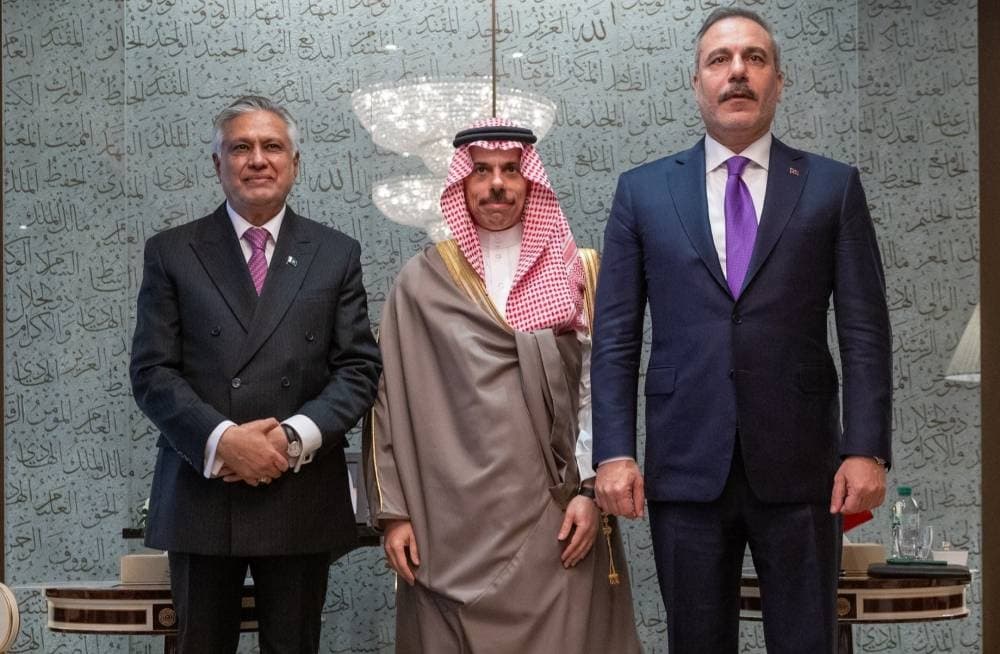
Why it matters
The Mecca Agreement solidifies a significant multilateral military alliance, influencing geopolitical dynamics and economic stability in the region.
What happened (in 30 seconds)
- Chiefs of Staff convened: On September 25, 2026, military leaders from Saudi Arabia, Turkey, and Pakistan met in Riyadh to activate collective defense commitments.
- Response to attacks: The meeting was prompted by reported attacks on Mecca and Saudi civilian infrastructure, leading to discussions on intelligence sharing and military coordination.
- Commitment to cooperation: The session concluded with pledges to enhance military collaboration under the Mecca Agreement for Joint Defense.
The context you actually need
- Mecca Agreement established: Signed on August 7, 2026, by leaders of Saudi Arabia, Turkey, and Pakistan, it creates a framework for mutual defense.
- Recent tensions: Attacks attributed to Houthi forces on Saudi targets have escalated security concerns, necessitating a unified military response.
- Global implications: The agreement positions the involved nations as a formidable military alliance, the fifth largest globally, reshaping regional power dynamics.
What's really happening
The convening of military chiefs from Saudi Arabia, Turkey, and Pakistan in Riyadh marks a pivotal moment in regional defense strategy, driven by the Mecca Agreement for Joint Defense. This agreement, signed in August 2026, establishes a framework where an attack on one member is considered an attack on all, thereby fostering a collective security environment. The backdrop of this meeting is a series of attacks on Saudi Arabia, particularly targeting Mecca and civilian infrastructure, attributed to Houthi forces. These incidents have heightened the urgency for a coordinated military response, prompting the recent discussions.
The meeting in Riyadh focused on enhancing intelligence sharing and operational coordination among the three nations. This collaboration is not merely a reaction to immediate threats but a strategic move to institutionalize military cooperation through the establishment of a secretariat in Saudi Arabia. The emphasis on collective deterrence mechanisms indicates a shift towards a more proactive defense posture, which could deter future aggressions and stabilize the region.
The implications of this military alliance extend beyond immediate security concerns. For businesses and global trade, the stability of the Gulf region is crucial. The agreement may support secure maritime navigation in the Gulf and Red Sea, which is vital for trade routes that pass through these waters. As Dubai continues to position itself as a global logistics and trade hub, the enhanced security measures under the Mecca Agreement could minimize disruptions to economic activities and resident security.
Moreover, the agreement's establishment as the fifth largest multilateral military alliance globally signifies a shift in the balance of power in the region. This could lead to increased military expenditures and strategic partnerships, influencing defense industries and geopolitical alliances worldwide. The commitment to collective defense may also encourage other nations to reassess their security strategies and alliances, potentially leading to a broader realignment of military partnerships in the Middle East.
Who feels it first (and how)
- Military personnel: Increased coordination and joint exercises may lead to enhanced training and operational readiness.
- Logistics and trade sectors: Businesses relying on secure maritime routes may benefit from improved regional stability.
- Local populations: Residents in the Gulf may experience heightened security measures and a potential decrease in regional tensions.
What to watch next
- Military exercises: Monitor joint military drills among the three nations, as they will indicate the level of operational integration and readiness.
- Security incidents: Keep an eye on any further attacks in the region, which could test the effectiveness of the Mecca Agreement.
- Economic impacts: Watch for shifts in trade patterns or investments in the Gulf region as a response to enhanced security measures.
The Mecca Agreement establishes a collective defense framework among Saudi Arabia, Turkey, and Pakistan.
Enhanced military cooperation will lead to increased security in the Gulf region, benefiting trade and logistics.
The long-term effectiveness of the agreement in deterring future threats remains to be seen.
Frequently Asked Questions
- Why it matters?
- The Mecca Agreement solidifies a significant multilateral military alliance, influencing geopolitical dynamics and economic stability in the region.
- What happened (in 30 seconds)?
- Chiefs of Staff convened: On September 25, 2026, military leaders from Saudi Arabia, Turkey, and Pakistan met in Riyadh to activate collective defense commitments. Response to attacks: The meeting was prompted by reported attacks on Mecca and Saudi civilian infrastructure, leading to discussions on intelligence sharing and military coordination. Commitment to cooperation: The session concluded with pledges to enhance military collaboration under the Mecca Agreement for Joint Defense.
- What's really happening?
- The convening of military chiefs from Saudi Arabia, Turkey, and Pakistan in Riyadh marks a pivotal moment in regional defense strategy, driven by the Mecca Agreement for Joint Defense. This agreement, signed in August 2026, establishes a framework where an attack on one member is considered an attack on all, thereby fostering a collective security environment. The backdrop of this meeting is a series of attacks on Saudi Arabia, particularly targeting Mecca and civilian infrastructure, attributed
- Who feels it first (and how)?
- Military personnel: Increased coordination and joint exercises may lead to enhanced training and operational readiness. Logistics and trade sectors: Businesses relying on secure maritime routes may benefit from improved regional stability. Local populations: Residents in the Gulf may experience heightened security measures and a potential decrease in regional tensions.
- What to watch next?
- Military exercises: Monitor joint military drills among the three nations, as they will indicate the level of operational integration and readiness. Security incidents: Keep an eye on any further attacks in the region, which could test the effectiveness of the Mecca Agreement. Economic impacts: Watch for shifts in trade patterns or investments in the Gulf region as a response to enhanced security measures.
Arabic-language reporting focused on domestic developments in Saudi Arabia.
"Okaz is a mainstream Saudi newspaper that often reflects domestic priorities and official-facing coverage."
— A47 Editor
وزير الخارجية يبحث في نيويورك العلاقات والتطورات الإقليمية والدولية
Saudi Foreign Minister Prince Faisal bin Farhan bin Abdullah engaged in discussions in New York regarding bilateral relations and various regional and international issues during the high-level week of the 81st session of the United Nations General A...
English-language reporting on Saudi politics, policy, and society.
"Saudi Gazette reflects mainstream Saudi institutional perspectives."
— A47 Editor
Saudi FM holds high-level UNGA talks with UN chief, foreign ministers
Saudi Foreign Minister Prince Faisal bin Farhan engaged in high-level discussions with UN Secretary-General António Guterres and foreign ministers from Algeria, Mexico, and Ghana during the 81st UN General Assembly in New York, focusing on cooperatio...
English-language reporting focused on Saudi Arabia and regional affairs.
"Saudi Gazette provides English-language coverage that often aligns with mainstream Saudi news priorities."
— A47 Editor
Saudi FM holds high-level UNGA talks with UN chief, foreign ministers
Saudi Foreign Minister Prince Faisal bin Farhan engaged in high-level discussions with UN Secretary-General António Guterres and foreign ministers from Algeria, Mexico, and Ghana during the 81st UN General Assembly in New York, focusing on cooperatio...
Arabic-language local and national news coverage from Saudi Arabia.
"Al-Jazirah is a major Saudi daily with strong emphasis on domestic reporting and official developments."
— A47 Editor
وزير الخارجية: المملكة تؤكد حقها الكامل في حماية أمنها وسيادتها
Prince Faisal bin Farhan bin Abdullah, the Minister of Foreign Affairs of Saudi Arabia, delivered a speech at the 81st session of the United Nations General Assembly in New York, emphasizing the Kingdom's full right to protect its security and sovere...
Coverage of political affairs and regional developments from a Saudi perspective.
"Al Watan political coverage typically follows a mainstream Saudi framing of regional and national issues."
— A47 Editor
اجتماع لرؤساء أركان دول اتفاق مكة لبحث سبل مساندة المملكة
Foreign ministers from the countries involved in the Mecca Agreement convened to discuss arrangements for an urgent meeting of military chiefs aimed at supporting Saudi Arabia, emphasizing that any aggression against one party is considered an attack...