
Houthi Attacks Challenge Saudi Arabia-Turkey-Pakistan Defense Pact
Why it matters
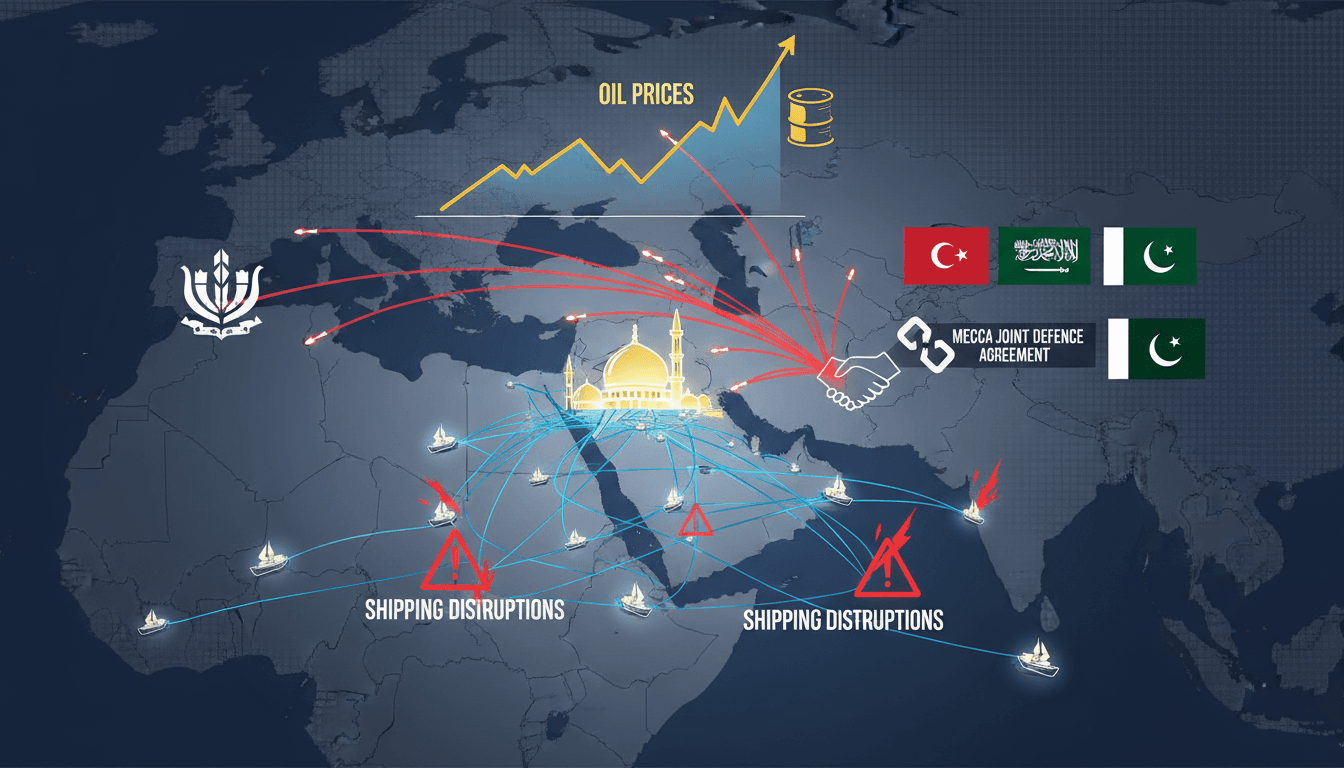
The ongoing conflict and defense commitments in the Middle East could disrupt global oil supply and increase shipping costs.
What happened (in 30 seconds)
- Houthi forces launched ballistic missile and drone attacks on Saudi Arabian targets, including areas near Mecca, escalating tensions in the region.
- Saudi Arabia's air defenses intercepted multiple projectiles, while Turkey and Pakistan provided limited support amid ongoing consultations.
- The attacks test the Mecca Joint Defence Agreement signed by Saudi Arabia, Turkey, and Pakistan, which commits signatories to mutual defense.
The context you actually need
- The Mecca Joint Defence Agreement was established on August 7, 2026, to counter regional threats, particularly from Iran-backed Houthi forces.
- Saudi Arabia has faced repeated Houthi strikes on its energy infrastructure, prompting requests for air defense support from allies as U.S. involvement wanes.
- The recent attacks coincide with broader Middle East conflicts, including the U.S.-Israeli tensions with Iran, affecting regional stability and trade routes.
What's really happening
The recent Houthi missile and drone attacks on Saudi Arabia represent a significant escalation in a long-standing conflict that has implications for regional security and global markets. Following the signing of the Mecca Joint Defence Agreement in August 2026, which includes commitments from Turkey and Pakistan, the Houthis intensified their military actions, targeting key Saudi locations. This escalation is not merely a tactical maneuver; it reflects the Houthis' strategic aim to challenge the newly formed alliance and assert their influence in the region.
The attacks have raised questions about the effectiveness of the Mecca Joint Defence Agreement, which stipulates that an armed attack on one signatory is considered an attack on all. However, the lack of clearly defined activation thresholds for the pact complicates the response. Saudi Arabia's air defenses have been active, intercepting several missiles aimed at critical infrastructure, but the limited support from Turkey and Pakistan has raised concerns about the alliance's robustness. Turkey's Foreign Minister offered technical assistance, while Pakistan has maintained its existing troop presence without committing additional forces, indicating a cautious approach to direct involvement.
The broader context includes the ongoing U.S.-Israeli conflict with Iran, which has heightened regional tensions and prompted Saudi Arabia to seek stronger alliances. The Houthis, backed by Iran, have capitalized on this instability, launching attacks that disrupt oil exports and shipping routes in the Red Sea. This has led to increased oil price volatility, with Brent crude rising approximately 3% to $106.60 per barrel amid fears of supply disruptions.
As the situation evolves, the Houthis have issued threats against Turkey and Pakistan, warning them against involvement in the conflict. This rhetoric underscores the precarious nature of the alliance and the potential for further escalation. Saudi officials have condemned the attacks, particularly those targeting holy sites, and have called for heightened defense readiness. The urgent trilateral foreign ministers meeting held on September 25 reflects the immediate need for a coordinated response, but the effectiveness of the Mecca Joint Defence Agreement remains to be seen.
Who feels it first (and how)
- Energy sector professionals: Increased oil prices and supply chain disruptions could impact profitability and operational costs.
- Shipping and logistics companies: Rerouted trade and elevated war-risk insurance may lead to higher operational costs.
- Tourism and hospitality sectors in Dubai: Reduced flight traffic and hotel occupancy due to regional instability could affect revenues.
What to watch next
- Trilateral military discussions: The outcomes of the chiefs of staff meetings could clarify the defense pact's effectiveness and response strategies.
- Oil price fluctuations: Continued Houthi attacks may lead to further volatility in oil prices, impacting global markets.
- Diplomatic engagements: Pakistan's diplomatic efforts with Iran to de-escalate tensions will be crucial in determining the conflict's trajectory.
Houthi forces will continue to target Saudi Arabia, testing the limits of the Mecca Joint Defence Agreement.
Oil prices will remain volatile as the situation develops, affecting global markets.
The long-term effectiveness of the Mecca Joint Defence Agreement in deterring Houthi aggression.
Frequently Asked Questions
- Why it matters?
- The ongoing conflict and defense commitments in the Middle East could disrupt global oil supply and increase shipping costs.
- What happened (in 30 seconds)?
- Houthi forces launched ballistic missile and drone attacks on Saudi Arabian targets, including areas near Mecca, escalating tensions in the region. Saudi Arabia's air defenses intercepted multiple projectiles, while Turkey and Pakistan provided limited support amid ongoing consultations. The attacks test the Mecca Joint Defence Agreement signed by Saudi Arabia, Turkey, and Pakistan, which commits signatories to mutual defense.
- What's really happening?
- The recent Houthi missile and drone attacks on Saudi Arabia represent a significant escalation in a long-standing conflict that has implications for regional security and global markets. Following the signing of the Mecca Joint Defence Agreement in August 2026, which includes commitments from Turkey and Pakistan, the Houthis intensified their military actions, targeting key Saudi locations. This escalation is not merely a tactical maneuver; it reflects the Houthis' strategic aim to challenge the
- Who feels it first (and how)?
- Energy sector professionals: Increased oil prices and supply chain disruptions could impact profitability and operational costs. Shipping and logistics companies: Rerouted trade and elevated war-risk insurance may lead to higher operational costs. Tourism and hospitality sectors in Dubai: Reduced flight traffic and hotel occupancy due to regional instability could affect revenues.
- What to watch next?
- Trilateral military discussions: The outcomes of the chiefs of staff meetings could clarify the defense pact's effectiveness and response strategies. Oil price fluctuations: Continued Houthi attacks may lead to further volatility in oil prices, impacting global markets. Diplomatic engagements: Pakistan's diplomatic efforts with Iran to de-escalate tensions will be crucial in determining the conflict's trajectory.
Conservative-leaning political and national coverage.
"The Washington Times is a conservative-leaning newspaper known for its political coverage and advocacy of right-of-center viewpoints."
— A47 Editor
Houthi attacks on Riyadh put new Saudi Arabia-Turkey-Pakistan mutual defense pact to test
Recent Houthi missile and drone attacks have targeted various locations in Saudi Arabia, including the holy city of Mecca, raising significant concerns about the effectiveness of the newly established mutual defense pact between Saudi Arabia, Turkey,...
English-language reporting on Saudi politics, policy, and society.
"Saudi Gazette reflects mainstream Saudi institutional perspectives."
— A47 Editor
Saudi Arabia, Egypt, Pakistan, Türkiye condemn attacks on Kingdom, back right to self-defense
The foreign ministers of Saudi Arabia, Egypt, Pakistan, and Türkiye condemned recent Houthi attacks on the Kingdom during a consultative meeting in New York, affirming Saudi Arabia's right to self-defense and the importance of maritime safety. This s...
English-language reporting focused on Saudi Arabia and regional affairs.
"Saudi Gazette provides English-language coverage that often aligns with mainstream Saudi news priorities."
— A47 Editor
Saudi Arabia, Egypt, Pakistan, Türkiye condemn attacks on Kingdom, back right to self-defense
The foreign ministers of Saudi Arabia, Egypt, Pakistan, and Türkiye condemned recent Houthi attacks on the Kingdom during a consultative meeting in New York, affirming Saudi Arabia's right to self-defense and the importance of maritime safety. This s...
Arabic-language reporting on global and regional news.
"BBC Arabic is part of the BBC, generally regarded for editorial standards and broad international coverage."
— A47 Editor
هل تتدخل تركيا وباكستان لحماية السعودية أمام هجمات الحوثيين؟
As tensions escalate between Saudi Arabia and the Houthi movement, with ongoing attacks on Saudi cities, questions arise regarding the role of the 'Makkah Alliance' in supporting Saudi Arabia against the Houthis. This situation prompts speculation ab...