
U.S. military disables oil tanker in Gulf of Oman amid blockade enforcement
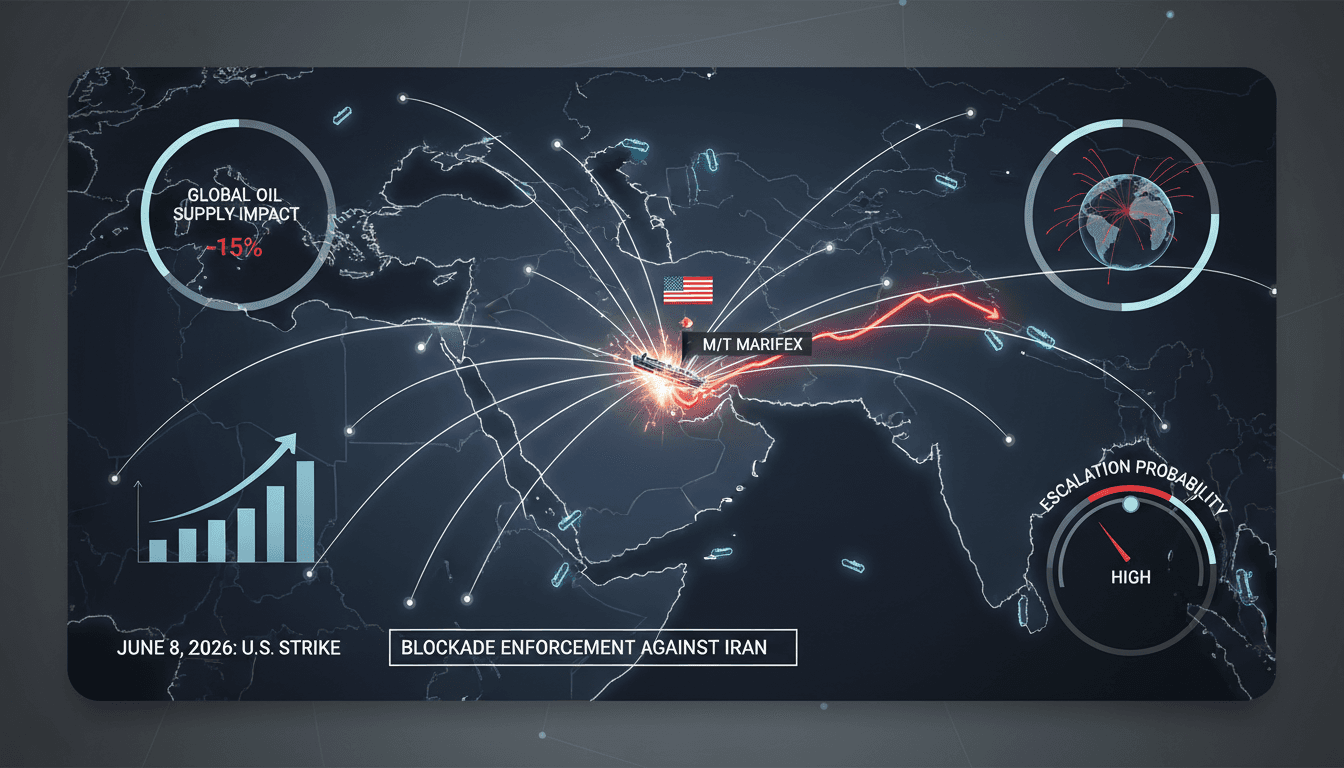
Here's what it means for you.
The U.S. military's recent action against the oil tanker 'M/T Marifex' signals a significant escalation in the enforcement of maritime policies aimed at Iran. This incident may impact global oil markets, particularly if tensions continue to rise in the Gulf region. Stakeholders in energy sectors should monitor developments closely, as further military actions could disrupt shipping routes and oil supply chains. The geopolitical landscape is becoming increasingly complex, with potential ramifications for U.S.-Iran relations. As the U.S. maintains its blockade, the likelihood of retaliatory measures from Iran could heighten regional instability.
What happened
On June 8, 2026, the U.S. military executed a precision strike on the oil tanker 'M/T Marifex' in the Gulf of Oman. This operation was conducted by an F/A-18 Super Hornet launched from the USS Abraham Lincoln, targeting the vessel for violating a Navy blockade. The tanker, flagged under Palau, was reportedly en route to Iran when it was disabled.
This military action underscores the U.S. commitment to preventing oil shipments to Iran amid ongoing tensions in the region. The incident marks a significant military engagement by the U.S. in the Gulf of Oman, highlighting the seriousness of the blockade enforcement.
The Context
The U.S. Navy has been actively enforcing a blockade in the Gulf of Oman to curb oil shipments to Iran, a country that has been a focal point of U.S. foreign policy. The enforcement of this blockade is part of broader efforts to address concerns over Iran's influence and activities in the region. The timing of this operation coincides with heightened geopolitical tensions, making it a critical moment for U.S. military strategy.
The stakeholders involved include the U.S. military, Iranian authorities, and international shipping entities. The operation reflects the U.S. Central Command's ongoing commitment to maintaining maritime security and enforcing sanctions against Iran. As the situation evolves, the implications for regional stability and international relations will be closely scrutinized.
Takeaway
The disabling of the 'M/T Marifex' could lead to an increased military presence in the Gulf region, raising the stakes for U.S.-Iran relations. Observers should watch for potential Iranian responses to this military action, which may include diplomatic protests or retaliatory measures.
Further developments in U.S.-Iran relations regarding oil trade will be critical to monitor, as they could influence global oil prices and shipping routes. The situation remains fluid, and the international community will be watching closely for any escalation in hostilities.
Jordanian news and regional updates.
"Roya News is a Jordanian outlet focused on breaking news and local affairs."
— A47 Editor
طائرة حربية أميركية تطلق النار على ناقلة نفط في خليج عمان وتعطلها بعد انتهاكها الحصار على إيران
A U.S. military aircraft fired upon an oil tanker in the Gulf of Oman, disabling it after the vessel allegedly violated sanctions against Iran. This incident highlights ongoing tensions in the region and the enforcement of maritime sanctions.
Arabic-language coverage of international news and geopolitics.
"RT Arabic is a Russian state-funded outlet often criticized for promoting Kremlin-aligned narratives."
— A47 Editor
القيادة المركزية الأمريكية تعلن تعطيل ناقلة نفط كانت متجهة إلى إيران في خليج عمان
The U.S. Central Command (CENTCOM) announced the disruption of the oil tanker MT Marifex, flagged under Palau, while it was sailing in the Gulf of Oman, indicating heightened military activity in the region.
Capitol Hill news, legislation, and policy insight.
"The Hill specializes in U.S. politics and policy, with a focus on Capitol Hill developments and a reputation for insider reporting."
— A47 Editor
US military disable oil tanker violating blockade: Centcom
The U.S. military disabled an oil tanker in the Gulf of Oman that was reportedly violating a U.S. Navy blockade, as confirmed by U.S. Central Command (Centcom). An F/A-18 Super Hornet from the USS Abraham Lincoln executed the operation, highlighting ...